About this artwork
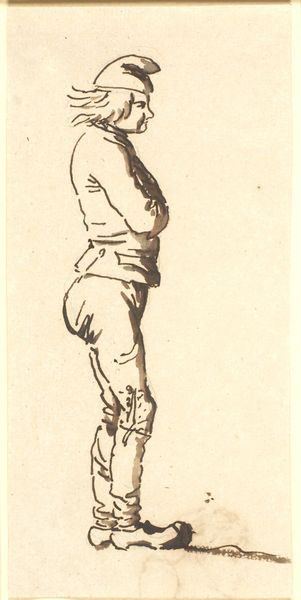
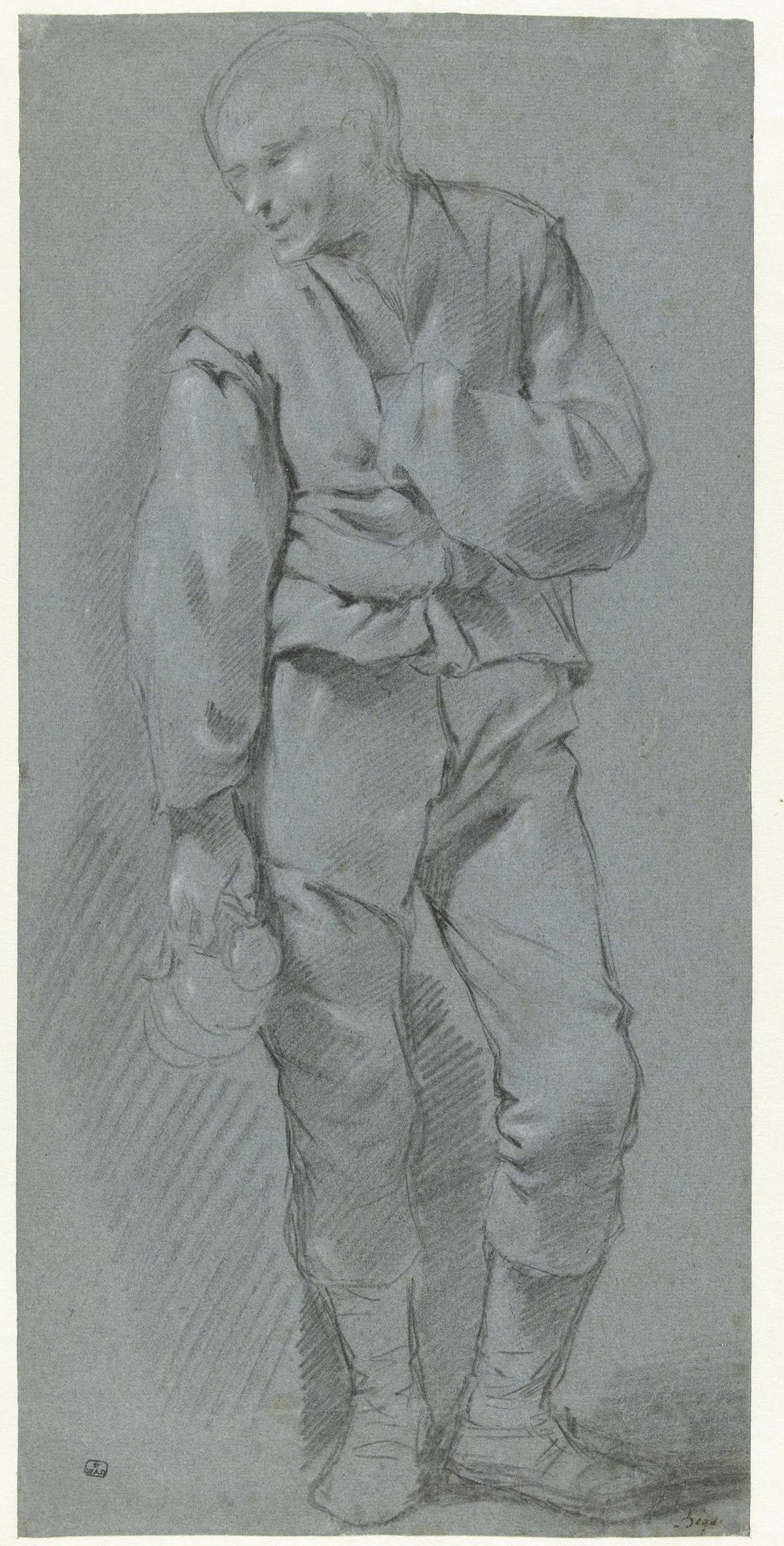
Cornelis Bega made this chalk drawing of a man holding a pitcher sometime in the 17th century. Bega lived during the Dutch Golden Age, a period of great economic prosperity in the Netherlands, but also one defined by stark class divisions. Bega often depicted peasant life in his work, although he himself was from a middle-class family. His choice of subject matter was partly shaped by the artistic trends of the time. Genre paintings of everyday life were popular, as the rising merchant class sought images reflecting their own values and experiences. The representation of the working class raises questions about authenticity and the power dynamics between artist and subject. The man’s weary posture may signal that he has just finished working. It invites us to think about how the laboring class was perceived during this period. The emotional depth of this piece prompts us to consider the lives of those who sustain society through their labor.
Standing Man, Holding a Pitcher in his Right Hand
1650 - 1664

Cornelis Bega
1631 - 1664Location
RijksmuseumArtwork details
- Medium
- drawing, pencil, graphite
- Dimensions
- height 405 mm, width 196 mm
- Location
- Rijksmuseum
- Copyright
- Rijks Museum: Open Domain
Tags
Comments
Share your thoughts
About this artwork
Cornelis Bega made this chalk drawing of a man holding a pitcher sometime in the 17th century. Bega lived during the Dutch Golden Age, a period of great economic prosperity in the Netherlands, but also one defined by stark class divisions. Bega often depicted peasant life in his work, although he himself was from a middle-class family. His choice of subject matter was partly shaped by the artistic trends of the time. Genre paintings of everyday life were popular, as the rising merchant class sought images reflecting their own values and experiences. The representation of the working class raises questions about authenticity and the power dynamics between artist and subject. The man’s weary posture may signal that he has just finished working. It invites us to think about how the laboring class was perceived during this period. The emotional depth of this piece prompts us to consider the lives of those who sustain society through their labor.
Comments
Share your thoughts