![Front elevation of the Great Temple of Aboosimble [sic]. Nubia. by David Roberts](https://d2w8kbdekdi1gv.cloudfront.net/eyJidWNrZXQiOiAiYXJ0ZXJhLWltYWdlcy1idWNrZXQiLCAia2V5IjogImFydHdvcmtzL2JiM2VhNTY4LTVkMjctNDA1Ni1hNTdhLTRlM2JhZDZjMWEwMy9iYjNlYTU2OC01ZDI3LTQwNTYtYTU3YS00ZTNiYWQ2YzFhMDNfZnVsbC5qcGciLCAiZWRpdHMiOiB7InJlc2l6ZSI6IHsid2lkdGgiOiAxOTIwLCAiaGVpZ2h0IjogMTkyMCwgImZpdCI6ICJpbnNpZGUifX19)
About this artwork
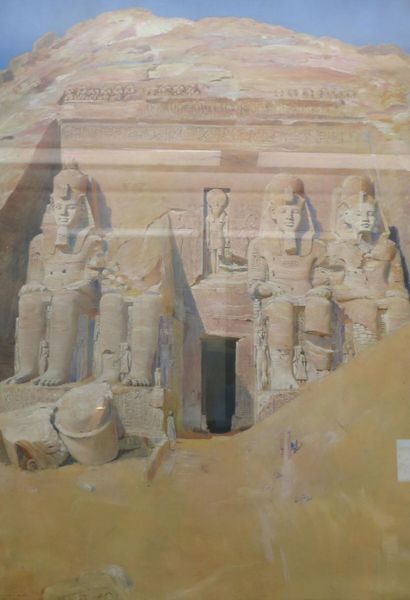
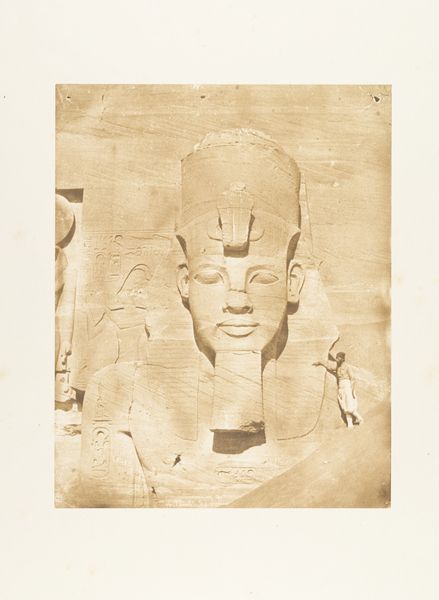
David Roberts made this print of the Great Temple of Abu Simbel in Nubia, using lithography, a process that democratized image-making in the 19th century. The monumental scale, so powerfully rendered here, speaks to the original construction of the temple, carved directly into the sandstone cliff face. Think of the labor involved, the teams of sculptors working for years with chisels and hammers to realize this pharaonic vision. Roberts captures not only the physical impressiveness, but also the temple's dramatic setting, partially buried in sand. This evokes a sense of history, of lost civilizations rediscovered. The lithographic process itself, with its ability to capture fine detail and tonal variation, contributes to this feeling. It allows Roberts to convey the texture of the stone, the play of light and shadow, and the sheer immensity of the site. Ultimately, this print reminds us that even images are made through processes, and that these processes are always embedded in social and historical contexts.
Front elevation of the Great Temple of Aboosimble [sic]. Nubia.
1846 - 1849

Artwork details
- Medium
- drawing, tempera, architecture
- Copyright
- Public Domain: Artvee
Tags
Comments
Share your thoughts
About this artwork
David Roberts made this print of the Great Temple of Abu Simbel in Nubia, using lithography, a process that democratized image-making in the 19th century. The monumental scale, so powerfully rendered here, speaks to the original construction of the temple, carved directly into the sandstone cliff face. Think of the labor involved, the teams of sculptors working for years with chisels and hammers to realize this pharaonic vision. Roberts captures not only the physical impressiveness, but also the temple's dramatic setting, partially buried in sand. This evokes a sense of history, of lost civilizations rediscovered. The lithographic process itself, with its ability to capture fine detail and tonal variation, contributes to this feeling. It allows Roberts to convey the texture of the stone, the play of light and shadow, and the sheer immensity of the site. Ultimately, this print reminds us that even images are made through processes, and that these processes are always embedded in social and historical contexts.
Comments
Share your thoughts