About this artwork
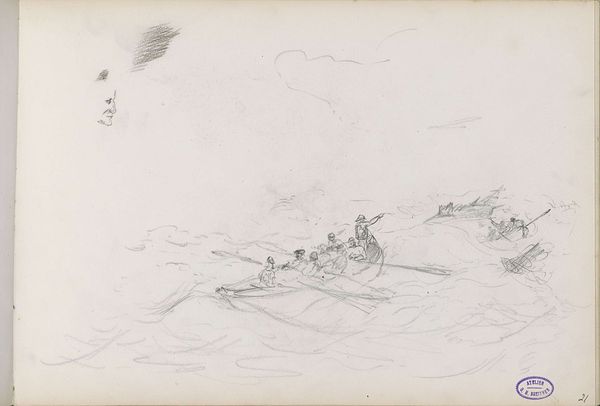
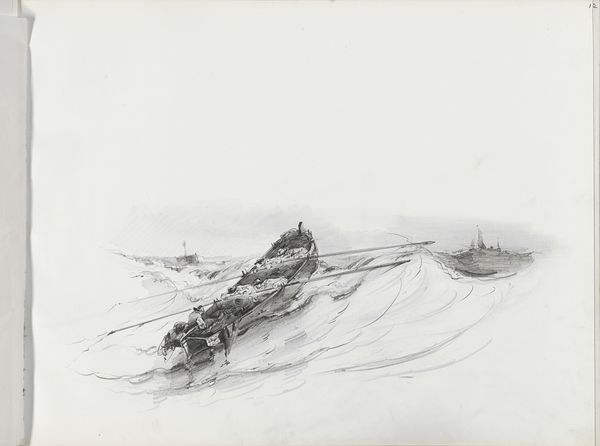
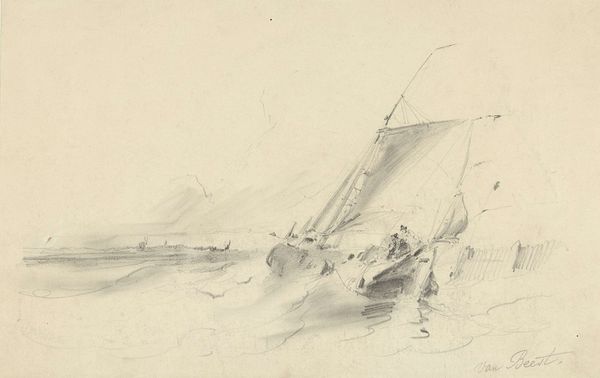
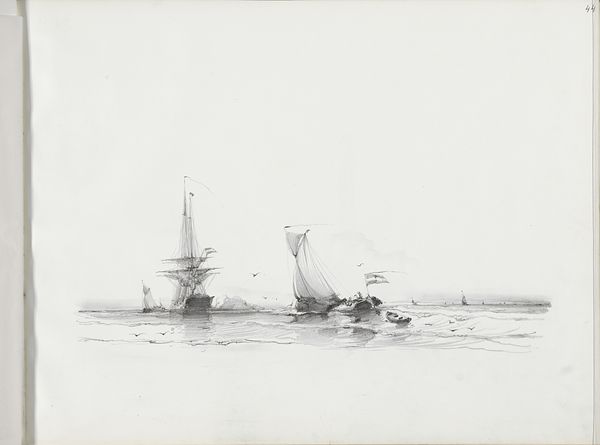
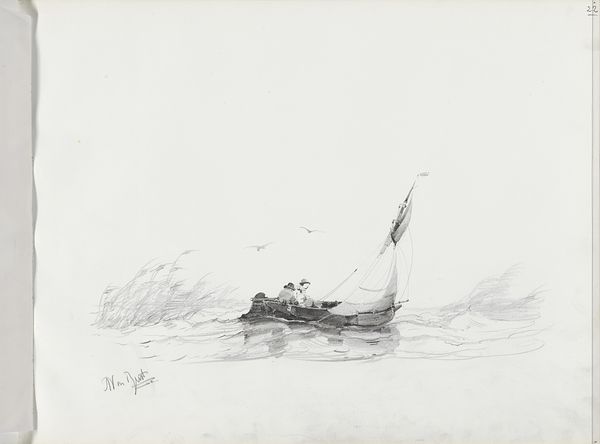
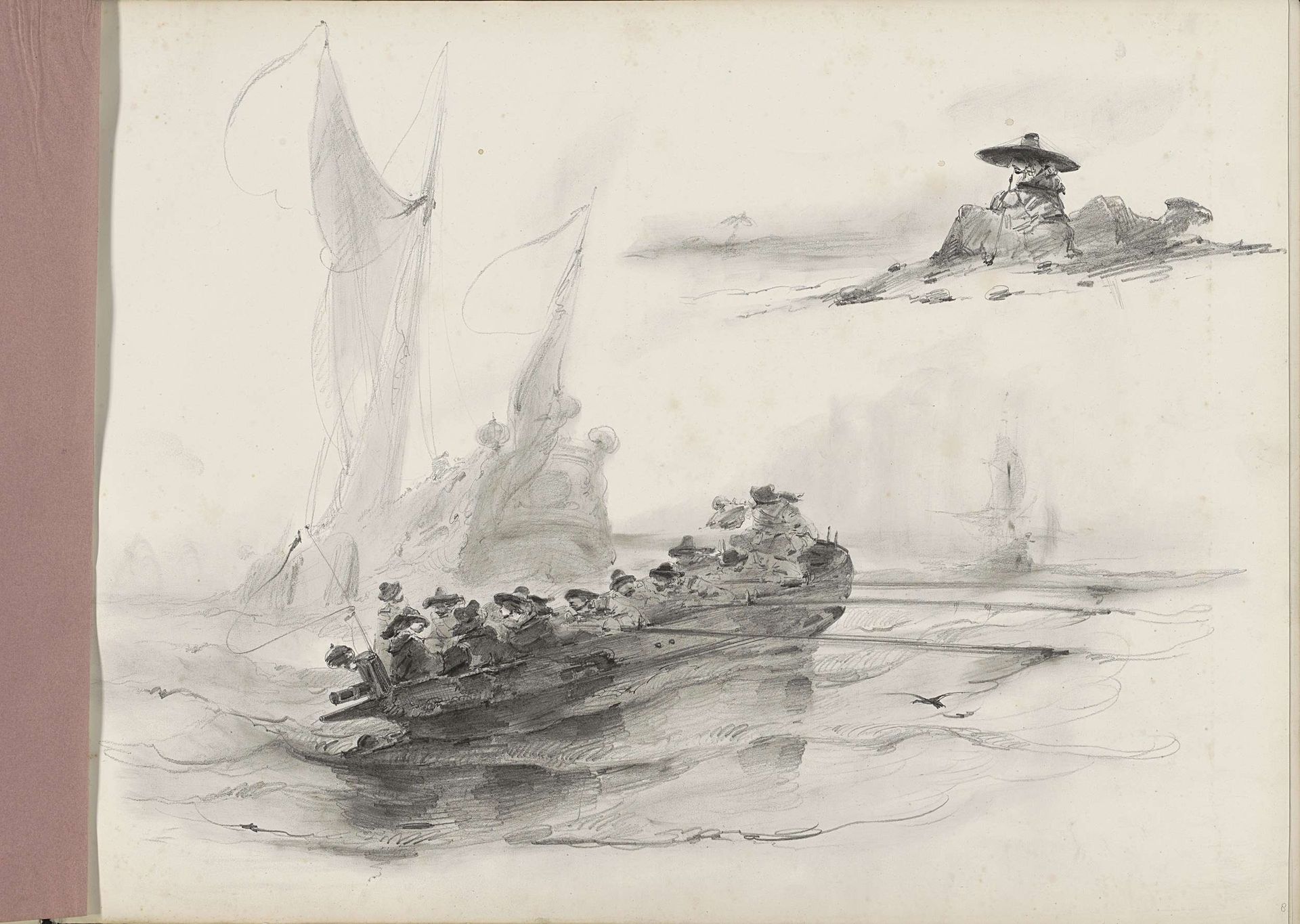
Albertus van Beest created this graphite drawing of a rowboat with figures near a two-master, sometime in the mid-19th century. Van Beest, working during a time of extensive global trade and exploration, invites us to consider themes of labor, travel, and cultural exchange. Look closely at the figures populating the rowboat; their postures suggest a collective effort, a shared purpose in navigating the waters. Who are these people, and what journeys are they undertaking? Perhaps they are merchants, sailors, or even migrants seeking new opportunities across the sea. The drawing subtly touches on issues of class and social hierarchy. We might consider how the figures in the rowboat relate to the larger ship and the individual atop the distant cliff, each representing different positions within the social landscape. Van Beest captures a moment in time that holds both individual stories and broader historical forces.
Roeiboot met figuren bij een tweemaster 1830 - 1860

Albertus van Beest
1820 - 1860Location
RijksmuseumArtwork details
- Medium
- drawing, paper, pencil
- Location
- Rijksmuseum
- Copyright
- Rijks Museum: Open Domain
Tags
drawing
pencil sketch
landscape
figuration
paper
romanticism
pencil
Comments
No comments
About this artwork
Albertus van Beest created this graphite drawing of a rowboat with figures near a two-master, sometime in the mid-19th century. Van Beest, working during a time of extensive global trade and exploration, invites us to consider themes of labor, travel, and cultural exchange. Look closely at the figures populating the rowboat; their postures suggest a collective effort, a shared purpose in navigating the waters. Who are these people, and what journeys are they undertaking? Perhaps they are merchants, sailors, or even migrants seeking new opportunities across the sea. The drawing subtly touches on issues of class and social hierarchy. We might consider how the figures in the rowboat relate to the larger ship and the individual atop the distant cliff, each representing different positions within the social landscape. Van Beest captures a moment in time that holds both individual stories and broader historical forces.
Comments
No comments