About this artwork
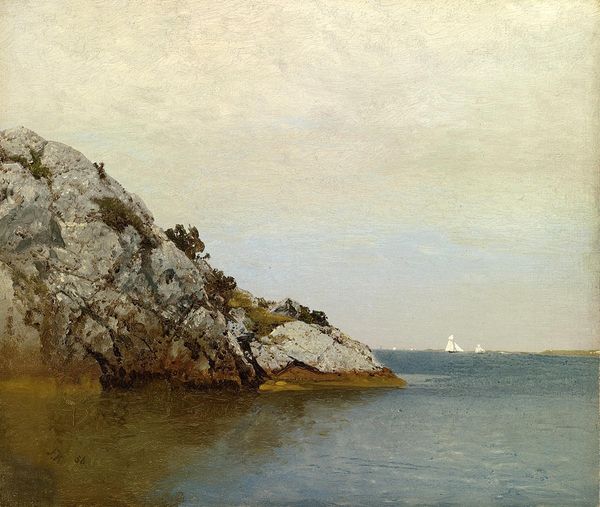
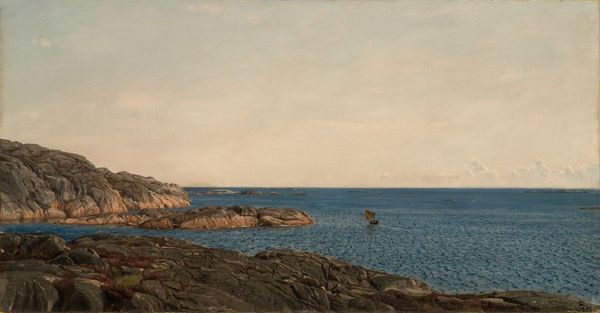
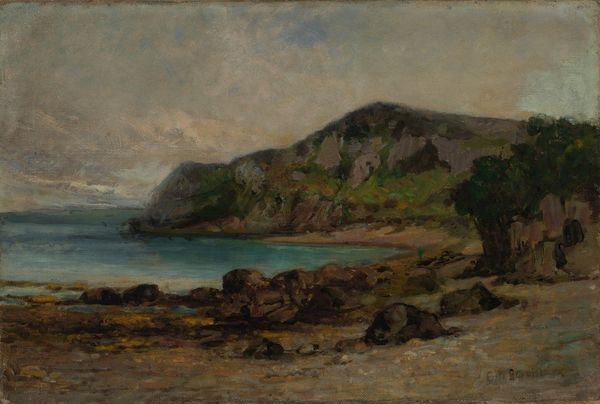
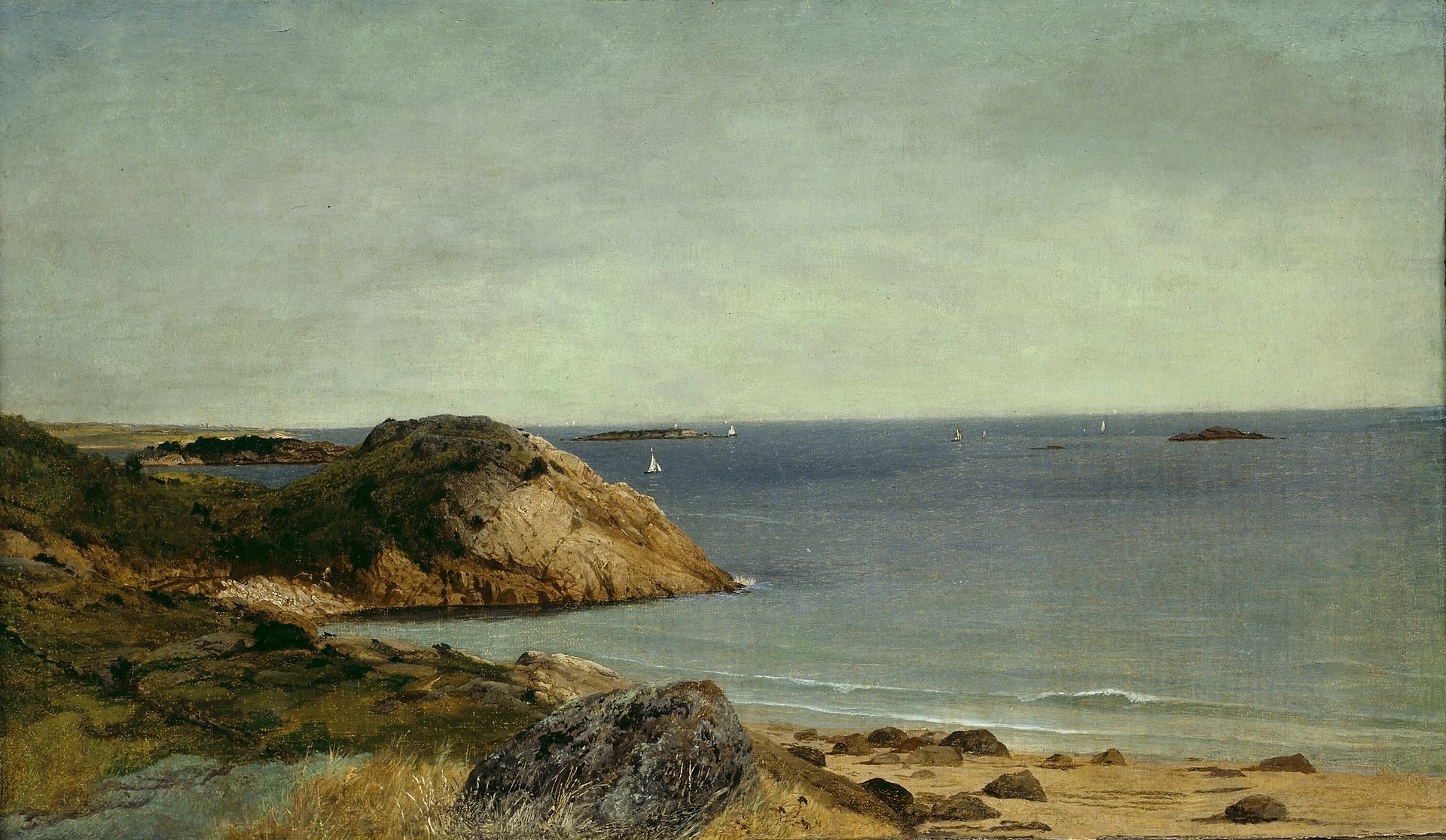
John Frederick Kensett made this "Rocky Coast" painting, with oil on canvas, sometime in the mid-19th century. It presents a serene coastal scene, but its tranquil surface belies deeper connections to the social and cultural currents of its time. This work belongs to the Hudson River School, a movement that glorified the American landscape as a symbol of national identity and manifest destiny. Kensett, like his peers, presents nature as sublime and untouched, subtly reinforcing the narrative of American exceptionalism. The art market and institutions of the time, like the National Academy of Design, played a key role in promoting these ideals. It's worth noting, however, that this vision often came at the expense of indigenous populations and the environment. To truly understand this painting, we can delve into the historical context using archival materials, exhibition records, and period writings. By doing so, we can unpack the complex relationship between art, national identity, and the social conditions that shaped its creation.
Rocky Coast
c. 1860
Artwork details
- Medium
- plein-air, oil-paint
- Dimensions
- 35.6 × 61 cm (14 × 24 in.)
- Location
- The Art Institute of Chicago
- Copyright
- Public Domain
Tags
impressionism
plein-air
oil-paint
landscape
impressionist landscape
oil painting
hudson-river-school
united-states
realism
Comments
Be the first to share your thoughts about this work.
About this artwork
John Frederick Kensett made this "Rocky Coast" painting, with oil on canvas, sometime in the mid-19th century. It presents a serene coastal scene, but its tranquil surface belies deeper connections to the social and cultural currents of its time. This work belongs to the Hudson River School, a movement that glorified the American landscape as a symbol of national identity and manifest destiny. Kensett, like his peers, presents nature as sublime and untouched, subtly reinforcing the narrative of American exceptionalism. The art market and institutions of the time, like the National Academy of Design, played a key role in promoting these ideals. It's worth noting, however, that this vision often came at the expense of indigenous populations and the environment. To truly understand this painting, we can delve into the historical context using archival materials, exhibition records, and period writings. By doing so, we can unpack the complex relationship between art, national identity, and the social conditions that shaped its creation.
Comments
Be the first to share your thoughts about this work.