About this artwork
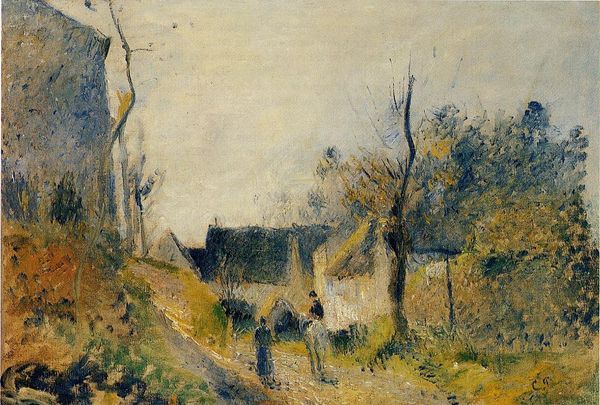
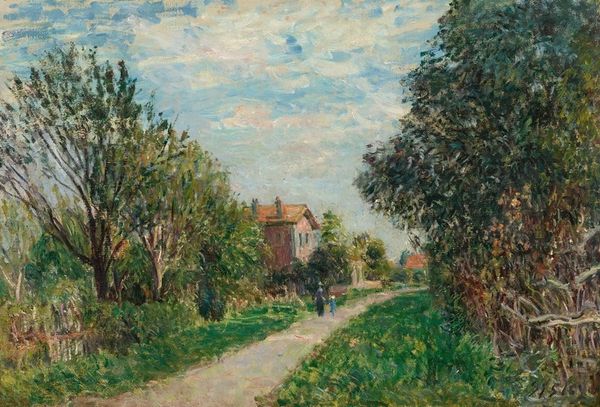
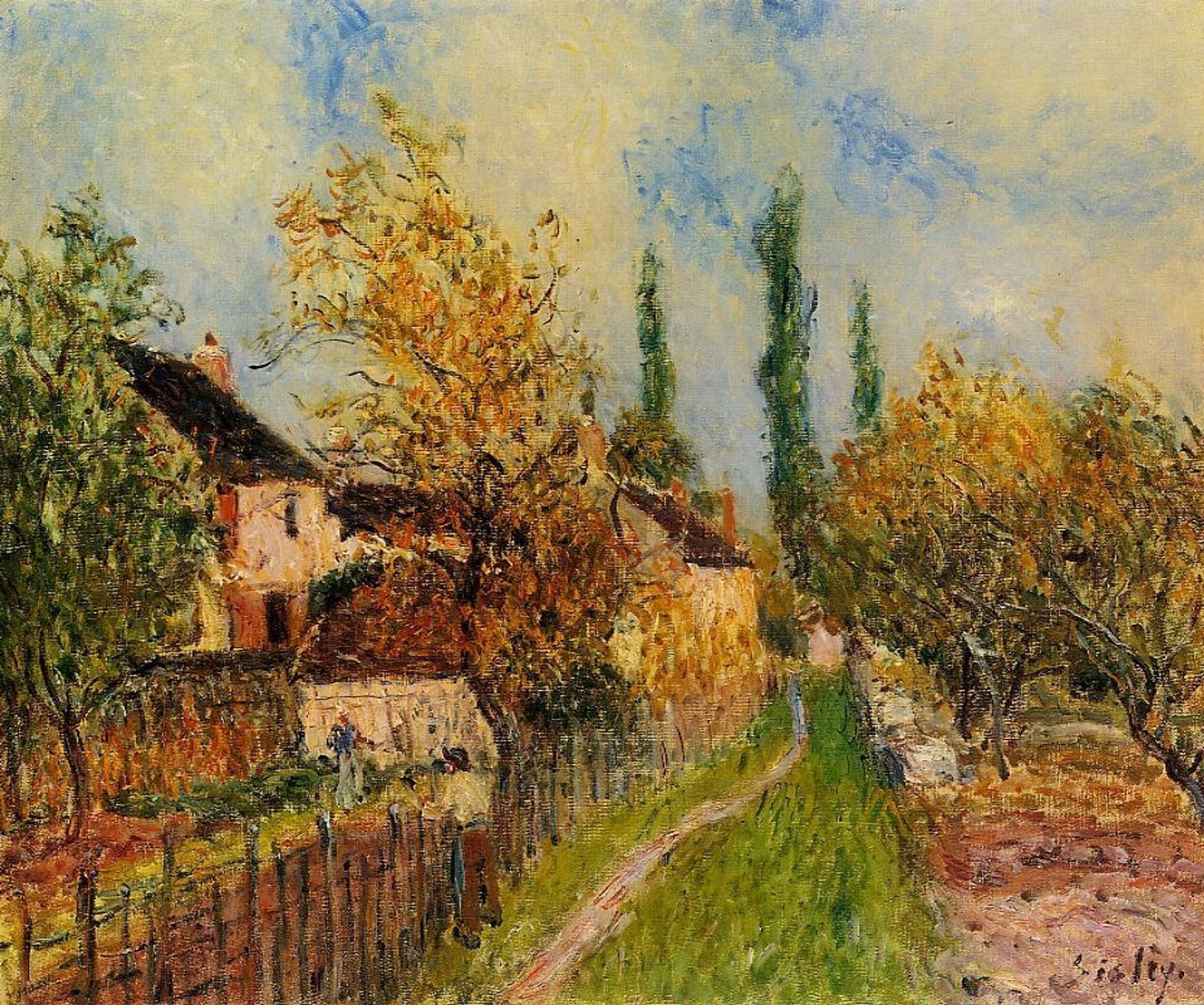
Alfred Sisley painted ‘Path at Sablons’ using oil on canvas, capturing a humble, intimate landscape. Sisley, born to affluent English parents in Paris, stands somewhat apart from his more radical Impressionist contemporaries. While artists like Monet and Degas engaged with the changing face of modern Paris, Sisley often focused on the suburbs and countryside around the city. Sisley here represents a path between houses that suggests the quietude of the rural areas, a life undisturbed by the industrial and social changes. The figures in the image appear small, anonymous, caught between domesticity and nature. We are invited to consider our place within the landscape. Sisley's technique favors subtle tonal variations and soft brushwork, evoking a sense of tranquility. What meanings might we find in Sisley's landscapes today, as urbanization and climate change challenge our relationship with nature? As Sisley once noted, "Every painting shows a corner of nature and conveys an impression."
Path at Sablons
1883

Alfred Sisley
1840 - 1899
National Gallery of Australia, Canberra
National Gallery of Australia (NGA), Canberra, AustraliaArtwork details
- Medium
- painting, plein-air, oil-paint
- Dimensions
- 46 x 55 cm
- Location
- National Gallery of Australia (NGA), Canberra, Australia
- Copyright
- Public domain
Tags
Comments
Share your thoughts
About this artwork
Alfred Sisley painted ‘Path at Sablons’ using oil on canvas, capturing a humble, intimate landscape. Sisley, born to affluent English parents in Paris, stands somewhat apart from his more radical Impressionist contemporaries. While artists like Monet and Degas engaged with the changing face of modern Paris, Sisley often focused on the suburbs and countryside around the city. Sisley here represents a path between houses that suggests the quietude of the rural areas, a life undisturbed by the industrial and social changes. The figures in the image appear small, anonymous, caught between domesticity and nature. We are invited to consider our place within the landscape. Sisley's technique favors subtle tonal variations and soft brushwork, evoking a sense of tranquility. What meanings might we find in Sisley's landscapes today, as urbanization and climate change challenge our relationship with nature? As Sisley once noted, "Every painting shows a corner of nature and conveys an impression."
Comments
Share your thoughts