About this artwork
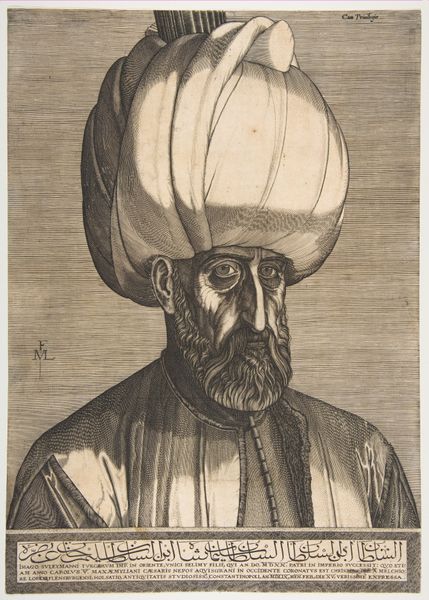
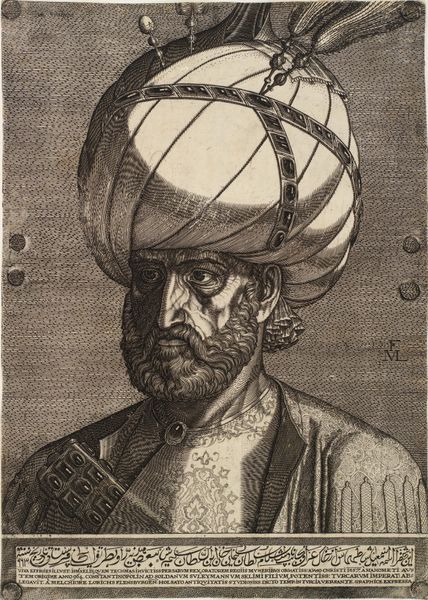
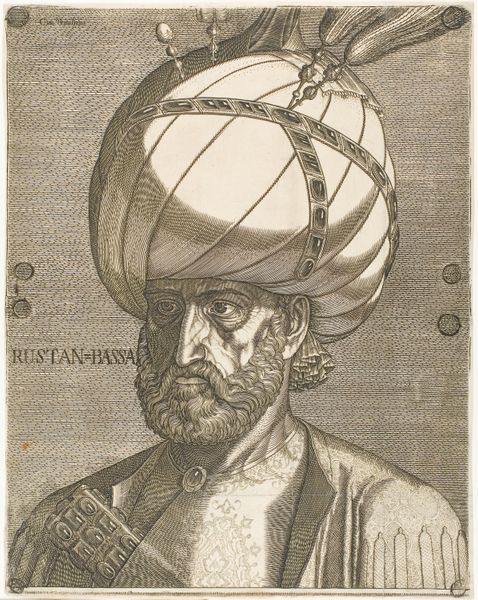
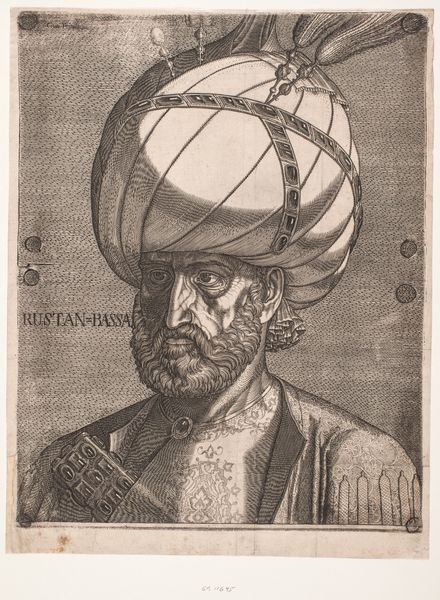
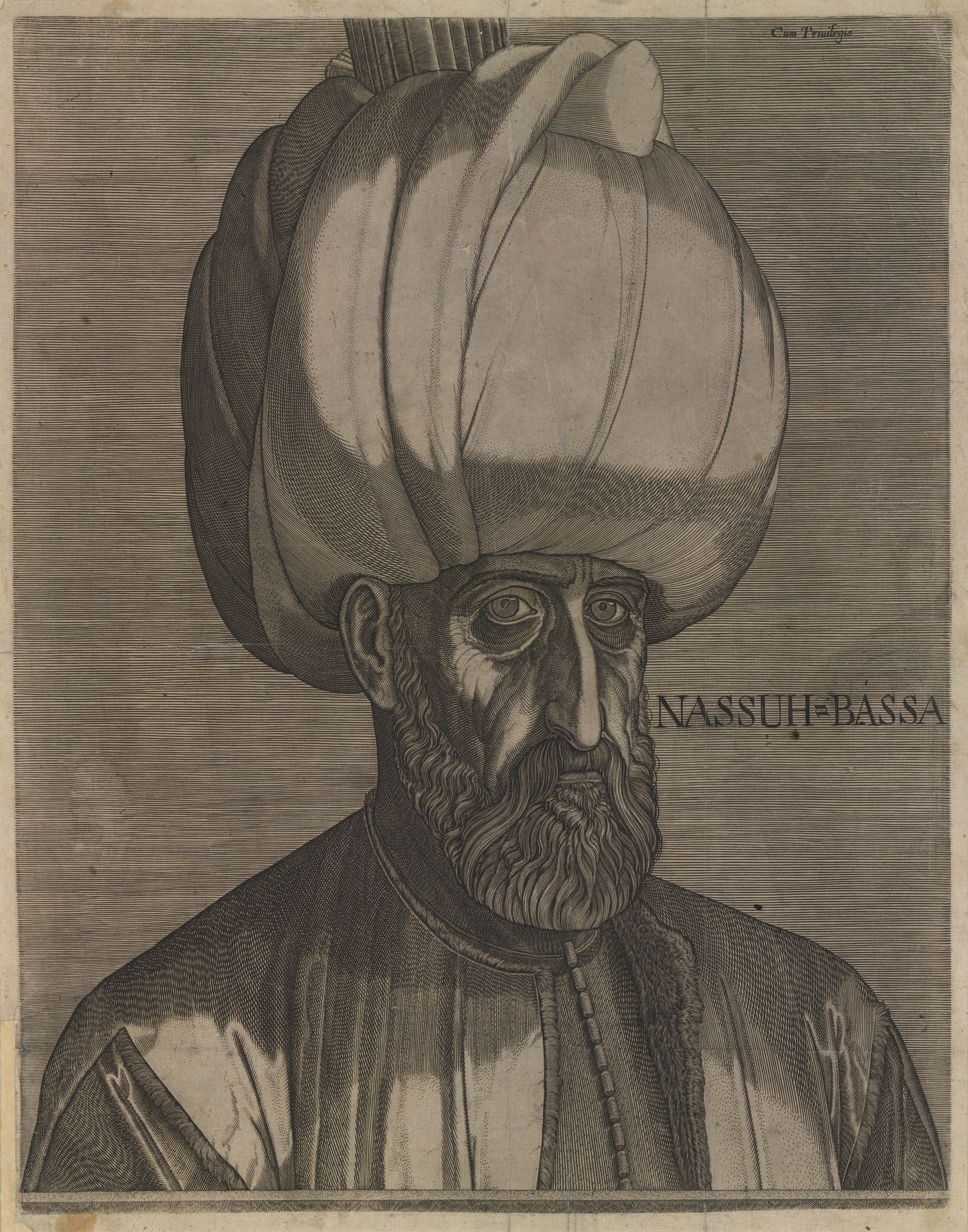
Melchior Lorck created this portrait of Sultan Suleiman the Magnificent using charcoal and pen in the 16th century. Lorck, a Danish artist, traveled to Constantinople during a time of significant cultural exchange and political tension between Europe and the Ottoman Empire. This portrait reflects the complex dynamics of cross-cultural representation. Suleiman, known in the West as "The Magnificent," was a powerful figure, and his depiction here engages with both fascination and a certain level of othering common in European portrayals of Ottoman leaders. Notice the detailed rendering of his turban and beard, symbols of his authority and religious identity. The inscription "Nassuh Bassa" adds another layer, possibly referencing a court official or scribe associated with Suleiman. Lorck’s work gives us insight into how identities are negotiated and framed across different cultures. It invites us to consider the gaze through which historical figures are represented and the power dynamics inherent in those representations.
Portrait of Sultan Suleiman the Magnificent
1562


Artwork details
- Medium
- print, engraving
- Dimensions
- 397 mm (height) x 309 mm (width) (billedmaal)
- Location
- SMK - Statens Museum for Kunst
Tags
portrait
mannerism
portrait drawing
islamic-art
engraving
Comments
Be the first to share your thoughts about this work.
About this artwork
Melchior Lorck created this portrait of Sultan Suleiman the Magnificent using charcoal and pen in the 16th century. Lorck, a Danish artist, traveled to Constantinople during a time of significant cultural exchange and political tension between Europe and the Ottoman Empire. This portrait reflects the complex dynamics of cross-cultural representation. Suleiman, known in the West as "The Magnificent," was a powerful figure, and his depiction here engages with both fascination and a certain level of othering common in European portrayals of Ottoman leaders. Notice the detailed rendering of his turban and beard, symbols of his authority and religious identity. The inscription "Nassuh Bassa" adds another layer, possibly referencing a court official or scribe associated with Suleiman. Lorck’s work gives us insight into how identities are negotiated and framed across different cultures. It invites us to consider the gaze through which historical figures are represented and the power dynamics inherent in those representations.
Comments
Be the first to share your thoughts about this work.