About this artwork
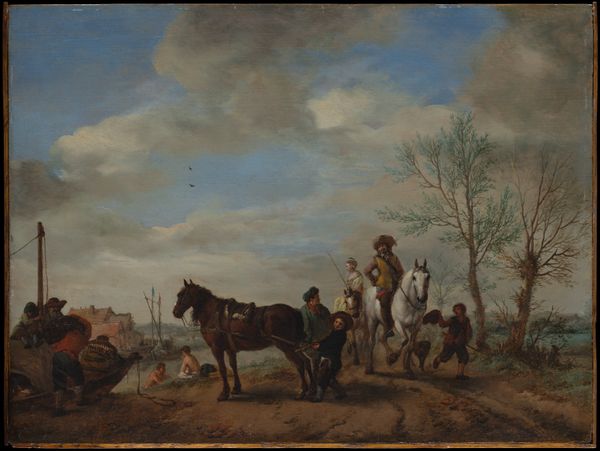
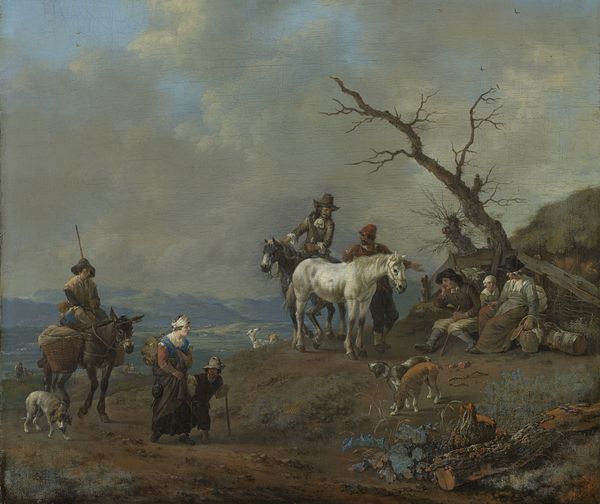
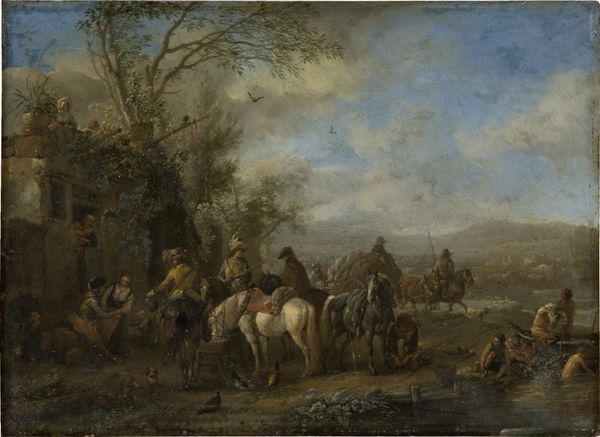
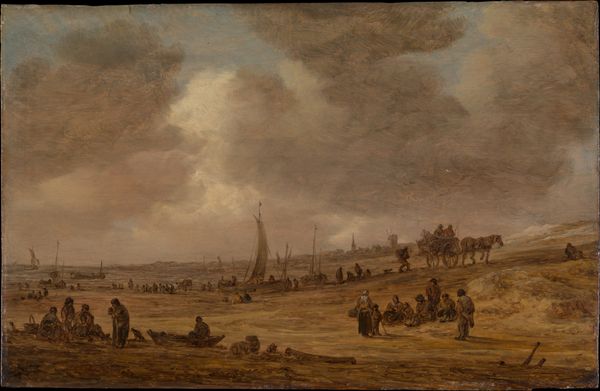
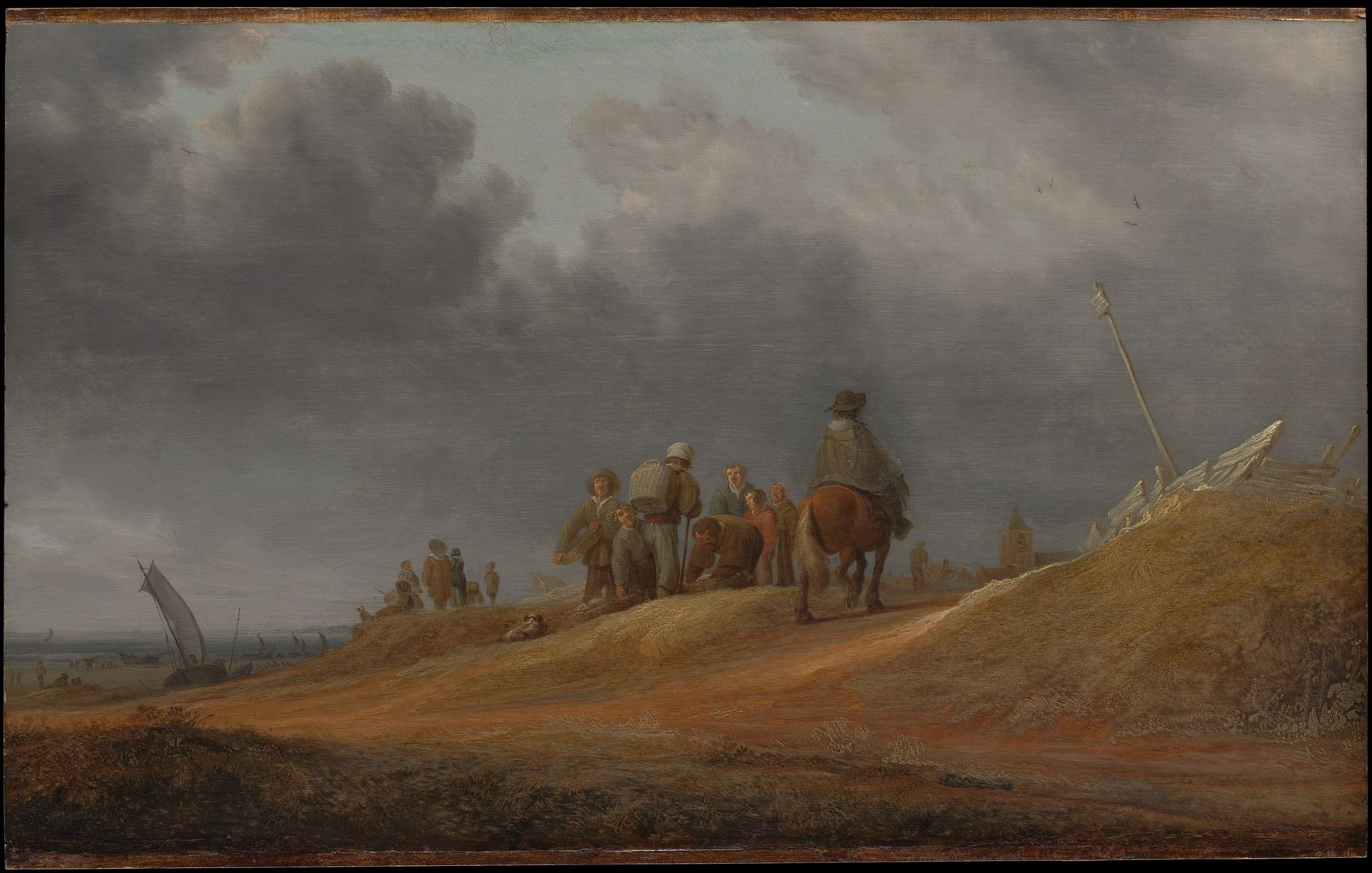
Salomon van Ruysdael painted this scene of a "Market by the Seashore" with oil on canvas. The work captures a slice of 17th-century Dutch life, but it's more than just a pretty picture. Look at the figures carefully. They are gathered on a dune under a heavy sky. A rider on horseback oversees the scene. In the distance, we can see ships, suggesting the importance of maritime trade to the Dutch economy. The details tell us a lot about the social and economic structures of the time. What kind of goods were traded here? What were the conditions of the market? To understand this painting fully, we need to dig into the history of the Dutch Golden Age. What was the role of the merchant class? How did Dutch art reflect the values and concerns of this society? We can find answers to these questions in historical documents, economic data, and of course, in other artworks from the period.
Market by the Seashore
1637

Salomon van Ruysdael
1600 - 1670
The Metropolitan Museum of Art
Metropolitan Museum of Art, New York, NYArtwork details
- Medium
- painting, oil-paint
- Dimensions
- 16 x 23 3/8 in. (40.6 x 59.4 cm)
- Location
- Metropolitan Museum of Art, New York, NY
- Copyright
- Public Domain
Tags
Comments
Share your thoughts
About this artwork
Salomon van Ruysdael painted this scene of a "Market by the Seashore" with oil on canvas. The work captures a slice of 17th-century Dutch life, but it's more than just a pretty picture. Look at the figures carefully. They are gathered on a dune under a heavy sky. A rider on horseback oversees the scene. In the distance, we can see ships, suggesting the importance of maritime trade to the Dutch economy. The details tell us a lot about the social and economic structures of the time. What kind of goods were traded here? What were the conditions of the market? To understand this painting fully, we need to dig into the history of the Dutch Golden Age. What was the role of the merchant class? How did Dutch art reflect the values and concerns of this society? We can find answers to these questions in historical documents, economic data, and of course, in other artworks from the period.
Comments
Share your thoughts