About this artwork
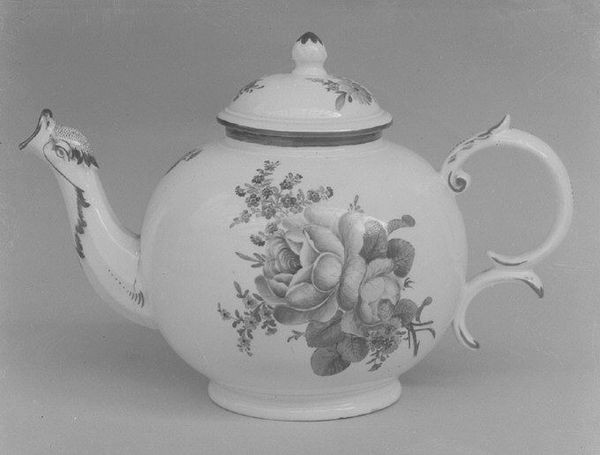
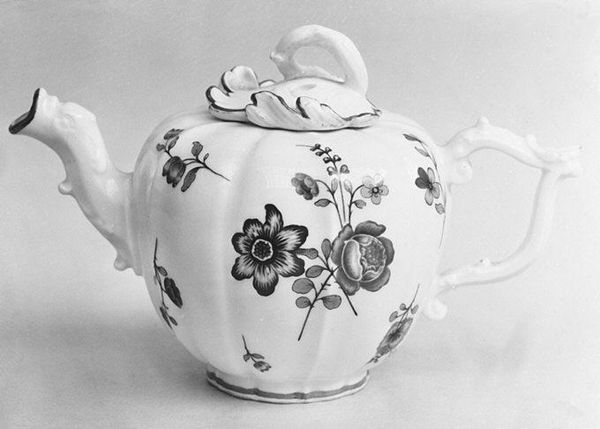
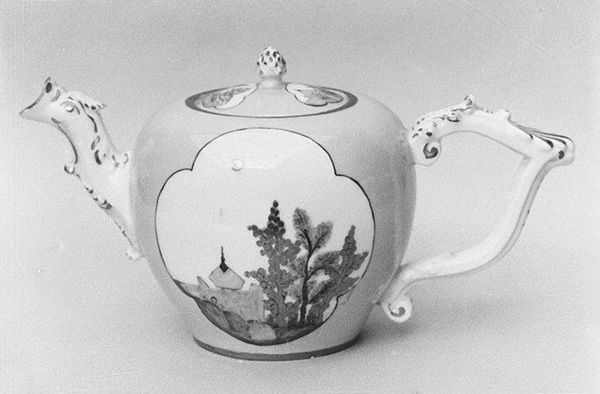
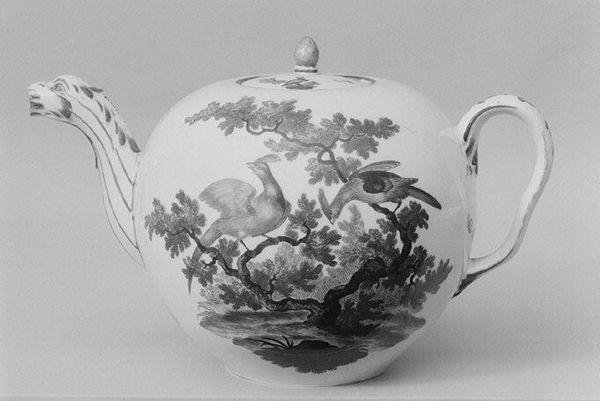
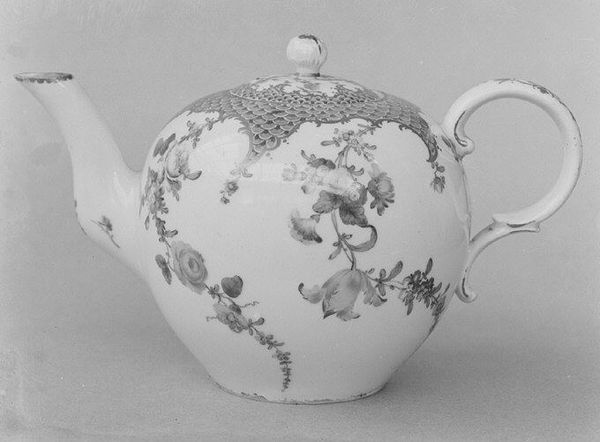
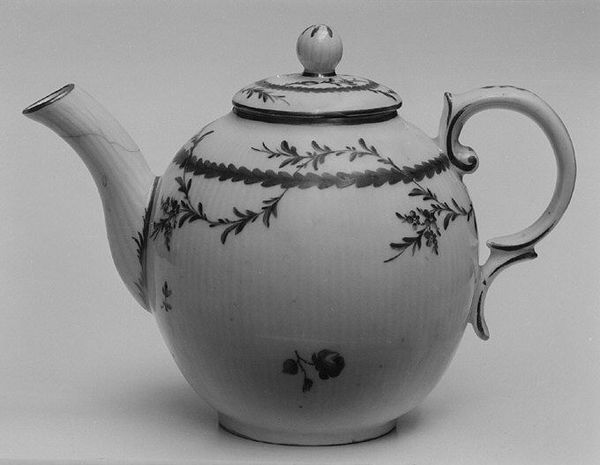
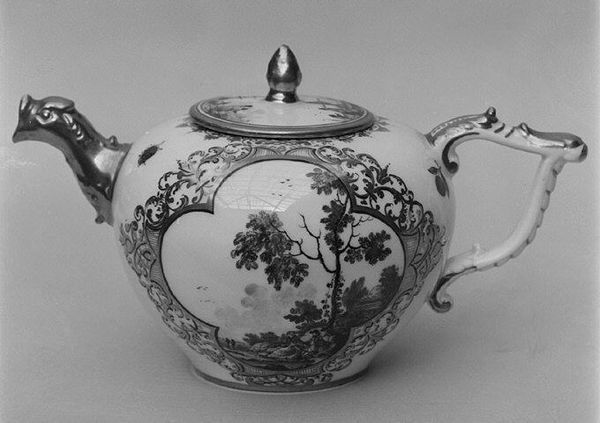
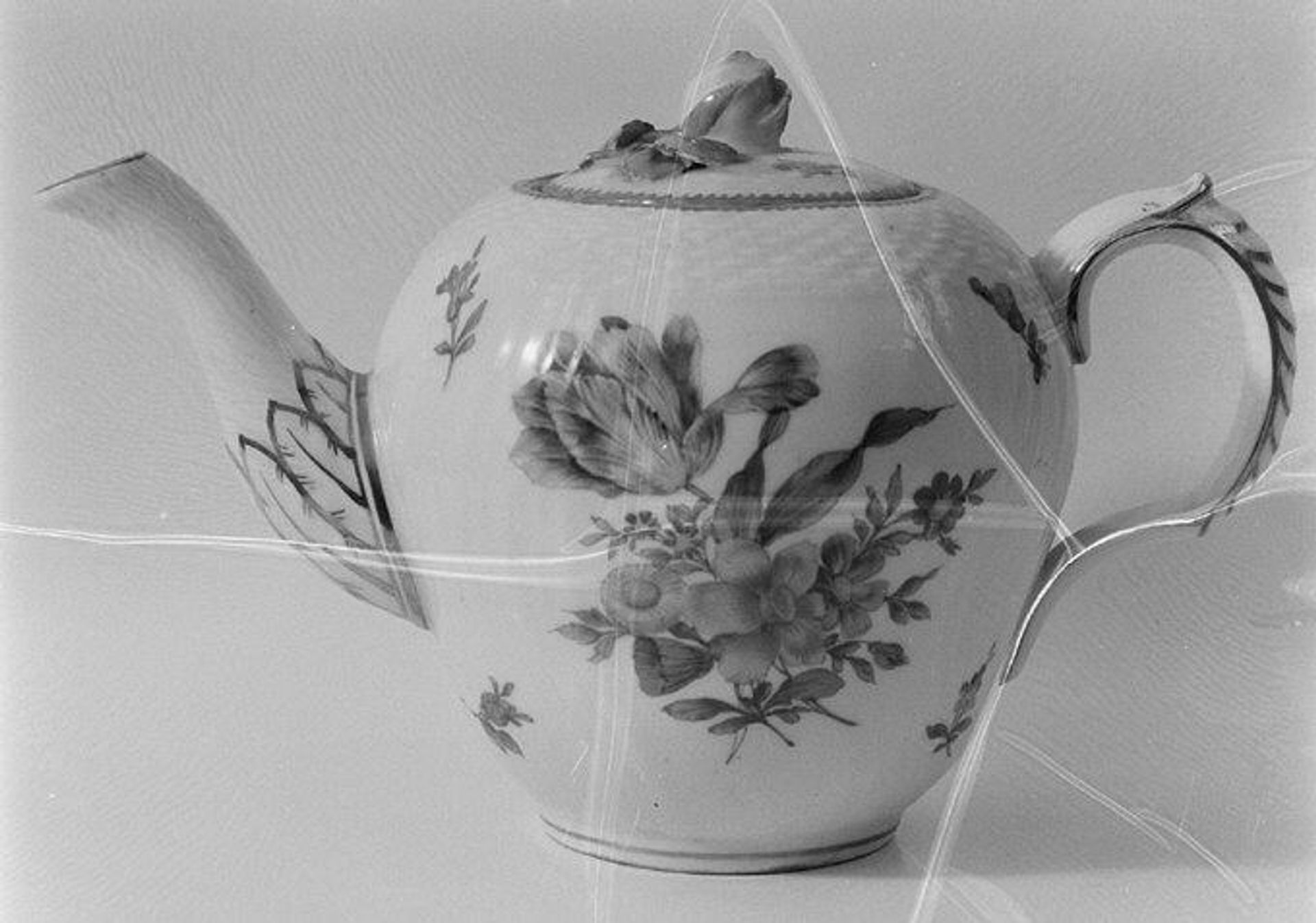
The "Teapot" was crafted by the Royal Porcelain Manufactory around 1775, a period when porcelain was synonymous with luxury and artistry. Notice how the teapot's form follows a classical spherical shape, subtly flattened to provide stability. The spout, handle, and lid are carefully integrated, creating a harmonious balance between function and aesthetics. The floral design, rendered in delicate brushstrokes, embraces the teapot's body, enhancing its contours while also reflecting the Rococo era’s fondness for nature. This artwork transcends its utilitarian purpose, functioning as a signifier of social status and refined taste. The surface decoration, meticulously applied, transforms the teapot into a canvas that engages with contemporary ideas about beauty and class. Consider how the curves of the handle and spout play against the solid roundness of the body, a dynamic relationship that embodies the tension between form and function. This teapot invites us to consider how everyday objects can also serve as potent cultural and aesthetic expressions.
Teapot 19th century

Royal Porcelain Manufactory
1775
The Metropolitan Museum of Art
Metropolitan Museum of Art, New York, NYArtwork details
- Medium
- ceramic, porcelain, sculpture
- Dimensions
- Height: 5 1/4 in. (13.3 cm)
- Location
- Metropolitan Museum of Art, New York, NY
- Copyright
- Public Domain
Tags
ceramic
jewelry design
porcelain
sculpture
black and white
decorative-art
Comments
No comments
About this artwork
The "Teapot" was crafted by the Royal Porcelain Manufactory around 1775, a period when porcelain was synonymous with luxury and artistry. Notice how the teapot's form follows a classical spherical shape, subtly flattened to provide stability. The spout, handle, and lid are carefully integrated, creating a harmonious balance between function and aesthetics. The floral design, rendered in delicate brushstrokes, embraces the teapot's body, enhancing its contours while also reflecting the Rococo era’s fondness for nature. This artwork transcends its utilitarian purpose, functioning as a signifier of social status and refined taste. The surface decoration, meticulously applied, transforms the teapot into a canvas that engages with contemporary ideas about beauty and class. Consider how the curves of the handle and spout play against the solid roundness of the body, a dynamic relationship that embodies the tension between form and function. This teapot invites us to consider how everyday objects can also serve as potent cultural and aesthetic expressions.
Comments
No comments