About this artwork
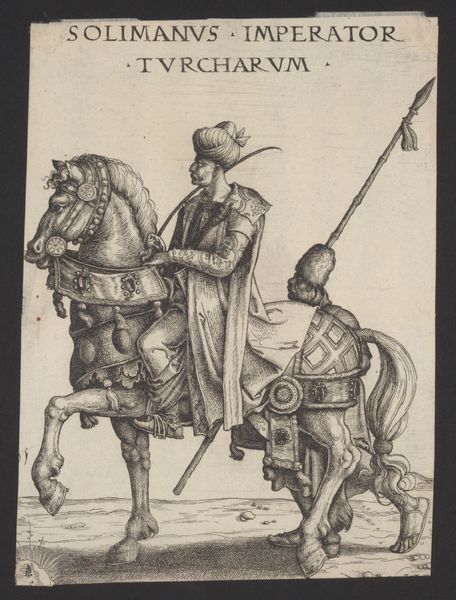
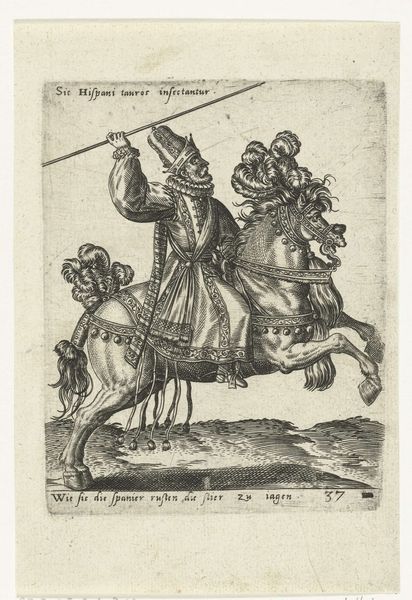
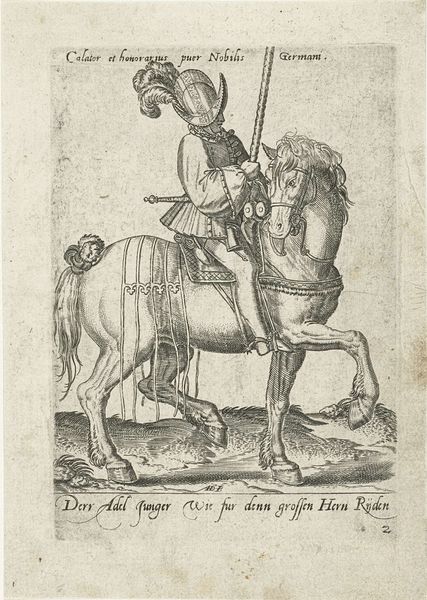
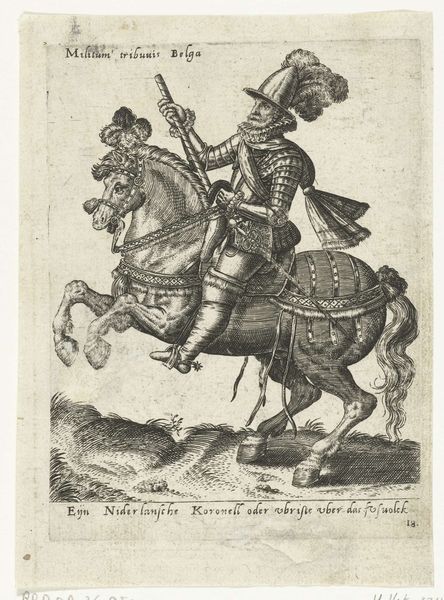
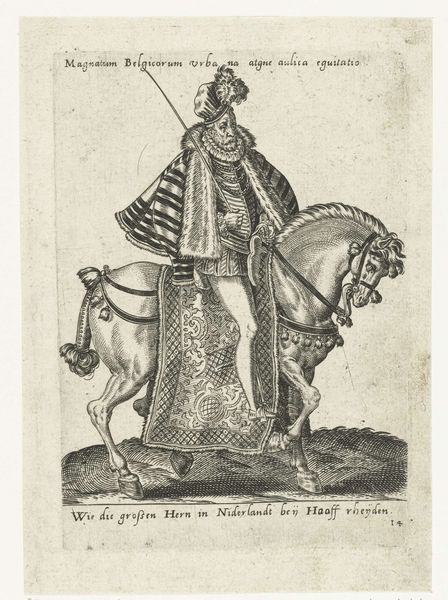
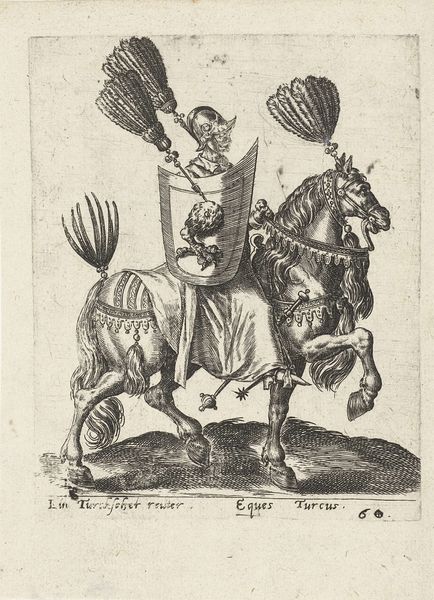
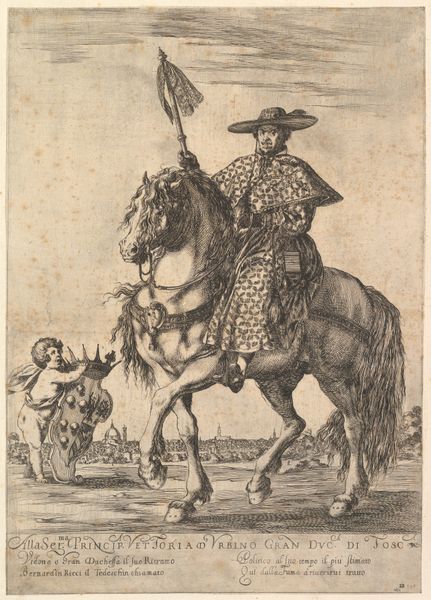
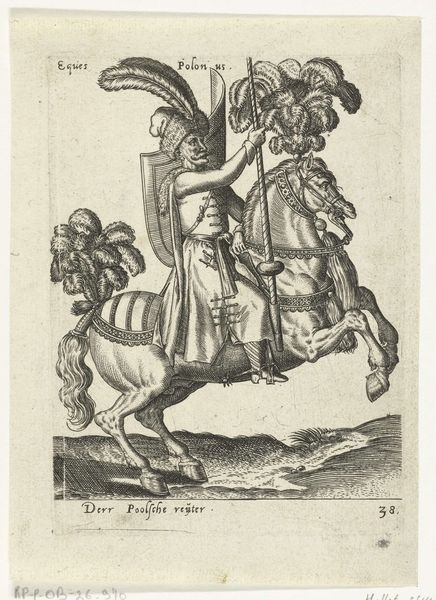
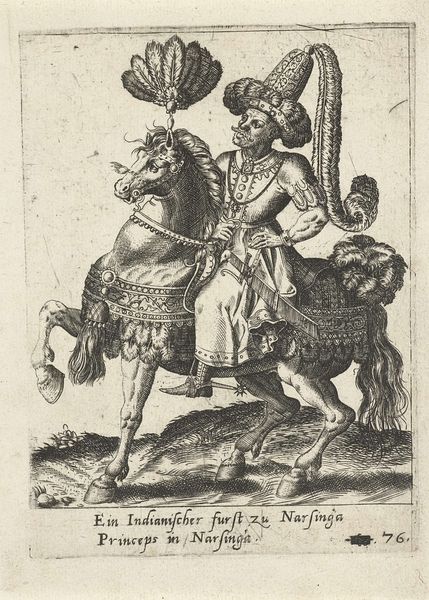
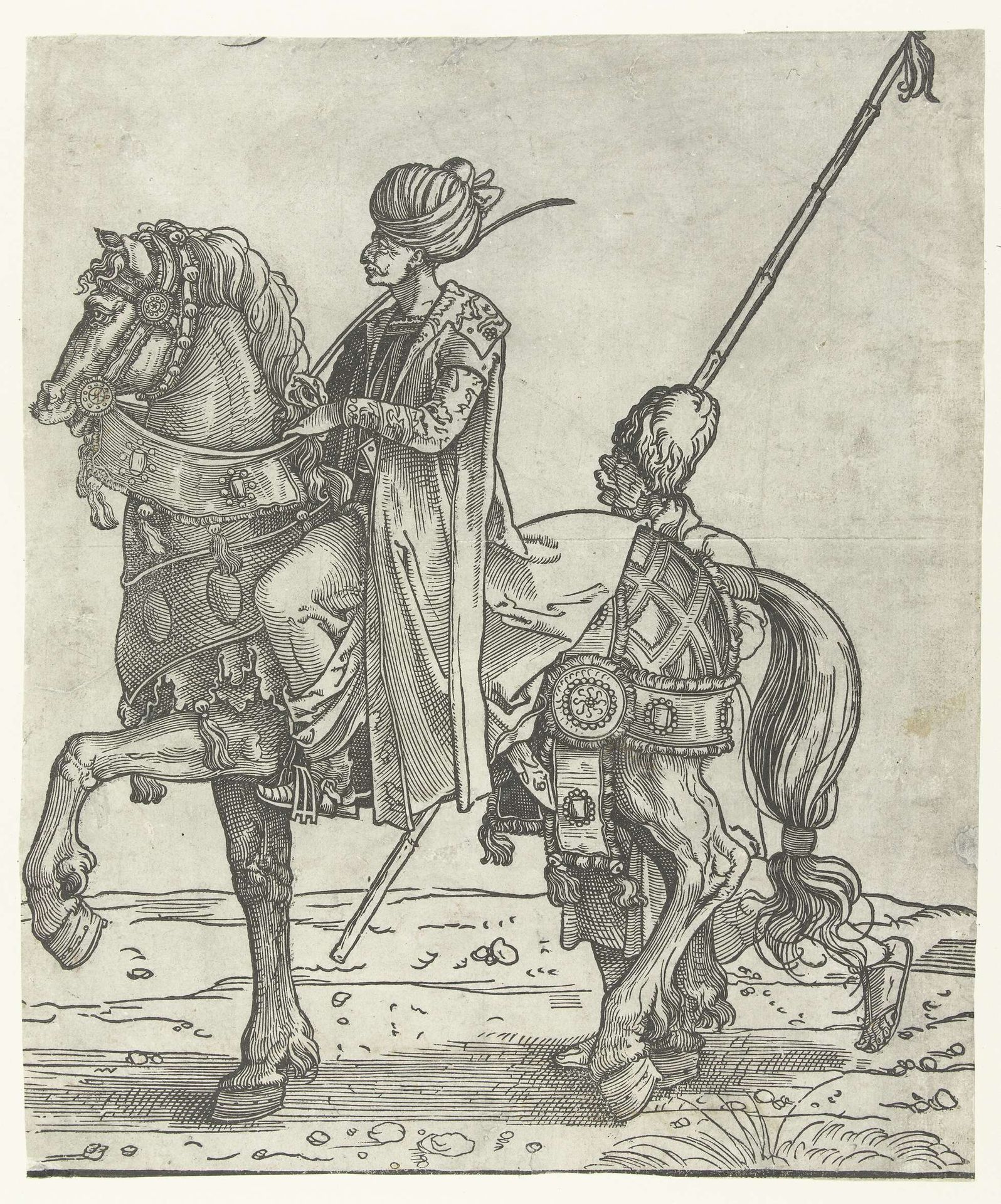
Jan Swart van Groningen created this representation of Soleiman de Grote using woodcut. The print presents us with a study in contrasts and textures rendered through meticulous lines. The figure of Soleiman, mounted on horseback, dominates the composition, immediately drawing the eye. Swart's use of line is striking; dense hatching creates deep shadows, giving weight and volume to the Sultan and his steed. Note how the intricate patterns on the horse's trappings and Soleiman's garments are constructed from fine, closely spaced lines, which contrast sharply with the smoother areas, such as the faces and open sky. These textural variations not only describe the physical properties of the objects but also contribute to the overall dynamism of the image. The print invites us to consider how representation, particularly through the graphic arts, can construct and convey notions of power and otherness. It is an exercise in visual rhetoric, where every line and shadow functions as a signifier within a complex cultural dialogue.

Artwork details
- Medium
- print, engraving
- Dimensions
- height 300 mm, width 248 mm
- Location
- Rijksmuseum
- Copyright
- Rijks Museum: Open Domain
Tags
portrait
figuration
11_renaissance
line
islamic-art
history-painting
engraving
Comments
Be the first to share your thoughts about this work.
About this artwork
Jan Swart van Groningen created this representation of Soleiman de Grote using woodcut. The print presents us with a study in contrasts and textures rendered through meticulous lines. The figure of Soleiman, mounted on horseback, dominates the composition, immediately drawing the eye. Swart's use of line is striking; dense hatching creates deep shadows, giving weight and volume to the Sultan and his steed. Note how the intricate patterns on the horse's trappings and Soleiman's garments are constructed from fine, closely spaced lines, which contrast sharply with the smoother areas, such as the faces and open sky. These textural variations not only describe the physical properties of the objects but also contribute to the overall dynamism of the image. The print invites us to consider how representation, particularly through the graphic arts, can construct and convey notions of power and otherness. It is an exercise in visual rhetoric, where every line and shadow functions as a signifier within a complex cultural dialogue.
Comments
Be the first to share your thoughts about this work.