c. 1654
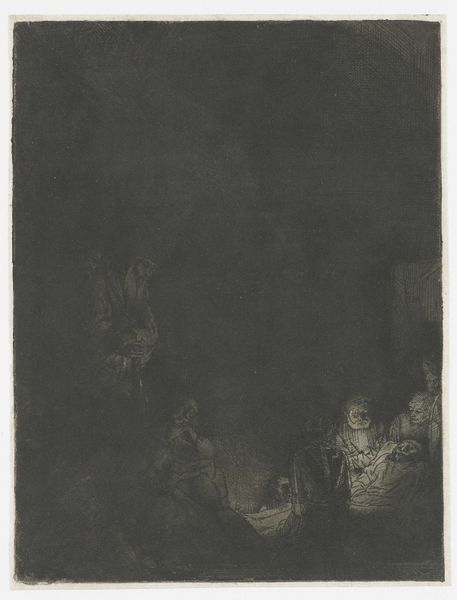
The Entombment

Rembrandt van Rijn
1606 - 1669Location
RijksmuseumListen to curator's interpretation
Curatorial notes
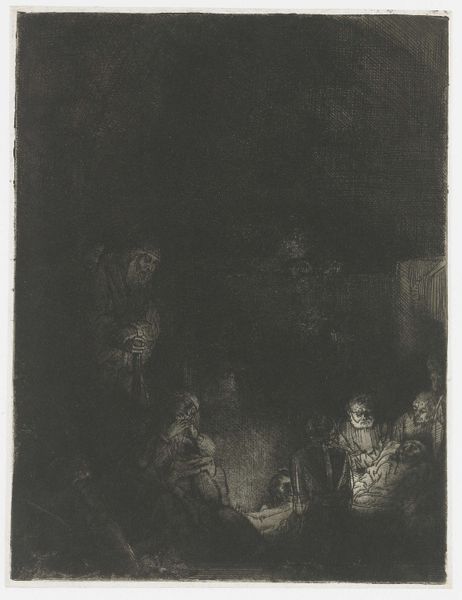
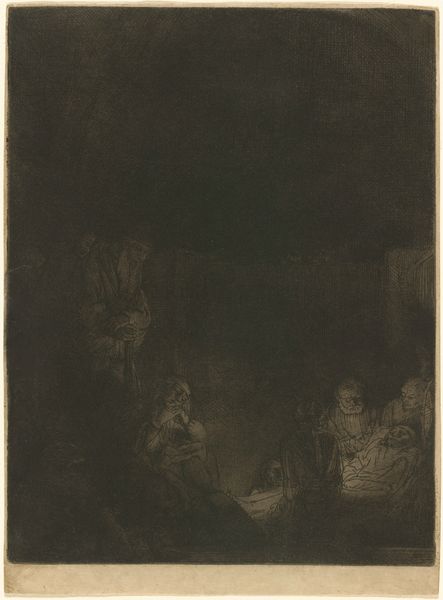
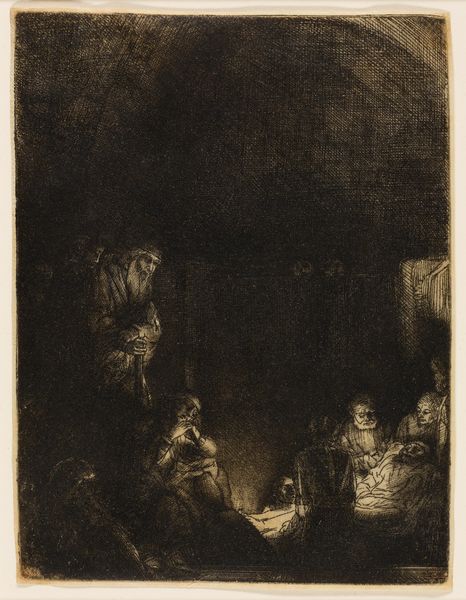
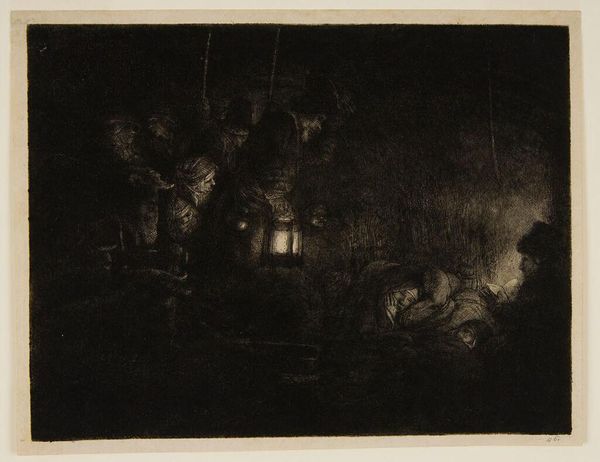
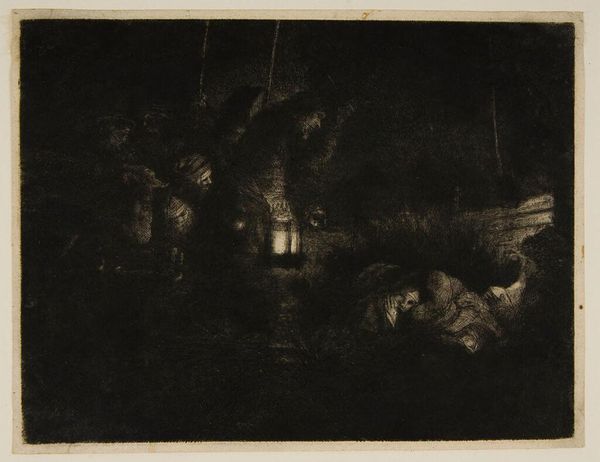
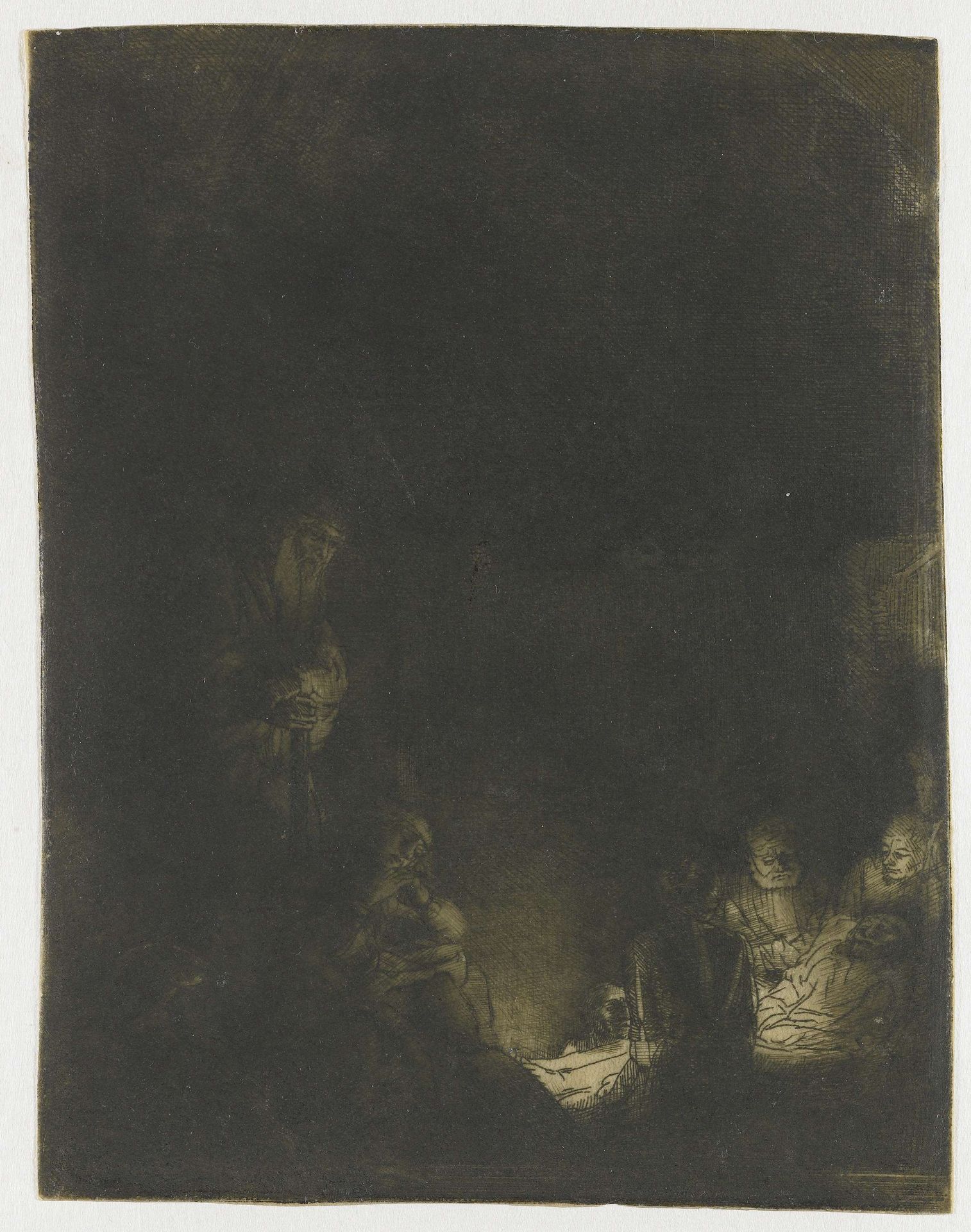
This is Rembrandt van Rijn’s etching, 'The Entombment,' now at the Rijksmuseum. Its composition, dominated by darkness, invites us to contemplate themes of loss and the unknown. Rembrandt masterfully uses light and shadow to guide our eyes. A soft glow illuminates the body of Christ, creating a focal point amidst the gloom, with figures huddled in grief around the body. The faces, though obscured, convey profound sorrow, with each etched line adding depth to their expressions. Rembrandt plays with the semiotics of light, challenging fixed meanings of religious art, he invites us to question the divine and human relationship. Light becomes a signifier of hope, a way to destabilize the established iconographic language. Notice how the dense, dark areas contrast with the illuminated figures, highlighting not only a somber mood but also a complex interplay between what is revealed and what remains hidden. It serves not only an aesthetic function but also becomes a philosophical inquiry into mortality and faith.