1480
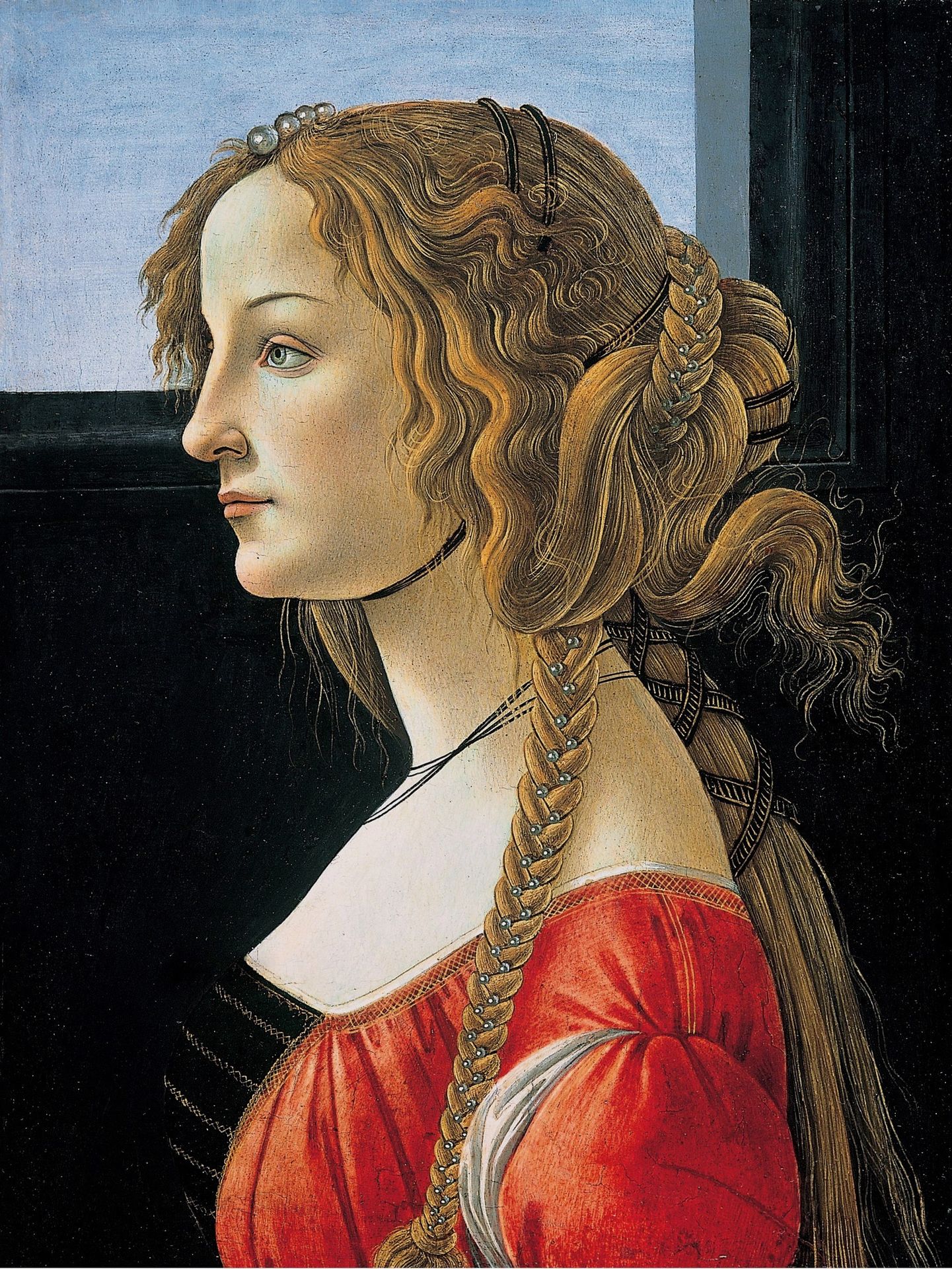
Portrait of Simonetta Vespucci (Portrait of a Young Woman)

Listen to curator's interpretation
Curatorial notes
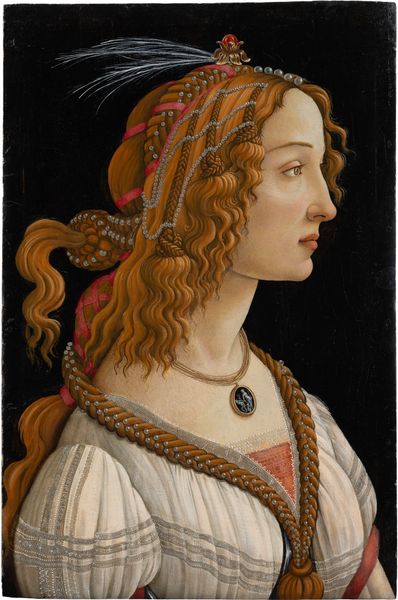
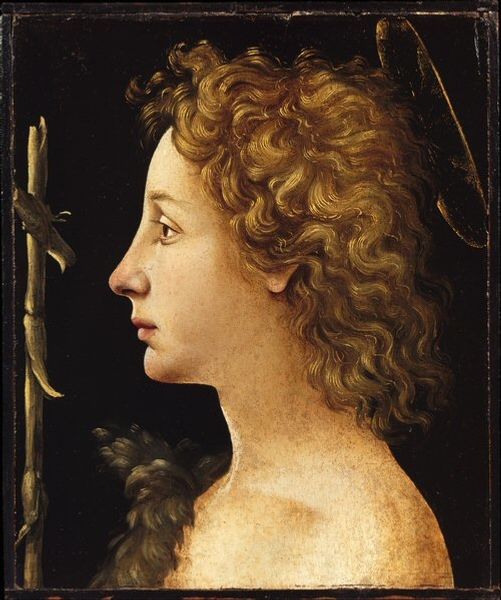
Curator: We’re now looking at Sandro Botticelli's “Portrait of Simonetta Vespucci," painted around 1480 using oil. What strikes you most about this work? Editor: Her gaze—it’s distant, almost melancholic. The severe profile, set against such a stark background, creates a real sense of isolation. Curator: Indeed. This portrait, also referred to as "Portrait of a Young Woman," is ripe for interpretation through a contemporary feminist lens. We might consider how women were often portrayed passively during the Renaissance, objects of beauty for the male gaze. Editor: The pearls woven into her hair also suggest layers of meaning. Pearls often symbolize purity, wealth, status, marriage, or perhaps a connection to the divine. Is Botticelli placing her simultaneously within an earthly and spiritual realm? Curator: Precisely! The iconography tells us much about the subject and her position in society. Considering the historical context, Simonetta Vespucci was a celebrated beauty of her time, a muse to many artists. But let’s also remember the portrait likely served as a signifier of status for the Vespucci family. Was she being actively objectified to elevate their lineage? Editor: Perhaps. The colors are muted, and create a powerful representation of idealized beauty during the early Renaissance, before high Renaissance color palettes came to being. It's also worth looking into that incredible plait! Is she setting or following a fashion, sending a coded message? The image invites many questions around identity formation in that historical context. Curator: And the fact that this profile view echoes ancient Roman coinage – there's a deliberate reference to antiquity and to ideals of beauty connected to power structures throughout time. Botticelli is situating her within a specific history and a specific, almost rigid ideal. Editor: Looking at this portrait again, I notice both an admiration and a confinement. Botticelli memorialized her, yes, but he also seemed to trap her, or at least control the memory of her image within his visual vocabulary. Curator: I agree. And maybe by critically examining portraits like this, we can uncover both their artistic value and the underlying power dynamics that they represent. Editor: It offers insight, I think, into the historical meanings attached to female beauty and their enduring symbolic power. It still has meaning now, doesn't it?