1933
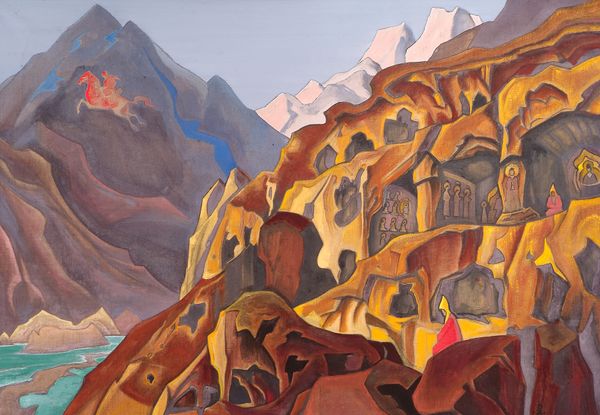
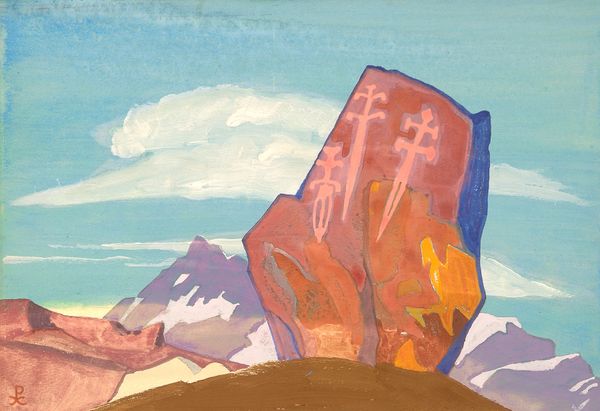
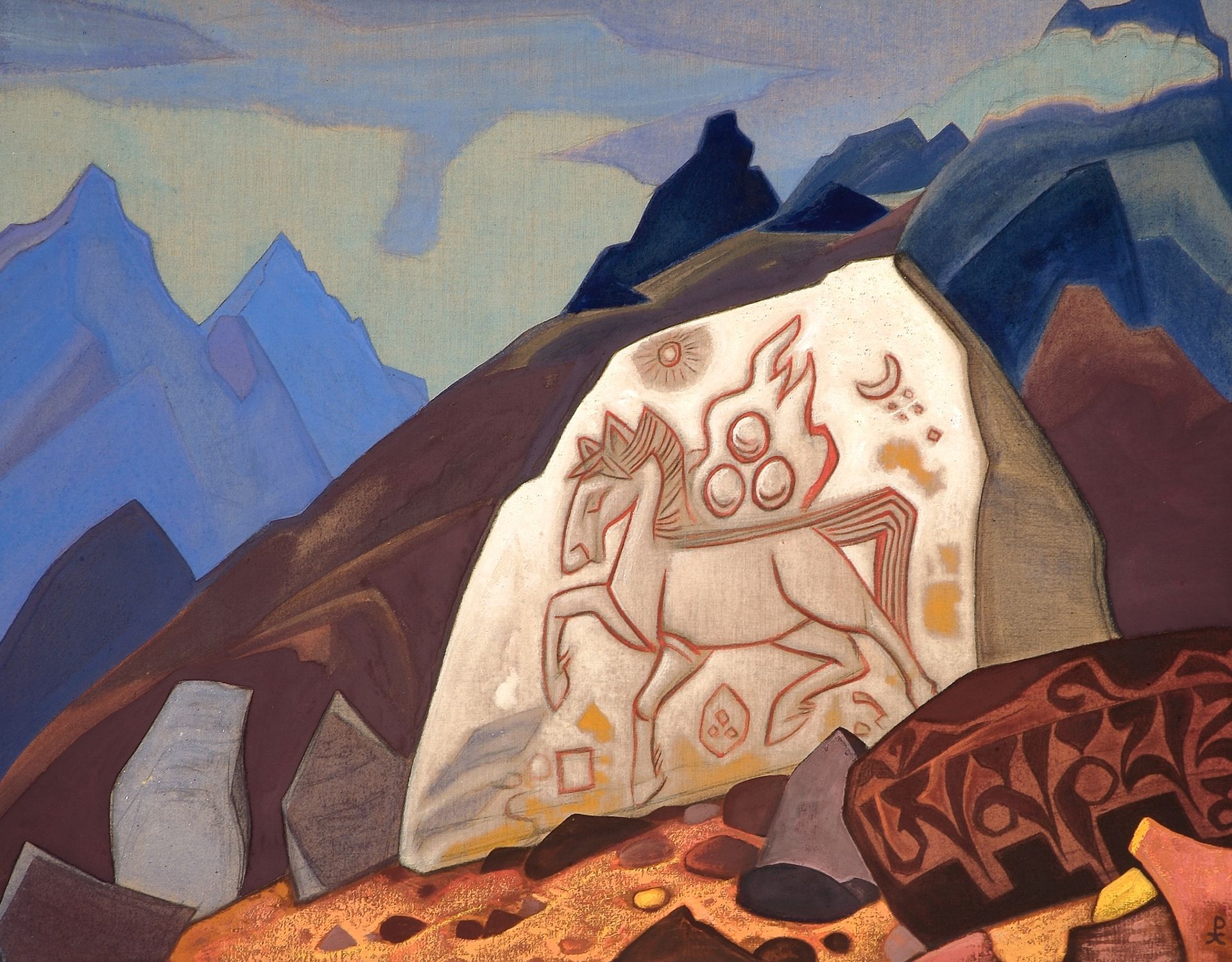
White Stone (Sign of Cintamani or Horse of happiness)

Nicholas Roerich
1874 - 1947Location
Nicholas Roerich Museum, New York City, NY, USListen to curator's interpretation
Curatorial notes
Nicholas Roerich made this painting, "White Stone," with what looks like tempera, probably sometime in the first half of the 20th century. What strikes me is the color – it's not quite naturalistic, but dreamy and symbolic. Look at how Roerich builds the landscape with these flat, almost geometric shapes. The paint application is smooth, giving the forms a solid, grounded feel, especially in the browns of the mountains. But then you see the white stone, and it’s got this amazing, almost chalky texture, setting it apart. On the stone there’s this carved horse, outlined in a simple, elegant line – it reminds me of the kind of drawings you see in caves, primal and powerful. The horse seems to carry a message, and it certainly looks like Roerich is trying to convey a vision of something ancient and spiritual through his choice of color and this very deliberate mark-making. Roerich's later works often delved into similar themes of spiritual quests. It puts me in mind of Hilma af Klint, who was another artist interested in creating visual languages for mystical ideas. Art's like a big conversation, right? Everyone’s riffing off each other, across time. It’s always open to your own take.