About this artwork
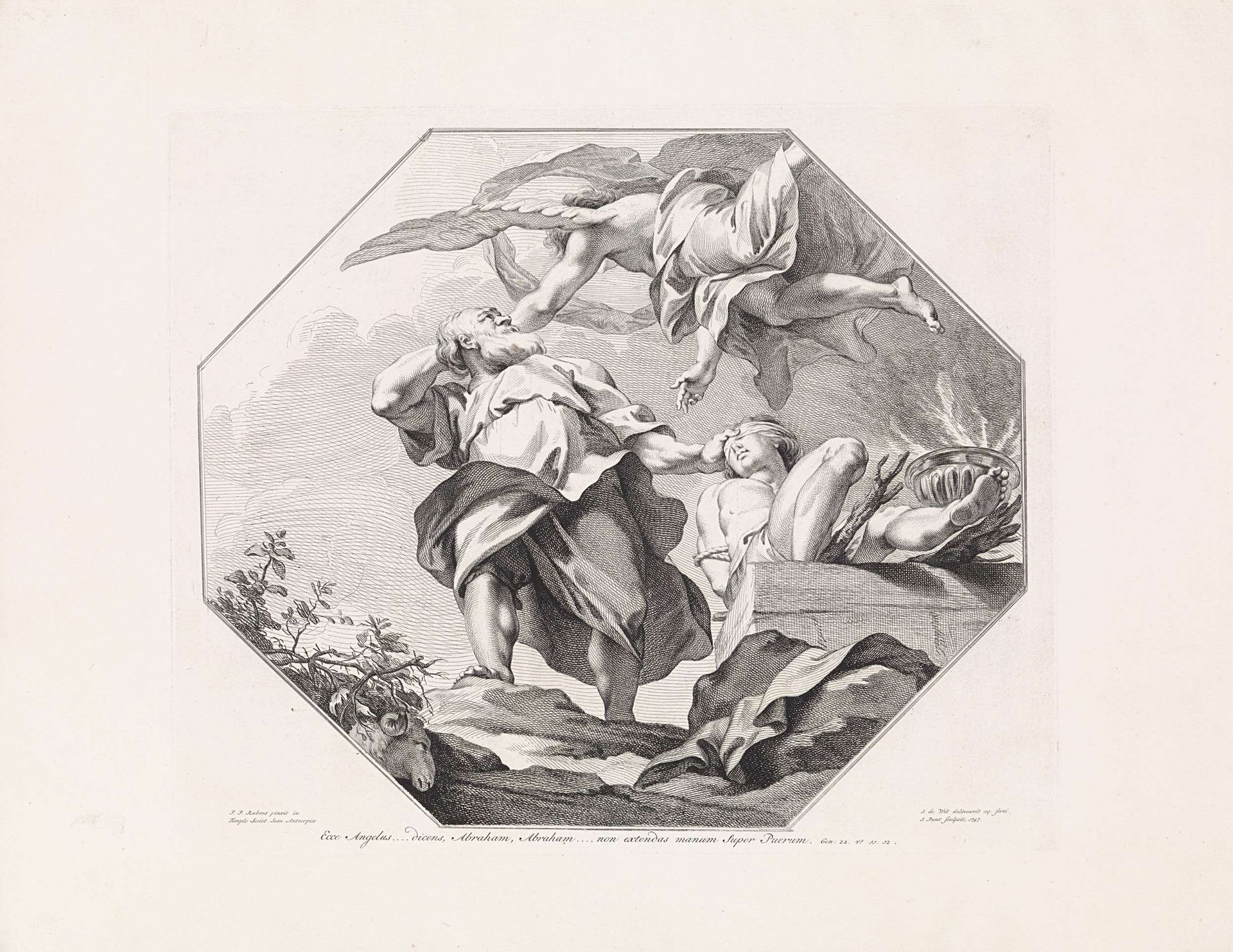
Jan Punt made this print, "Offer van Abraham," during the Dutch Republic. This work depicts a key moment from the Book of Genesis, when God tests Abraham's faith by asking him to sacrifice his son, Isaac. Punt's image invites us to consider the social and cultural values circulating in the Netherlands during the 18th century, as well as the role of religious narratives in shaping social morality. Note the angel's intervention, a direct representation of divine authority. The Dutch Republic at this time was a Protestant society, and prints like this circulated widely among households, serving as both moral instruction and artistic display. By examining this print, we can gain insights into the intersection of religion, ethics, and social expectations in the Dutch Republic. Through careful study of such prints alongside period sermons, pamphlets, and other visual materials, historians piece together a richer understanding of the past.

Artwork details
- Medium
- print, engraving
- Dimensions
- height 333 mm, width 397 mm
- Location
- Rijksmuseum
- Copyright
- Rijks Museum: Open Domain
Tags
Comments
Share your thoughts
About this artwork
Jan Punt made this print, "Offer van Abraham," during the Dutch Republic. This work depicts a key moment from the Book of Genesis, when God tests Abraham's faith by asking him to sacrifice his son, Isaac. Punt's image invites us to consider the social and cultural values circulating in the Netherlands during the 18th century, as well as the role of religious narratives in shaping social morality. Note the angel's intervention, a direct representation of divine authority. The Dutch Republic at this time was a Protestant society, and prints like this circulated widely among households, serving as both moral instruction and artistic display. By examining this print, we can gain insights into the intersection of religion, ethics, and social expectations in the Dutch Republic. Through careful study of such prints alongside period sermons, pamphlets, and other visual materials, historians piece together a richer understanding of the past.
Comments
Share your thoughts