About this artwork
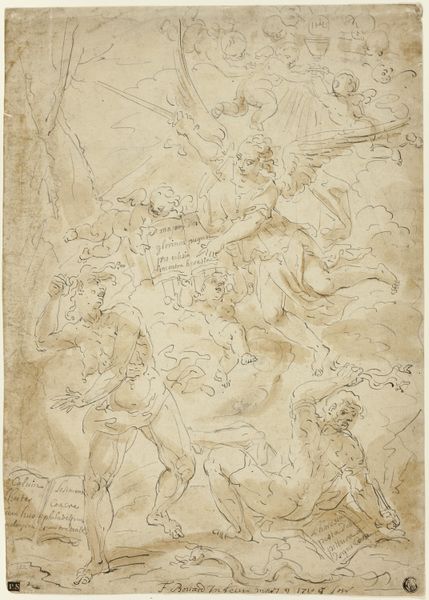
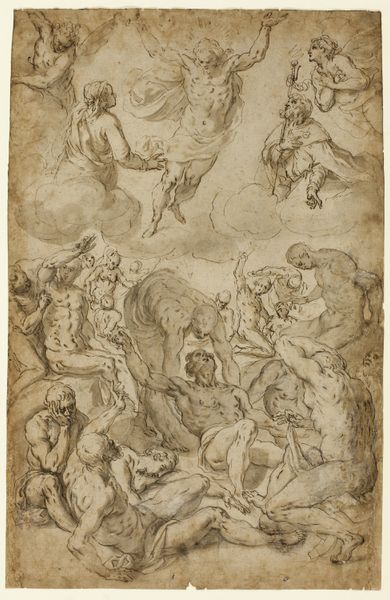
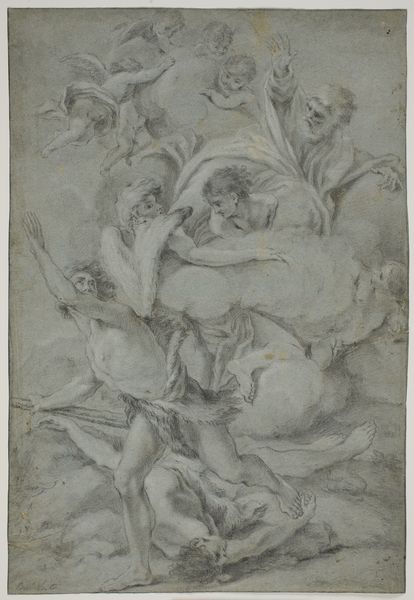
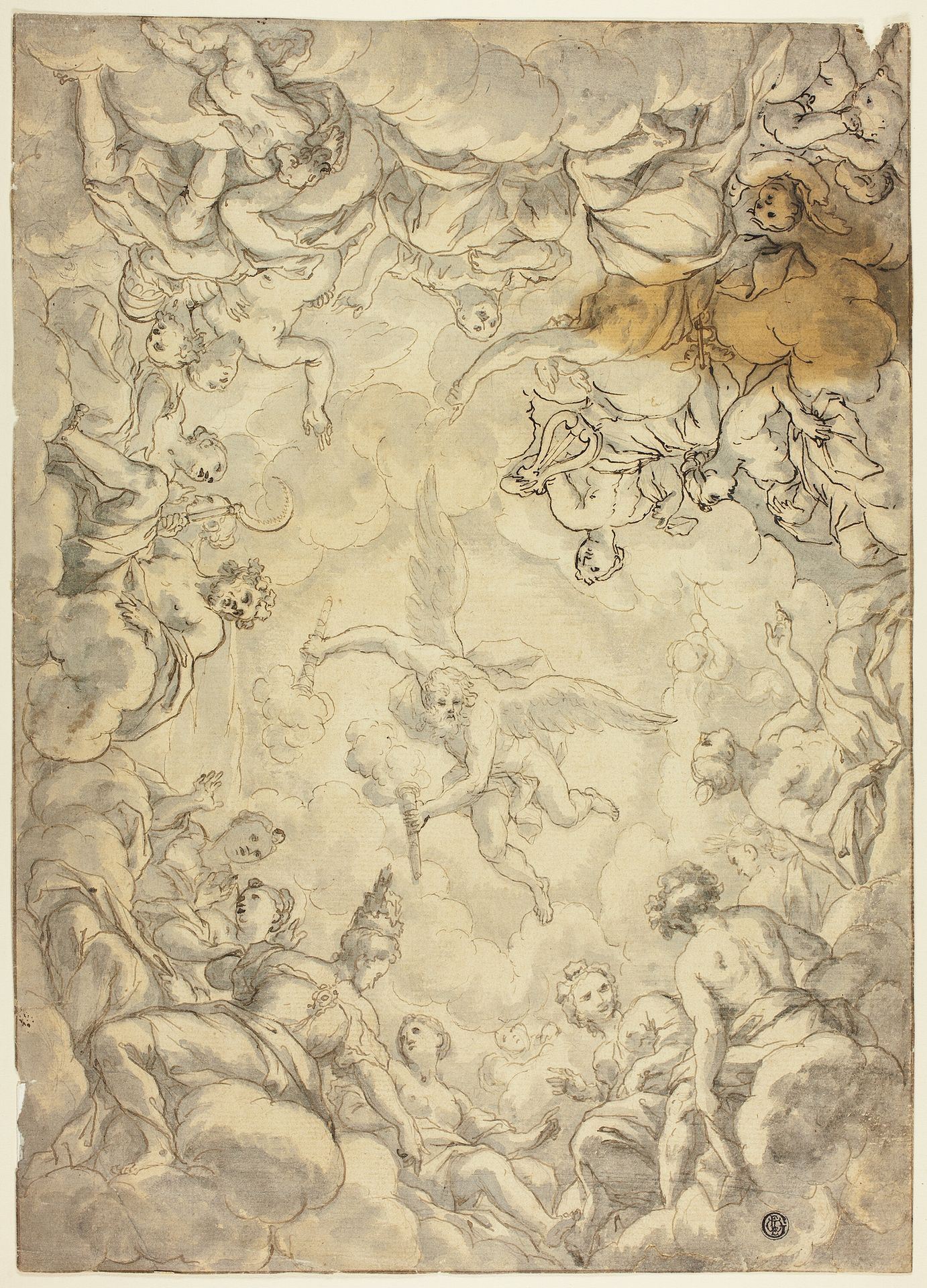
Editor: This is Cigoli’s "Prometheus Taking Fire From Olympus," an undated ink drawing at the Art Institute of Chicago. It's really dynamic – the figures are all swirling, and there's this tension between the gods and Prometheus. What does this composition suggest to you? Curator: I see a visual manifestation of power dynamics and cultural narrative. The figures tumbling down, the god gifting fire—it's a challenge to the established order, isn’t it? In what ways does this challenge resonate in Renaissance society, where intellectual and artistic expression was being questioned? Editor: So, the theft of fire, not just a mythological act, but also an allegory of societal disruption. That's interesting because the academic style feels contradictory to this anti-establishment theme. Why present this disruption so formally? Curator: Perhaps Cigoli used this traditional style strategically to legitimize new ideas. Academic art, historically backed and funded, served as a medium to subtly introduce revolutionary thoughts, negotiating authority, and audience receptivity. It raises a question: How did institutions of art patronize artists exploring social shifts? Editor: So, it's almost like hiding the revolutionary idea within the acceptable language of art. The artwork becomes a negotiation between artist, patron, and the sociopolitical atmosphere of that time? Curator: Precisely. Museums play a pivotal role here, shaping how we understand and validate these historical power dynamics through art. What does it mean for us to view this drawing now, within the walls of an institution? Editor: It prompts us to acknowledge the socio-political forces that shaped this artwork. Looking at the political undercurrent and how that influences the patronage of the arts in this period is so revealing. Curator: Absolutely, I think that it's crucial to keep the sociopolitical context in mind and consider art’s complicated relation to both challenging and reinforcing power structures.
Prometheus Taking Fire From Olympus n.d.


Artwork details
- Medium
- drawing, print, paper, ink, chalk
- Dimensions
- 446 × 318 mm
- Location
- The Art Institute of Chicago
- Copyright
- Public Domain
Tags
drawing
allegory
narrative-art
ink painting
mannerism
figuration
paper
11_renaissance
ink
chalk
history-painting
academic-art
Comments
No comments
About this artwork
Editor: This is Cigoli’s "Prometheus Taking Fire From Olympus," an undated ink drawing at the Art Institute of Chicago. It's really dynamic – the figures are all swirling, and there's this tension between the gods and Prometheus. What does this composition suggest to you? Curator: I see a visual manifestation of power dynamics and cultural narrative. The figures tumbling down, the god gifting fire—it's a challenge to the established order, isn’t it? In what ways does this challenge resonate in Renaissance society, where intellectual and artistic expression was being questioned? Editor: So, the theft of fire, not just a mythological act, but also an allegory of societal disruption. That's interesting because the academic style feels contradictory to this anti-establishment theme. Why present this disruption so formally? Curator: Perhaps Cigoli used this traditional style strategically to legitimize new ideas. Academic art, historically backed and funded, served as a medium to subtly introduce revolutionary thoughts, negotiating authority, and audience receptivity. It raises a question: How did institutions of art patronize artists exploring social shifts? Editor: So, it's almost like hiding the revolutionary idea within the acceptable language of art. The artwork becomes a negotiation between artist, patron, and the sociopolitical atmosphere of that time? Curator: Precisely. Museums play a pivotal role here, shaping how we understand and validate these historical power dynamics through art. What does it mean for us to view this drawing now, within the walls of an institution? Editor: It prompts us to acknowledge the socio-political forces that shaped this artwork. Looking at the political undercurrent and how that influences the patronage of the arts in this period is so revealing. Curator: Absolutely, I think that it's crucial to keep the sociopolitical context in mind and consider art’s complicated relation to both challenging and reinforcing power structures.
Comments
No comments