About this artwork
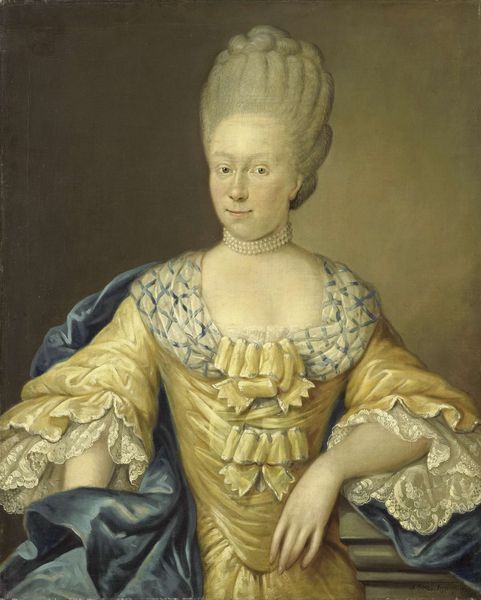
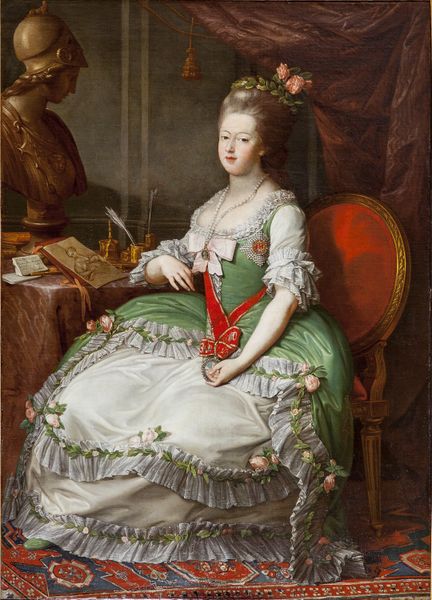
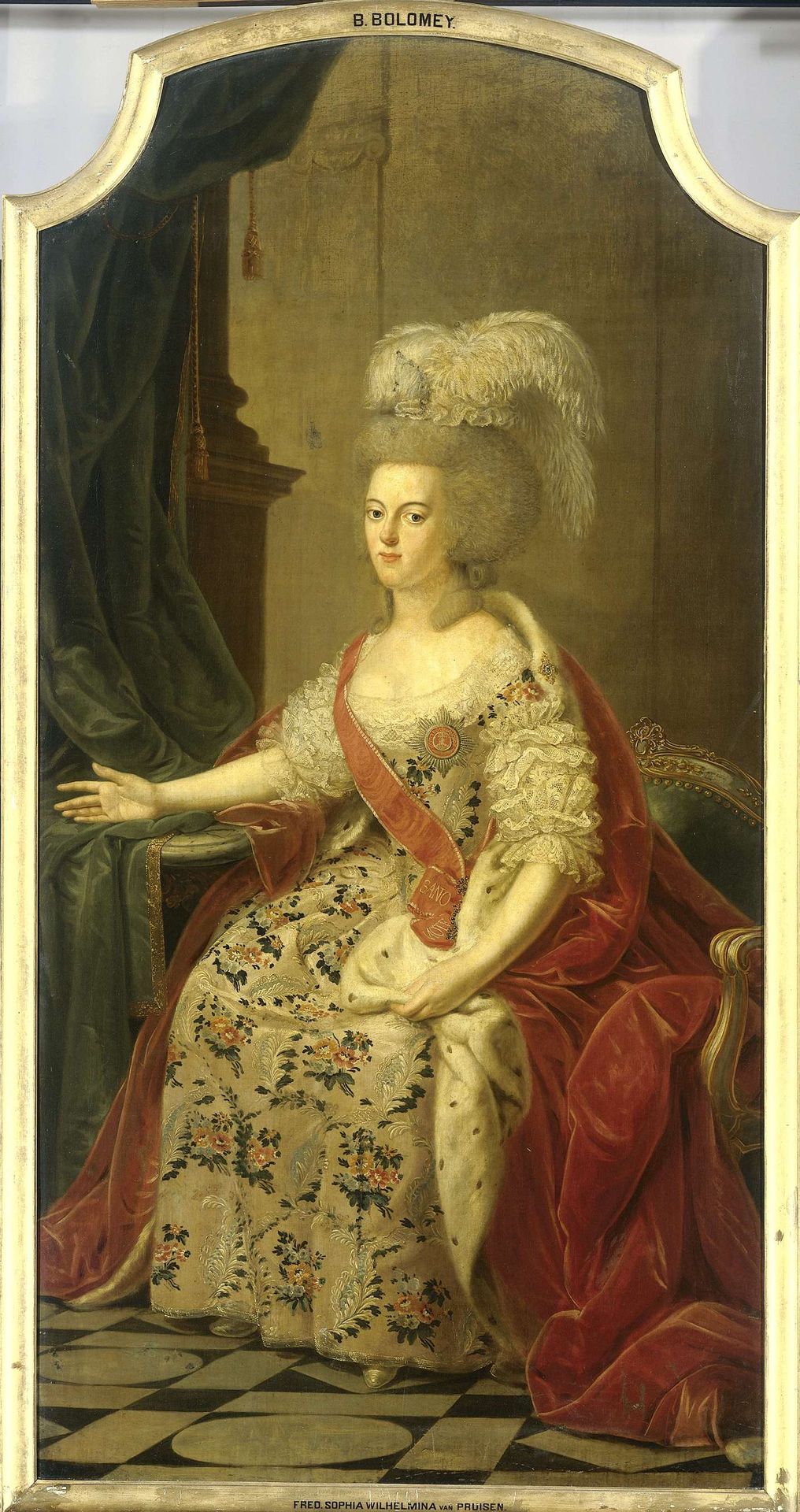
Benjamin Samuel Bolomey painted this full-length portrait of Frederika Sophia Wilhelmina of Prussia in the late 18th century using oil on canvas. Wilhelmina's regal bearing and opulent attire speak volumes about the social hierarchies of her time. Painted in the Dutch Republic, this image projects power through visual codes. The setting is palatial, with a checkered floor, heavy drapes, and a glimpse of classical architecture in the background. Her dress, wig, and the Order of the House of Orange sash all contribute to a carefully constructed image of dynastic authority. This was a period when the House of Orange's power was waning, and portraits like these were crucial in maintaining their public image. The Rijksmuseum's own archives, along with other period documents, can tell us more about the social and institutional forces that shaped both the sitter and the artist. Art history, at its best, connects the image to its moment in time.
Frederika Sophia Wilhelmina of Prussia (1751-1820), Wife of Prince Willem V
1770

Benjamin Samuel Bolomey
1739 - 1819Location
RijksmuseumArtwork details
- Medium
- painting, oil-paint
- Dimensions
- height 207 cm, width 103 cm
- Location
- Rijksmuseum
- Copyright
- Rijks Museum: Open Domain
Tags
Comments
Share your thoughts
About this artwork
Benjamin Samuel Bolomey painted this full-length portrait of Frederika Sophia Wilhelmina of Prussia in the late 18th century using oil on canvas. Wilhelmina's regal bearing and opulent attire speak volumes about the social hierarchies of her time. Painted in the Dutch Republic, this image projects power through visual codes. The setting is palatial, with a checkered floor, heavy drapes, and a glimpse of classical architecture in the background. Her dress, wig, and the Order of the House of Orange sash all contribute to a carefully constructed image of dynastic authority. This was a period when the House of Orange's power was waning, and portraits like these were crucial in maintaining their public image. The Rijksmuseum's own archives, along with other period documents, can tell us more about the social and institutional forces that shaped both the sitter and the artist. Art history, at its best, connects the image to its moment in time.
Comments
Share your thoughts