About this artwork
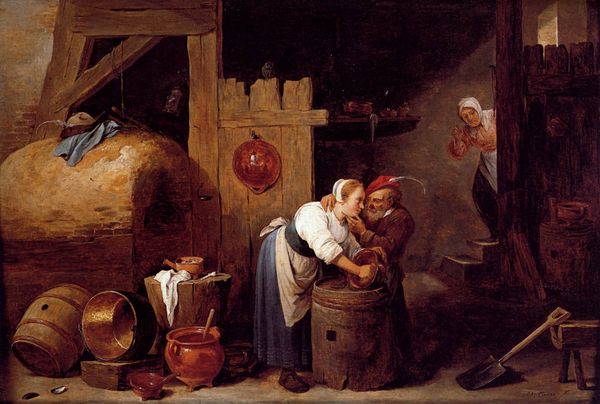
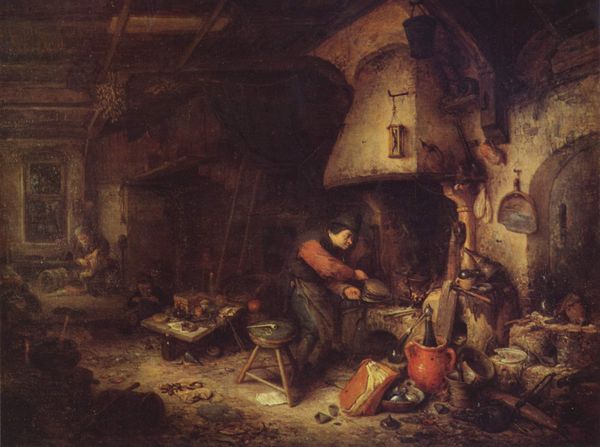
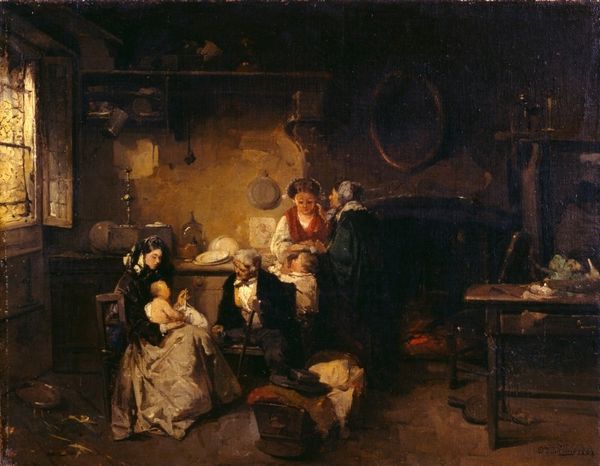
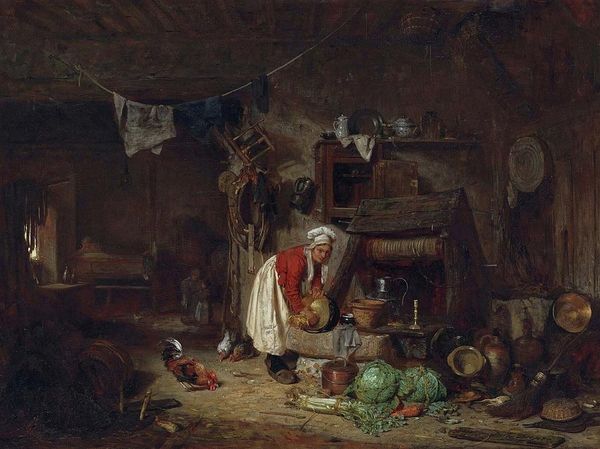
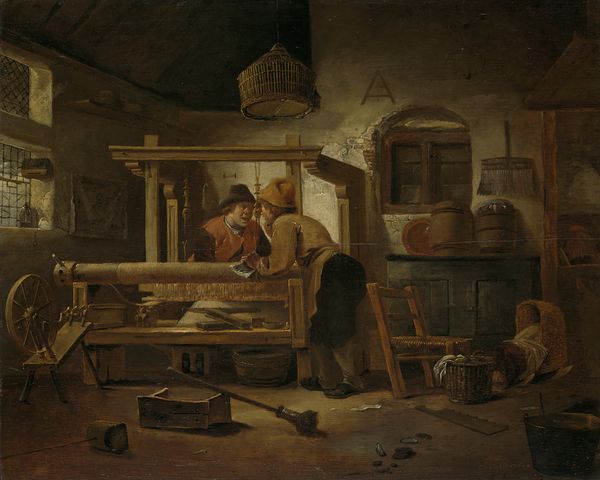
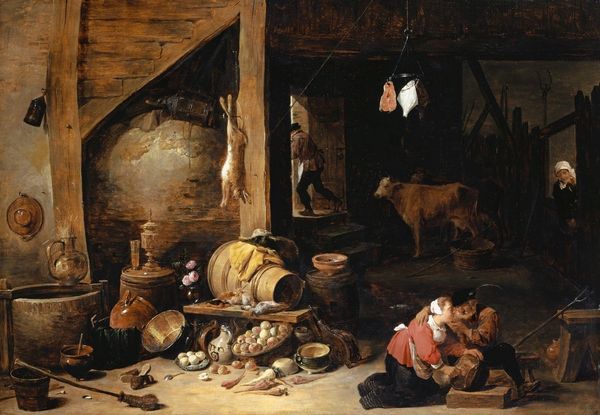
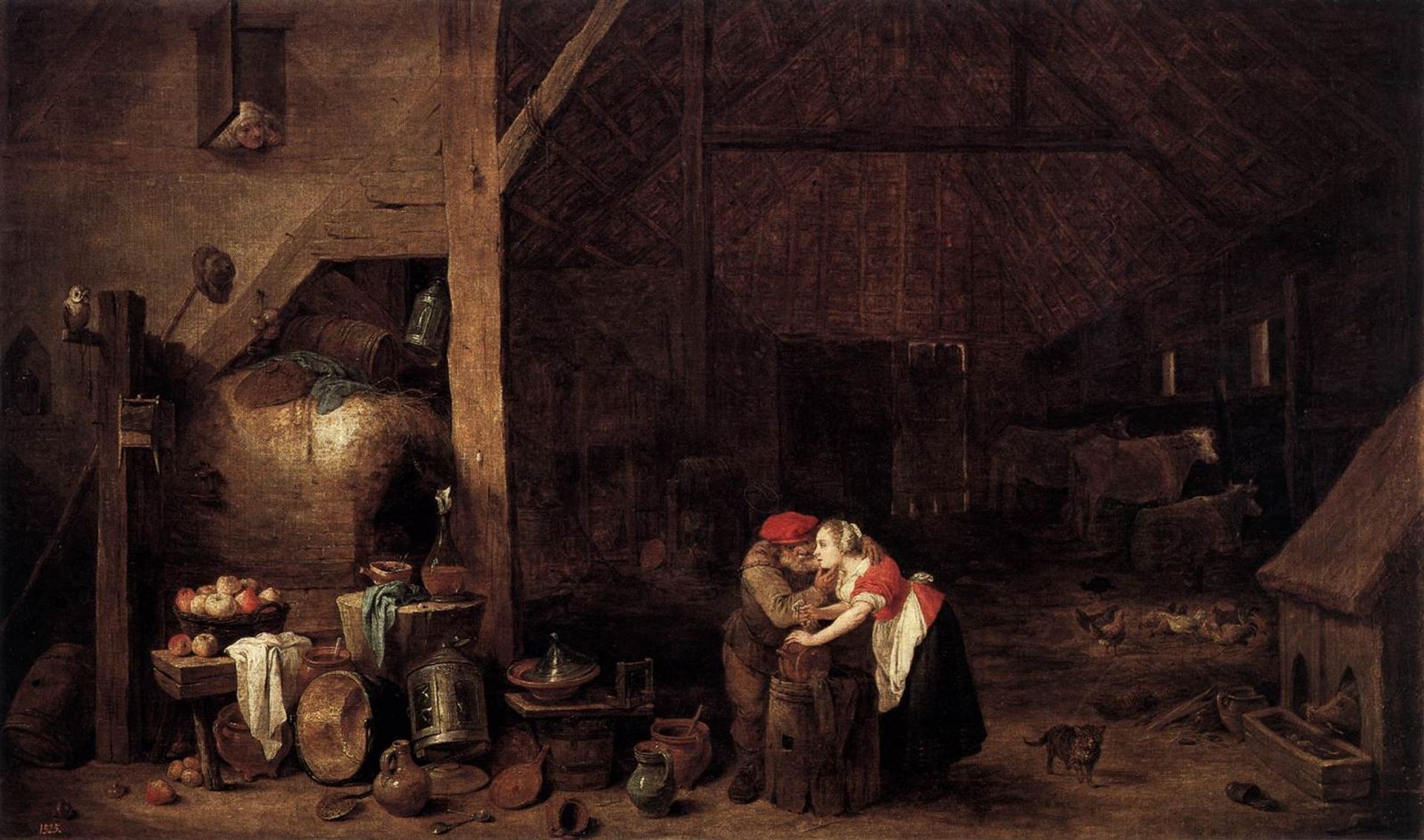
David Teniers the Younger painted "The Old Man and the Maid" using oil on canvas, a common material for the time, to create this scene. But look closely – it's not the high drama of court or myth that occupies him, but the textures and tones of everyday life in a barn. Teniers was a master of capturing the tactile qualities of the mundane. The rough-hewn wood, the dull gleam of earthenware, and the soft sheen of skin are all rendered with equal care. It is also his way of drawing attention to the lives of those who work the land, giving dignity to their labor through the very act of representation. Consider the labor invested not only in the scene itself but also in its rendering; the grinding of pigments, the stretching of canvas, the meticulous layering of paint. In Teniers’s hands, these processes elevate the ordinary, reminding us that even the simplest scenes are imbued with cultural significance. By appreciating the artistry in the everyday, we challenge the traditional hierarchies of art itself.
The Old Man and the Maid
1650

David Teniers The Younger
1610 - 1690Location
Museo del Prado, Madrid, SpainArtwork details
- Medium
- painting, oil-paint
- Dimensions
- 55 x 90 cm
- Location
- Museo del Prado, Madrid, Spain
- Copyright
- Public domain
Tags
Comments
Share your thoughts
About this artwork
David Teniers the Younger painted "The Old Man and the Maid" using oil on canvas, a common material for the time, to create this scene. But look closely – it's not the high drama of court or myth that occupies him, but the textures and tones of everyday life in a barn. Teniers was a master of capturing the tactile qualities of the mundane. The rough-hewn wood, the dull gleam of earthenware, and the soft sheen of skin are all rendered with equal care. It is also his way of drawing attention to the lives of those who work the land, giving dignity to their labor through the very act of representation. Consider the labor invested not only in the scene itself but also in its rendering; the grinding of pigments, the stretching of canvas, the meticulous layering of paint. In Teniers’s hands, these processes elevate the ordinary, reminding us that even the simplest scenes are imbued with cultural significance. By appreciating the artistry in the everyday, we challenge the traditional hierarchies of art itself.
Comments
Share your thoughts