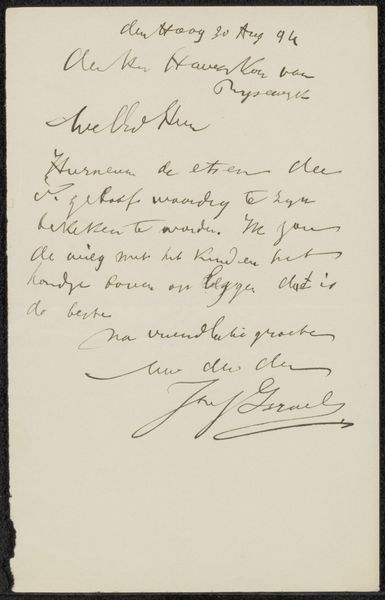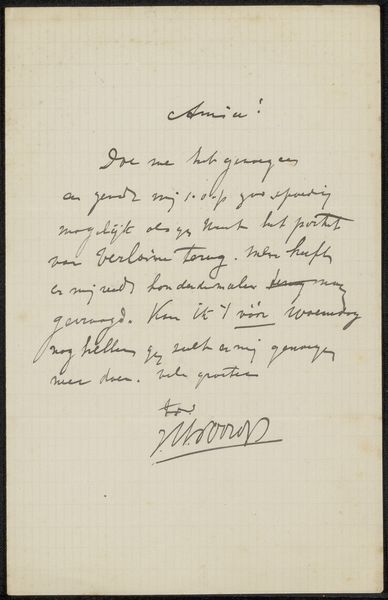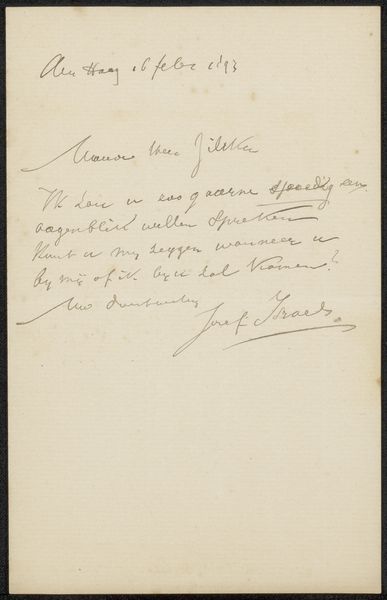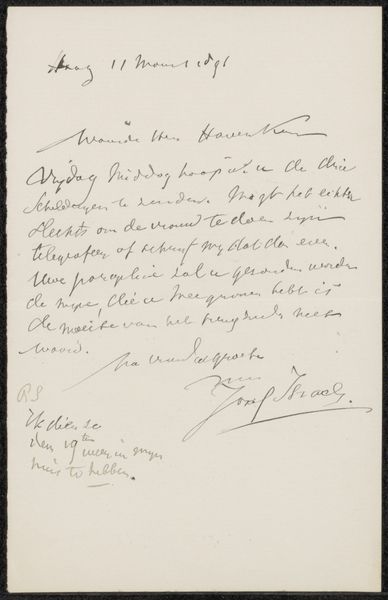
Possibly 1879
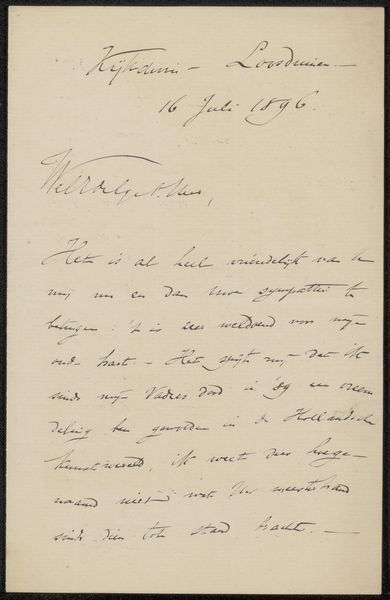
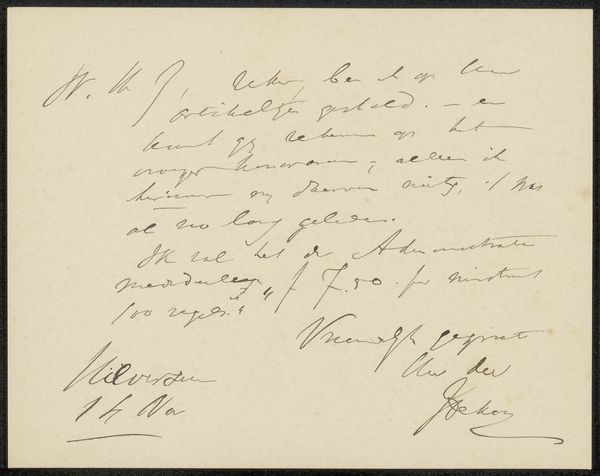
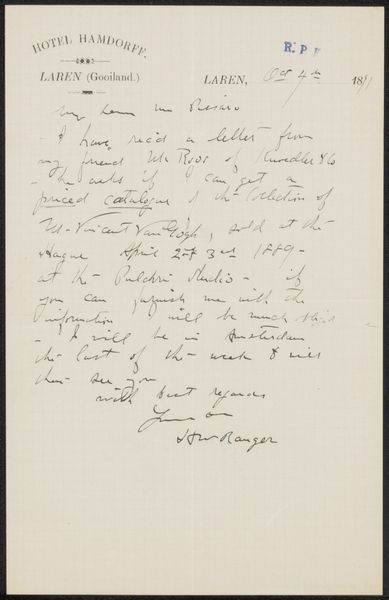
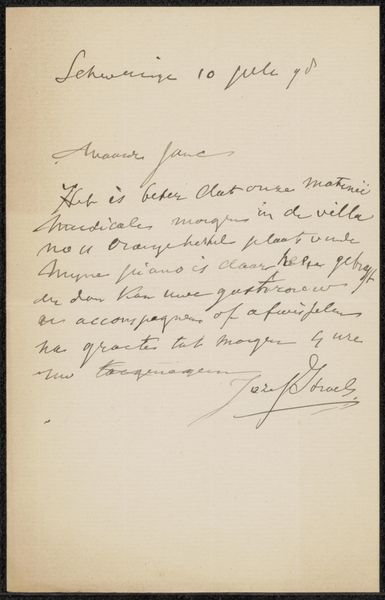
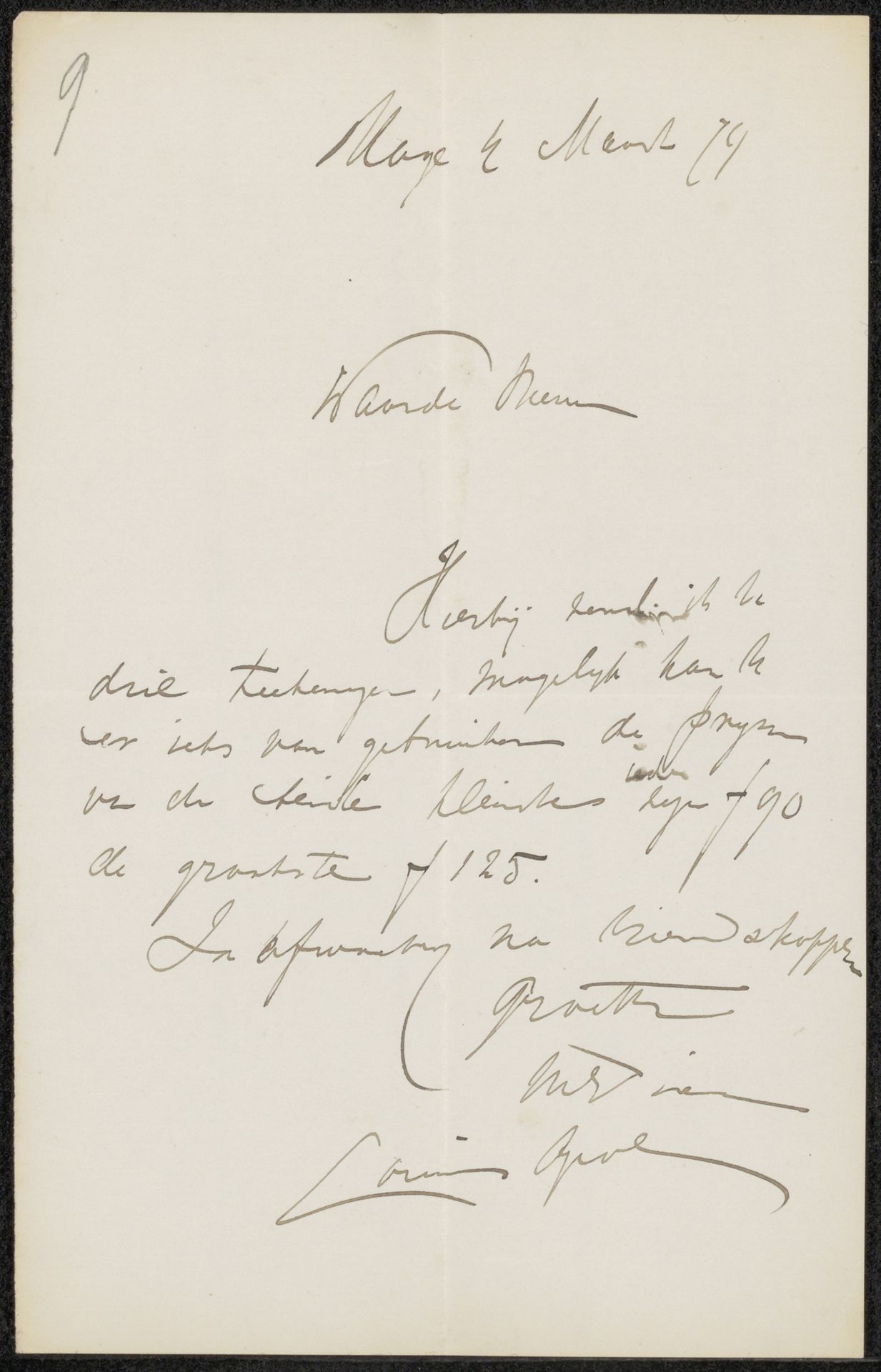
Brief aan Frans Buffa en Zonen

Louis Apol
1850 - 1936Location
RijksmuseumListen to curator's interpretation
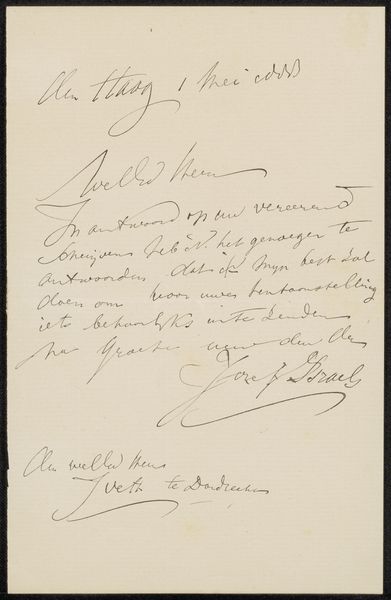
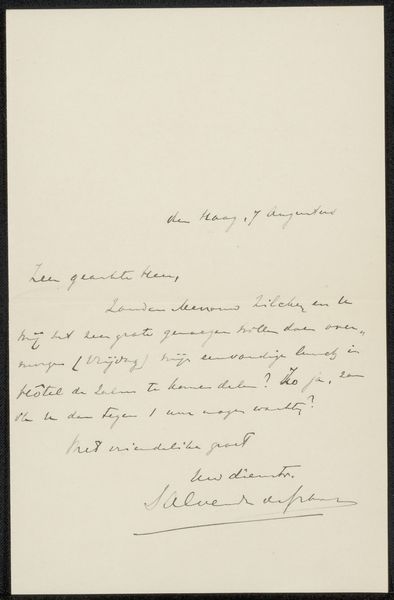
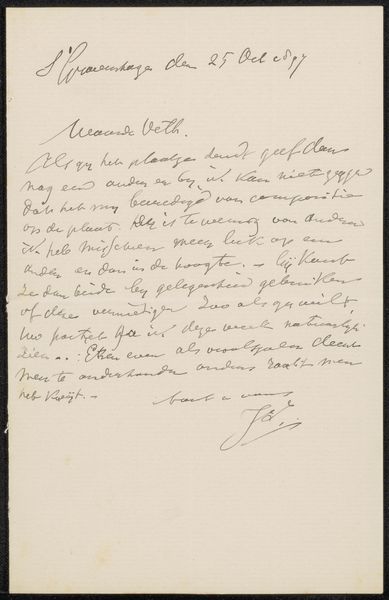
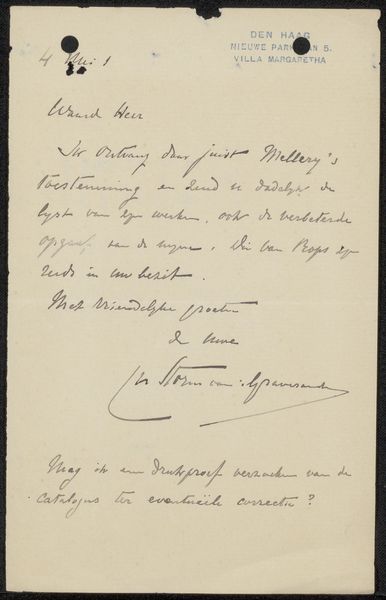
Curatorial notes
Editor: Here we have Louis Apol's "Brief aan Frans Buffa en Zonen," likely from 1879. It's a pen and ink drawing on paper. It feels so delicate and intimate, like a peek into the artist's private correspondence. How do you interpret this work, looking beyond its surface appearance as a letter? Curator: Well, it’s intriguing to consider this "Brief" not just as a simple message, but as a material object embedded in a network of social and economic relations. Apol was a prominent landscape painter. How might his engagement with art dealers like Frans Buffa and Zonen, who are essentially part of the art market infrastructure, influence the type of art he produced? Consider the power dynamics inherent in that relationship – who is shaping whose vision? Editor: That's a good point! I hadn't really thought about the market forces at play. So, is the very act of writing this letter an acknowledgement of the economic structures supporting Apol's artistic practice? Curator: Precisely. And it pushes us to question: to what extent do these infrastructures affect the creation and dissemination of art? Further, who gets remembered in art history and whose stories are marginalized because they didn’t have the resources to promote their art? It provokes thoughts around class and access. Editor: It's almost unsettling to realize that even something as seemingly personal as this letter is tied to those power structures. Curator: Exactly. Thinking intersectionally, how might Apol's gender, class, and race intersect with these power structures to shape his opportunities and constraints? This document can open a much larger discussion. Editor: I guess a seemingly straightforward drawing can really become a powerful reminder of the forces at play in the art world and beyond. Thank you! Curator: Indeed! By looking closely at such archival material, we can uncover the many socio-economic layers of art history.