About this artwork
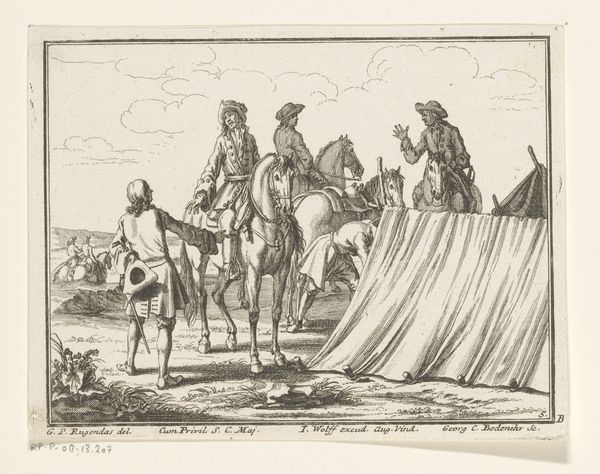
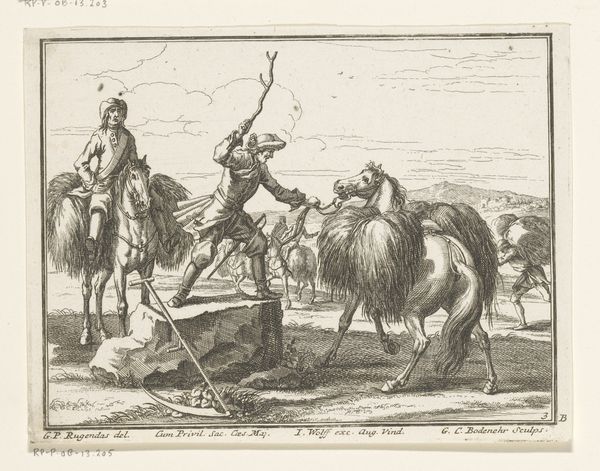
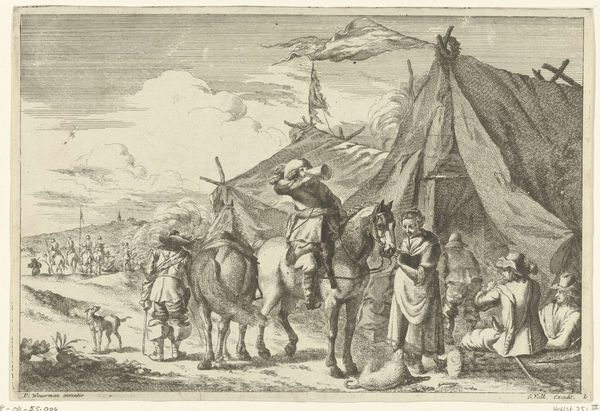
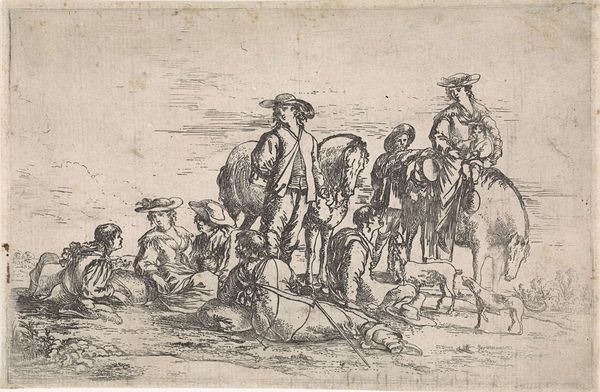
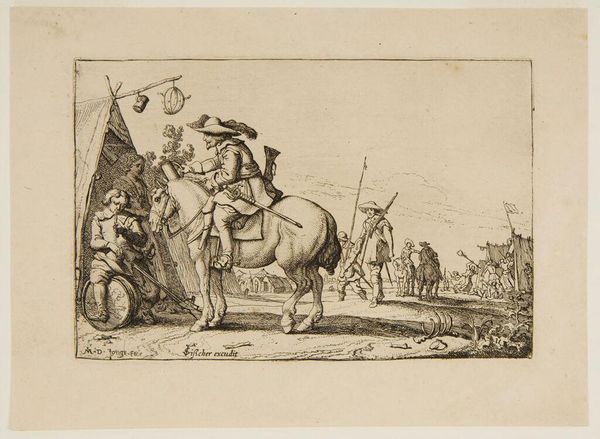
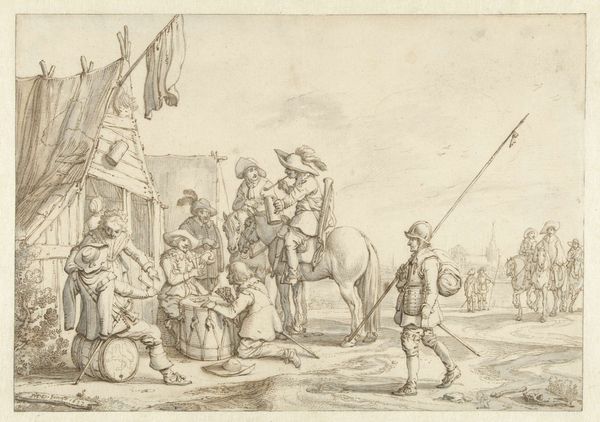
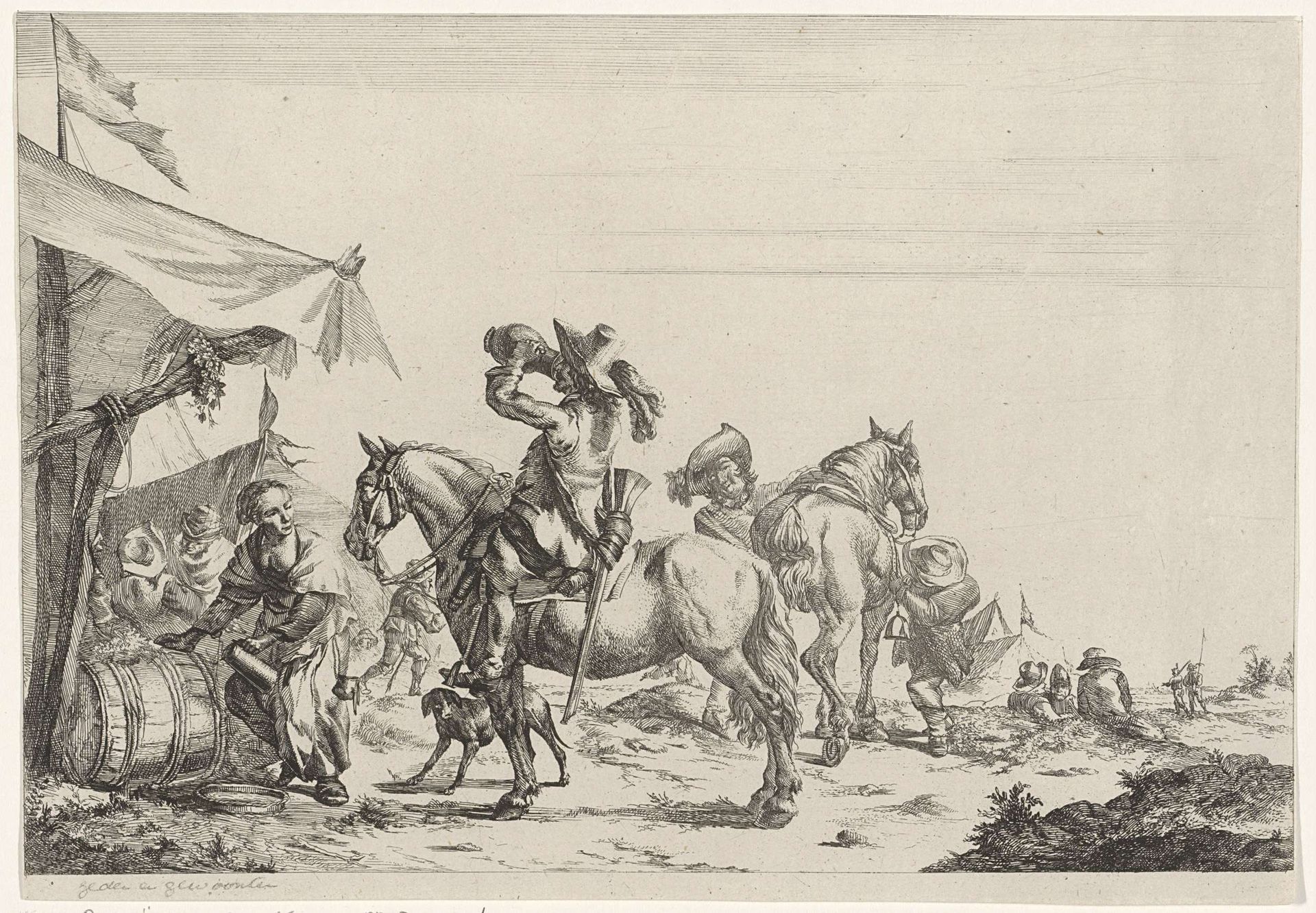
Romeyn de Hooghe made this print, "Cavalrymen Resting Near a Tent," using etching. It shows soldiers taking a break, drinking, and relaxing near a tent. De Hooghe was working in the Netherlands during a time of significant military conflict, particularly the Franco-Dutch War. This print offers a glimpse into the everyday life of soldiers. The presence of a well-stocked tent and the act of drinking suggest the logistical support and sustenance required to maintain an army on the move. The depiction of soldiers resting also suggests a degree of autonomy away from the discipline of the military institution. To truly understand the context of this print, research into the social history of military life in the 17th-century Netherlands is crucial. By examining period documents, military records, and other visual representations, we can gain insights into the conditions, experiences, and social roles of soldiers during this era.

Artwork details
- Medium
- print, etching
- Dimensions
- height 182 mm, width 262 mm
- Location
- Rijksmuseum
- Copyright
- Rijks Museum: Open Domain
Tags
baroque
pen sketch
etching
landscape
genre-painting
history-painting
Comments
Be the first to share your thoughts about this work.
About this artwork
Romeyn de Hooghe made this print, "Cavalrymen Resting Near a Tent," using etching. It shows soldiers taking a break, drinking, and relaxing near a tent. De Hooghe was working in the Netherlands during a time of significant military conflict, particularly the Franco-Dutch War. This print offers a glimpse into the everyday life of soldiers. The presence of a well-stocked tent and the act of drinking suggest the logistical support and sustenance required to maintain an army on the move. The depiction of soldiers resting also suggests a degree of autonomy away from the discipline of the military institution. To truly understand the context of this print, research into the social history of military life in the 17th-century Netherlands is crucial. By examining period documents, military records, and other visual representations, we can gain insights into the conditions, experiences, and social roles of soldiers during this era.
Comments
Be the first to share your thoughts about this work.