About this artwork
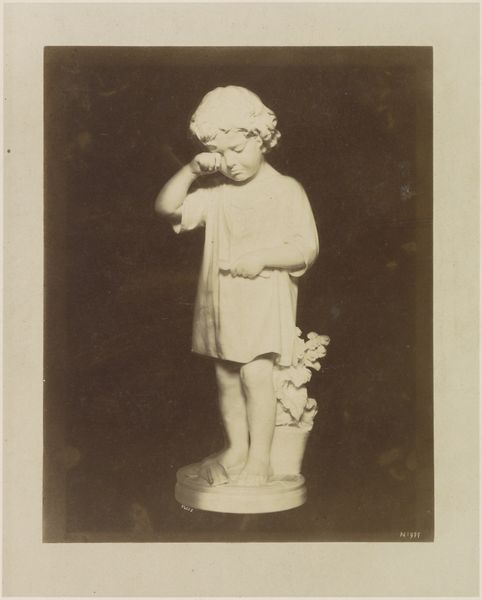
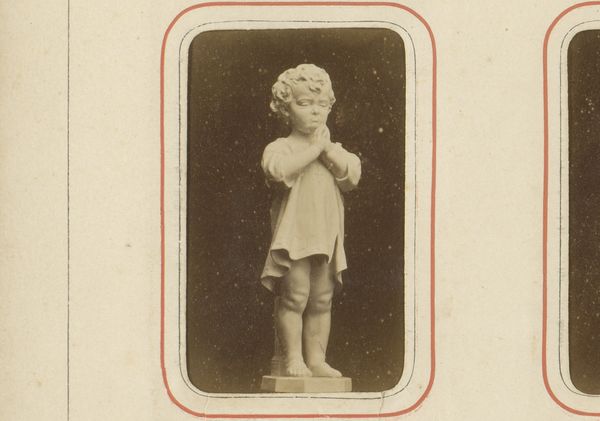
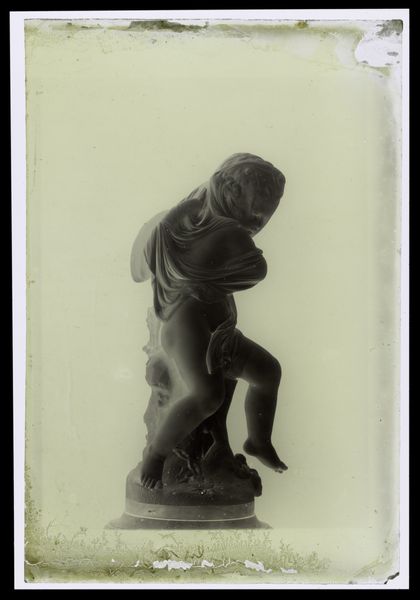
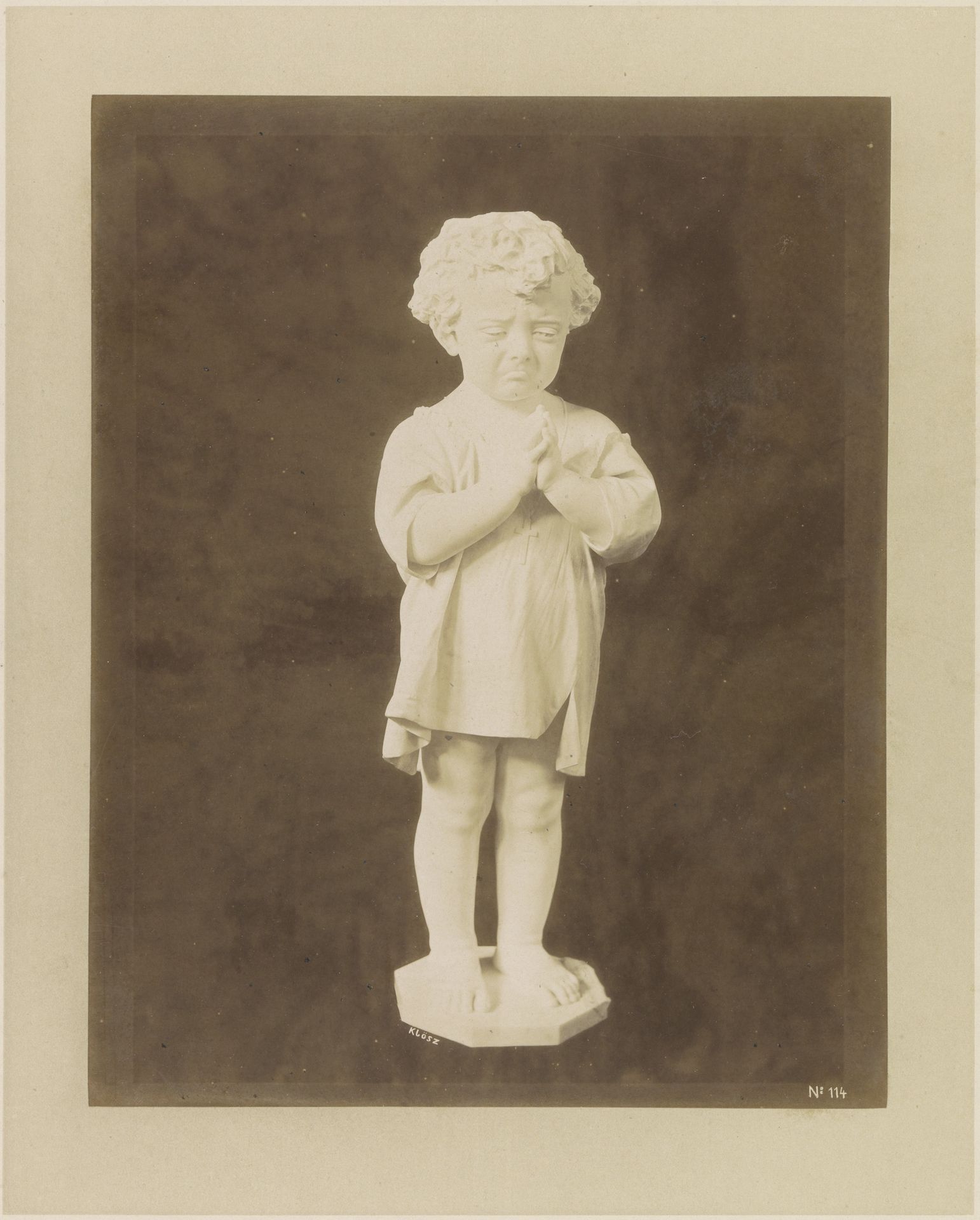
This photograph shows a sculpture of a crying child with folded hands, by an artist named Klösz. In viewing this image, one might consider the historic idealization of childhood innocence and vulnerability, which has roots in religious art but also, as the industrial revolution progressed, had a social impact on how children were viewed. Consider the emotional weight carried by this small figure; the folded hands, a universal gesture of prayer or supplication, paired with tears, evoke a sense of profound innocence but also possible exploitation. As you reflect on this artwork, consider whether the sculpture upholds societal norms, or offers alternative narratives. Does it reflect a world in which children's vulnerability could be celebrated or perhaps one in which such innocence is at constant risk? Consider your own emotional response to this sculpture.

Artwork details
- Medium
- photography, sculpture
- Dimensions
- height 534 mm, width 412 mm
- Copyright
- Rijks Museum: Open Domain
Tags
Comments
Share your thoughts
About this artwork
This photograph shows a sculpture of a crying child with folded hands, by an artist named Klösz. In viewing this image, one might consider the historic idealization of childhood innocence and vulnerability, which has roots in religious art but also, as the industrial revolution progressed, had a social impact on how children were viewed. Consider the emotional weight carried by this small figure; the folded hands, a universal gesture of prayer or supplication, paired with tears, evoke a sense of profound innocence but also possible exploitation. As you reflect on this artwork, consider whether the sculpture upholds societal norms, or offers alternative narratives. Does it reflect a world in which children's vulnerability could be celebrated or perhaps one in which such innocence is at constant risk? Consider your own emotional response to this sculpture.
Comments
Share your thoughts