silkscreen, print, paper
#
silkscreen
#
pattern-and-decoration
# print
#
etching
#
paper
#
feminist-art
Dimensions: overall: 46 x 60.3 cm (18 1/8 x 23 3/4 in.)
Copyright: National Gallery of Art: CC0 1.0
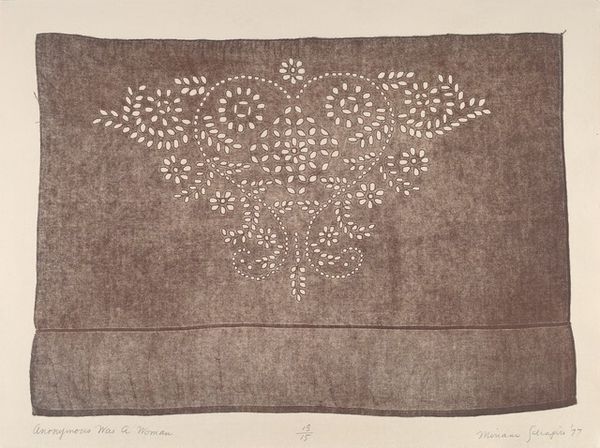
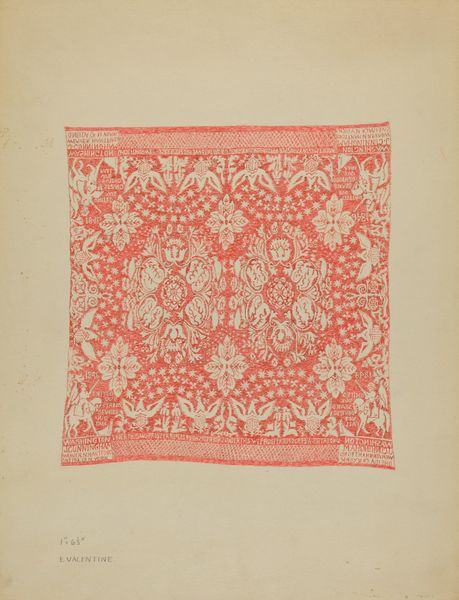
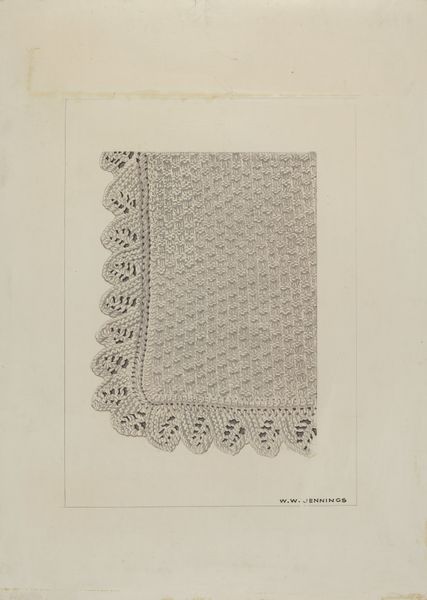
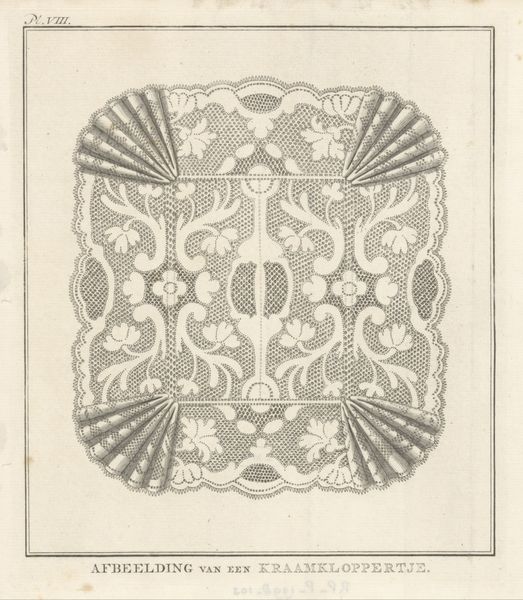
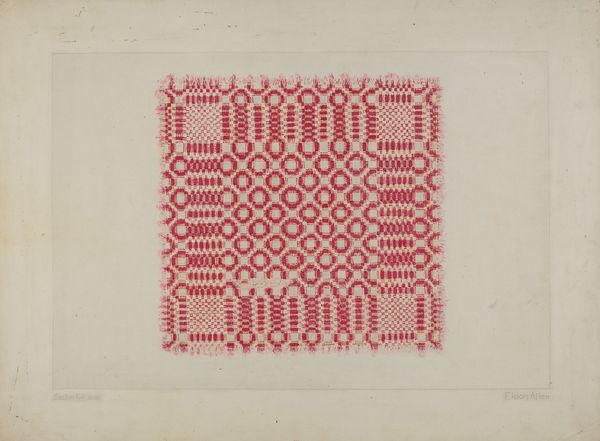
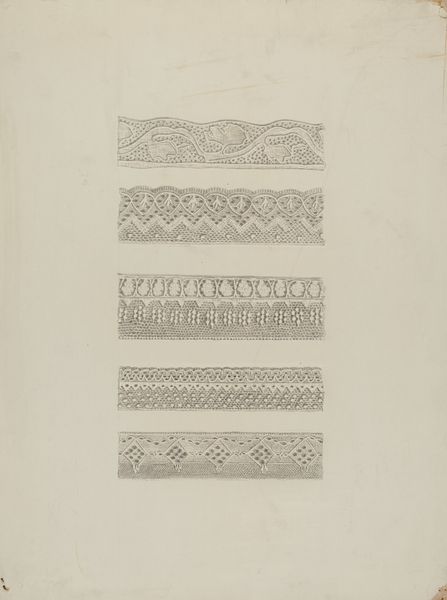
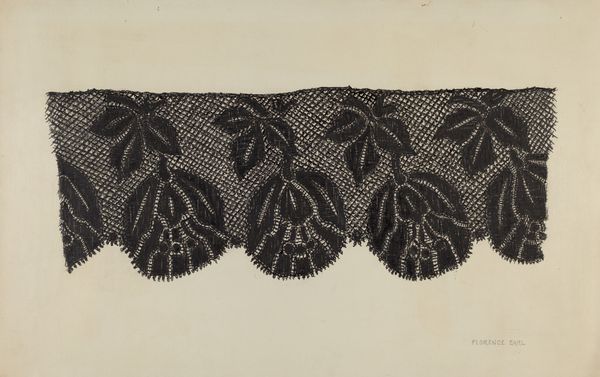
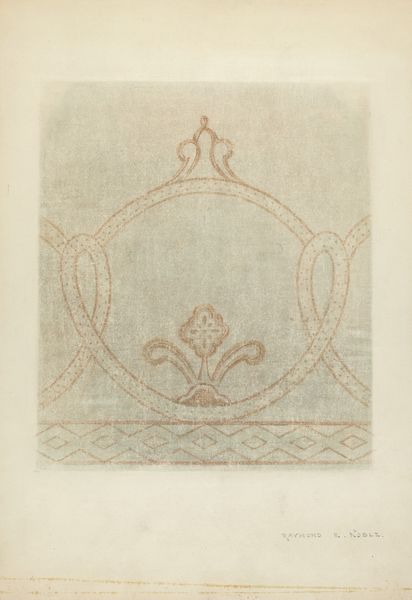
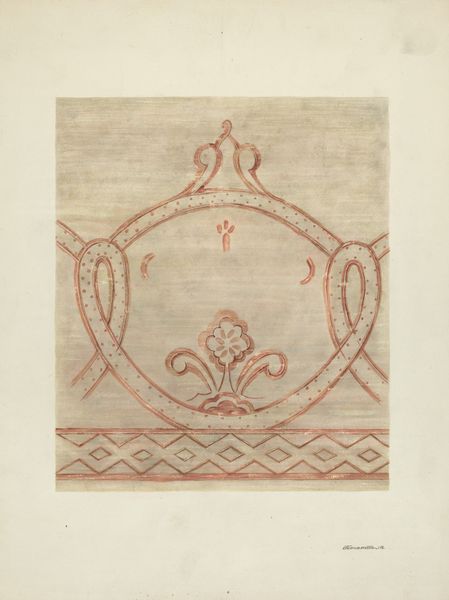
Curator: What immediately strikes me is the delicate, almost ghostly quality of this image. Editor: We are looking at "Anonymous was a Woman II," a 1977 etching and textile work by Miriam Schapiro. She was a central figure in the Pattern and Decoration movement, which aimed to reclaim and celebrate traditionally "feminine" crafts. Curator: So, the choice of lace as the central image feels loaded. The act of making lace itself involved so much handwork and care from often nameless creators. It also was a common item, a status signifier, available to a wide consumer public. Editor: Precisely. Schapiro uses it to question the traditional hierarchy that elevates painting and sculpture above crafts typically associated with women’s work. Where were these women recognized? Who knew the countless hours behind items such as this one? She really addresses that historical blind spot in a profound way, naming "Anonymous was a Woman". Curator: It really invites you to reconsider the materials and labor involved in making decorative objects that have been historically dismissed as merely domestic or frivolous. This isn’t simply lace; it’s an imprint of lives lived and skills mastered. Look closely; it could be your mother’s or grandmother’s handywork. Editor: Right. Think about the institutional history here as well. Museums have traditionally valued artworks considered “fine art” over textile art, and Schapiro's work challenges that very notion, especially given its deliberate use of etching, commonly a fine art medium, to depict what some may categorize simply as decoration. Curator: The texture she achieves with etching is crucial too. By employing printmaking techniques with images of textiles she gives these domestic, and previously devalued works, a fine art stature. Schapiro allows a wide range of audiences to enjoy an ethereal, yet accessible craft, usually confined within the borders of households and private consumption. Editor: Schapiro offers a poignant comment on artistic recognition, gender, and the politics of visibility within cultural institutions, past and present. It demands we acknowledge those whose labor has been historically unseen and uncelebrated. Curator: Considering its time, I see "Anonymous was a Woman II" as a profound reclamation of domestic spaces and artistic validation. It certainly encouraged a broader definition of “art.” Editor: Absolutely, and in doing so, it invited—and continues to invite—viewers to question those established definitions.
Comments
No comments
Be the first to comment and join the conversation on the ultimate creative platform.
 Collect
 React
React Comment
More like this