About this artwork
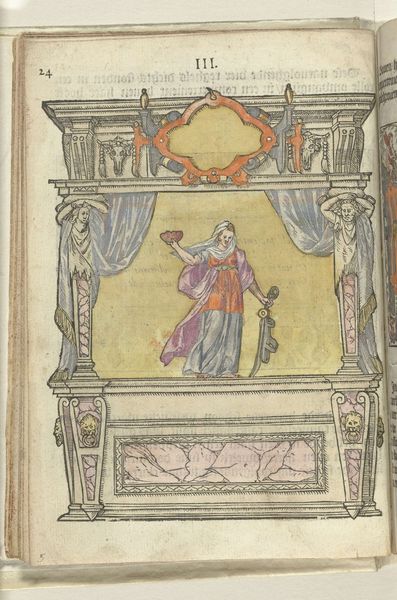
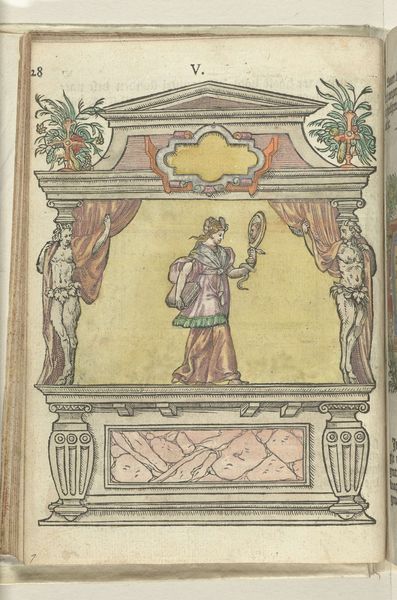
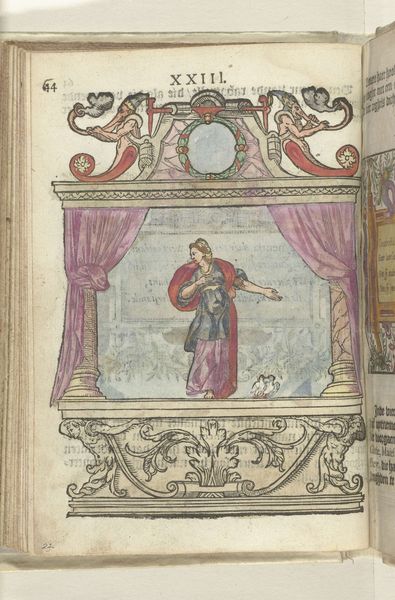
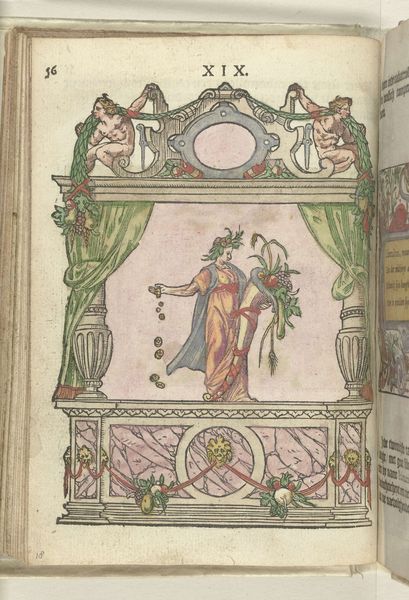
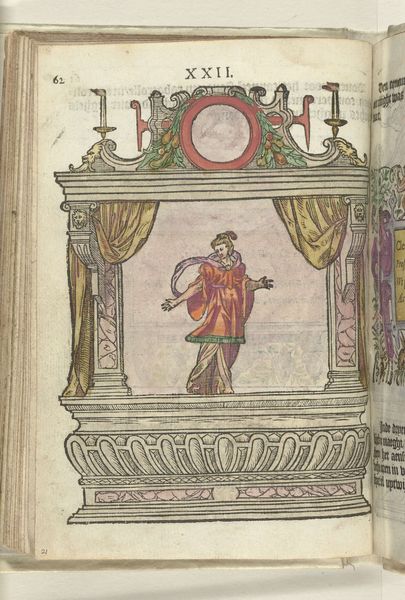
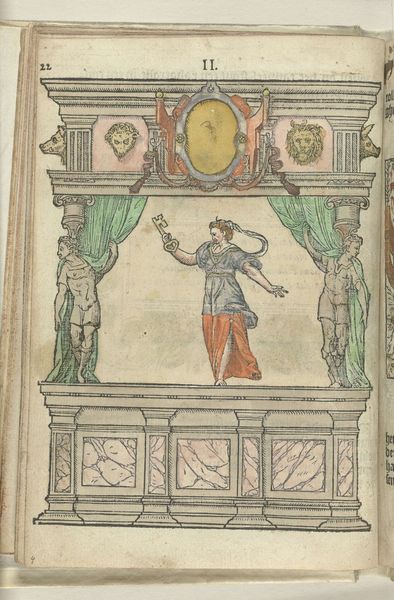
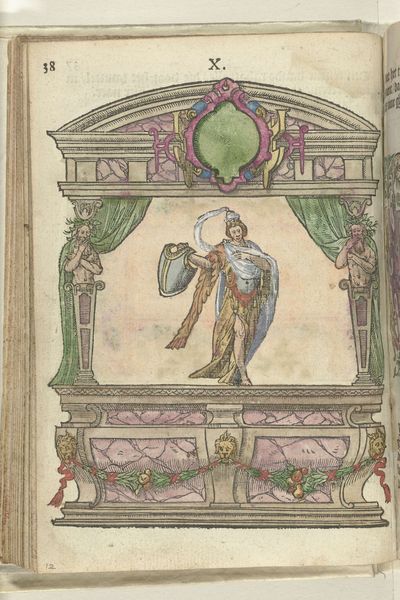
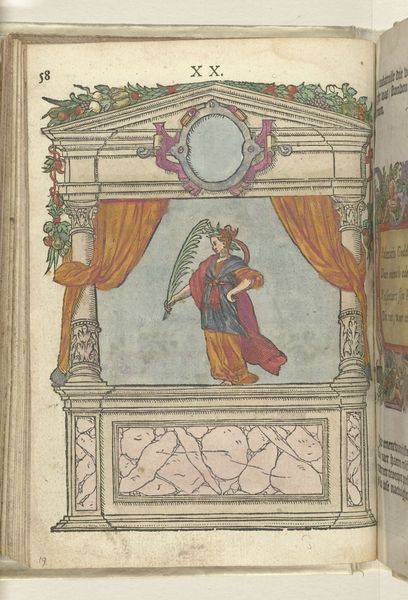
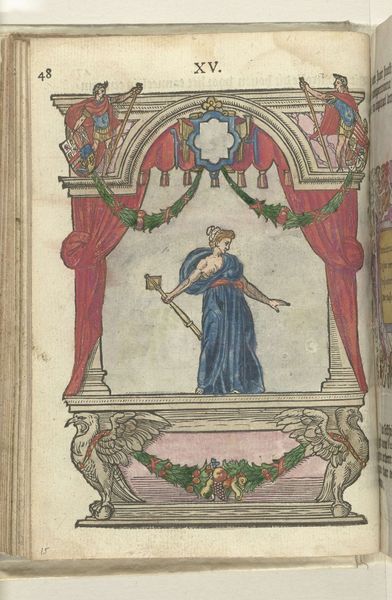
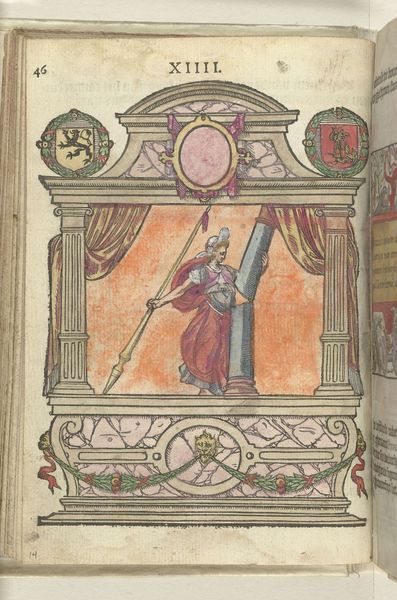
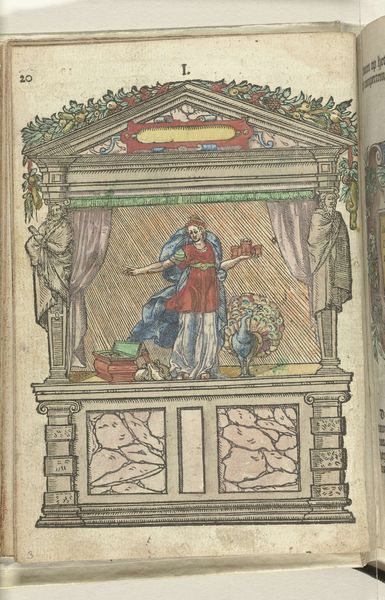
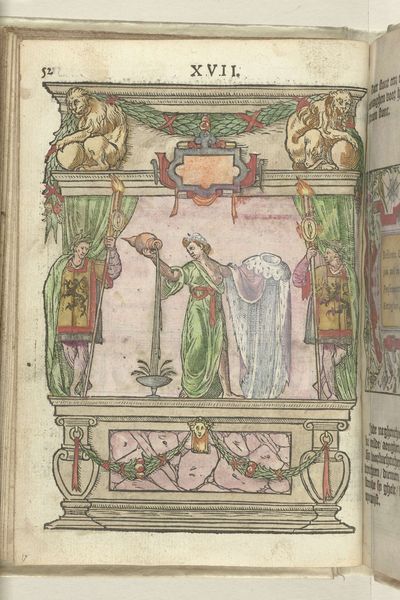
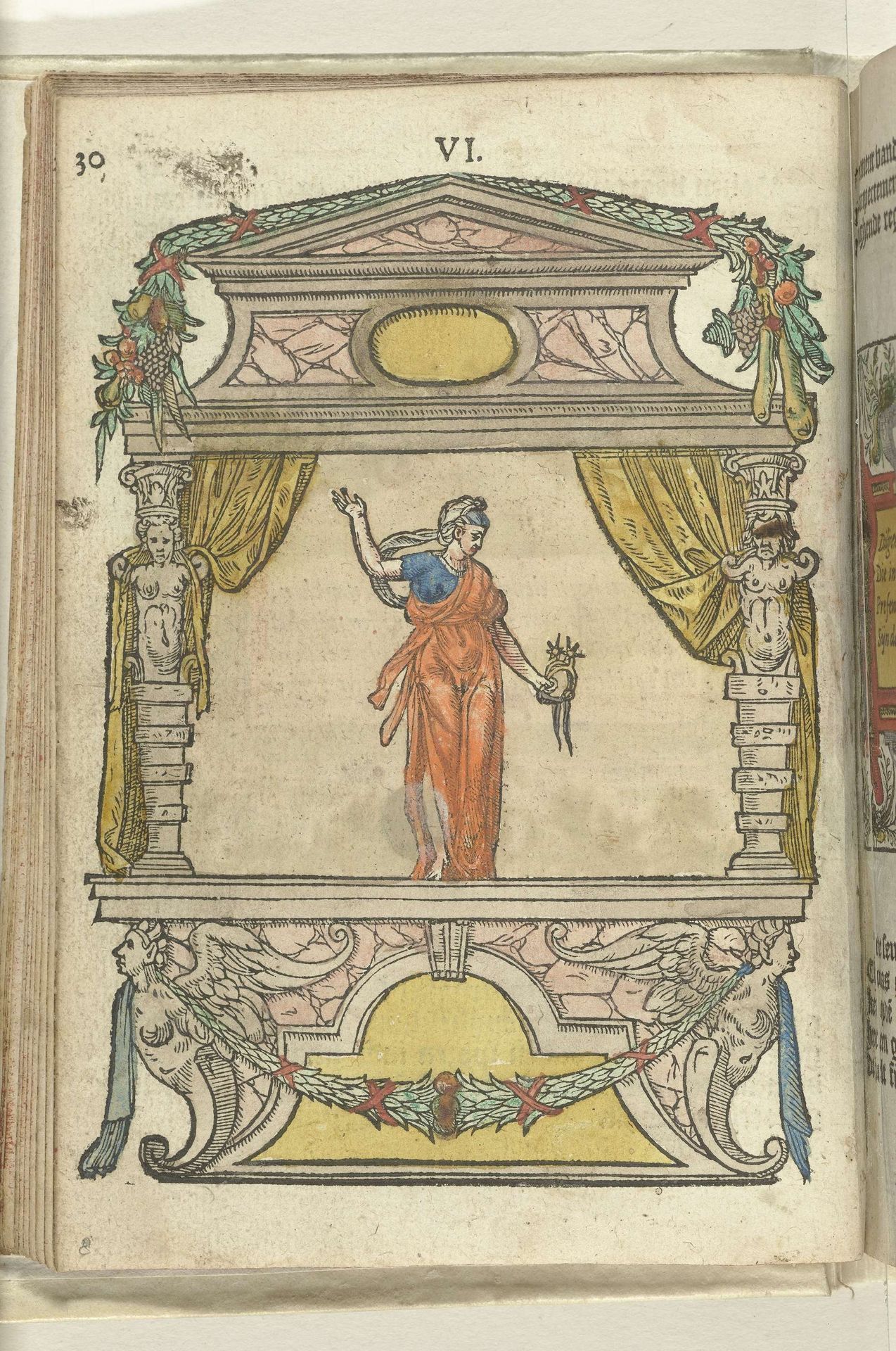
This colored etching by Antoni van Leest, dating from 1578, depicts the personification of Diligentia, or diligence, in the guise of a theatrical stage. The composition is structured by a series of horizontal layers, each adorned with classical motifs like garlands and sculpted figures, creating a balanced yet rigid framework. The central figure, Diligentia, is highlighted by the use of contrasting colors that draw the eye. However, her posture and placement seem almost secondary to the elaborate architectural setting, inviting us to consider the symbolic interplay between virtue and constructed space. The theatrical setting, complete with columns, curtains, and decorative carvings, suggests a constructed reality, perhaps a comment on the performative nature of virtue itself. The use of classical motifs may seem traditional, but their arrangement challenges conventional hierarchies, prompting us to question the values embedded within these symbols. This etching invites ongoing interpretation, where Diligentia is not merely represented but actively negotiated within cultural and philosophical discourse.
Toneel met personificatie van de Vlijt (Diligentia), 1578
1578 - 1579

Artwork details
- Medium
- print, ink, engraving
- Dimensions
- height 155 mm, width 115 mm
- Copyright
- Rijks Museum: Open Domain
Tags
Comments
Share your thoughts
About this artwork
This colored etching by Antoni van Leest, dating from 1578, depicts the personification of Diligentia, or diligence, in the guise of a theatrical stage. The composition is structured by a series of horizontal layers, each adorned with classical motifs like garlands and sculpted figures, creating a balanced yet rigid framework. The central figure, Diligentia, is highlighted by the use of contrasting colors that draw the eye. However, her posture and placement seem almost secondary to the elaborate architectural setting, inviting us to consider the symbolic interplay between virtue and constructed space. The theatrical setting, complete with columns, curtains, and decorative carvings, suggests a constructed reality, perhaps a comment on the performative nature of virtue itself. The use of classical motifs may seem traditional, but their arrangement challenges conventional hierarchies, prompting us to question the values embedded within these symbols. This etching invites ongoing interpretation, where Diligentia is not merely represented but actively negotiated within cultural and philosophical discourse.
Comments
Share your thoughts