c. 1668
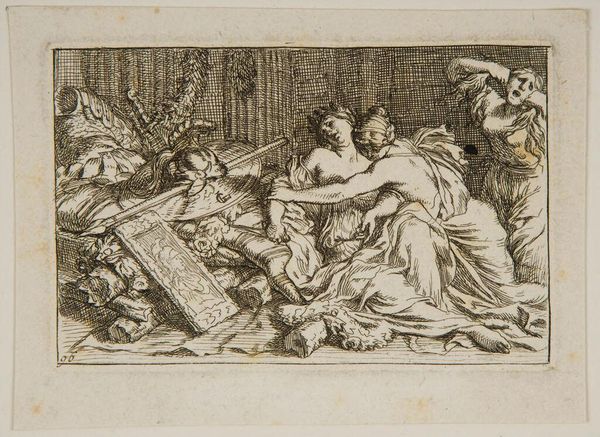
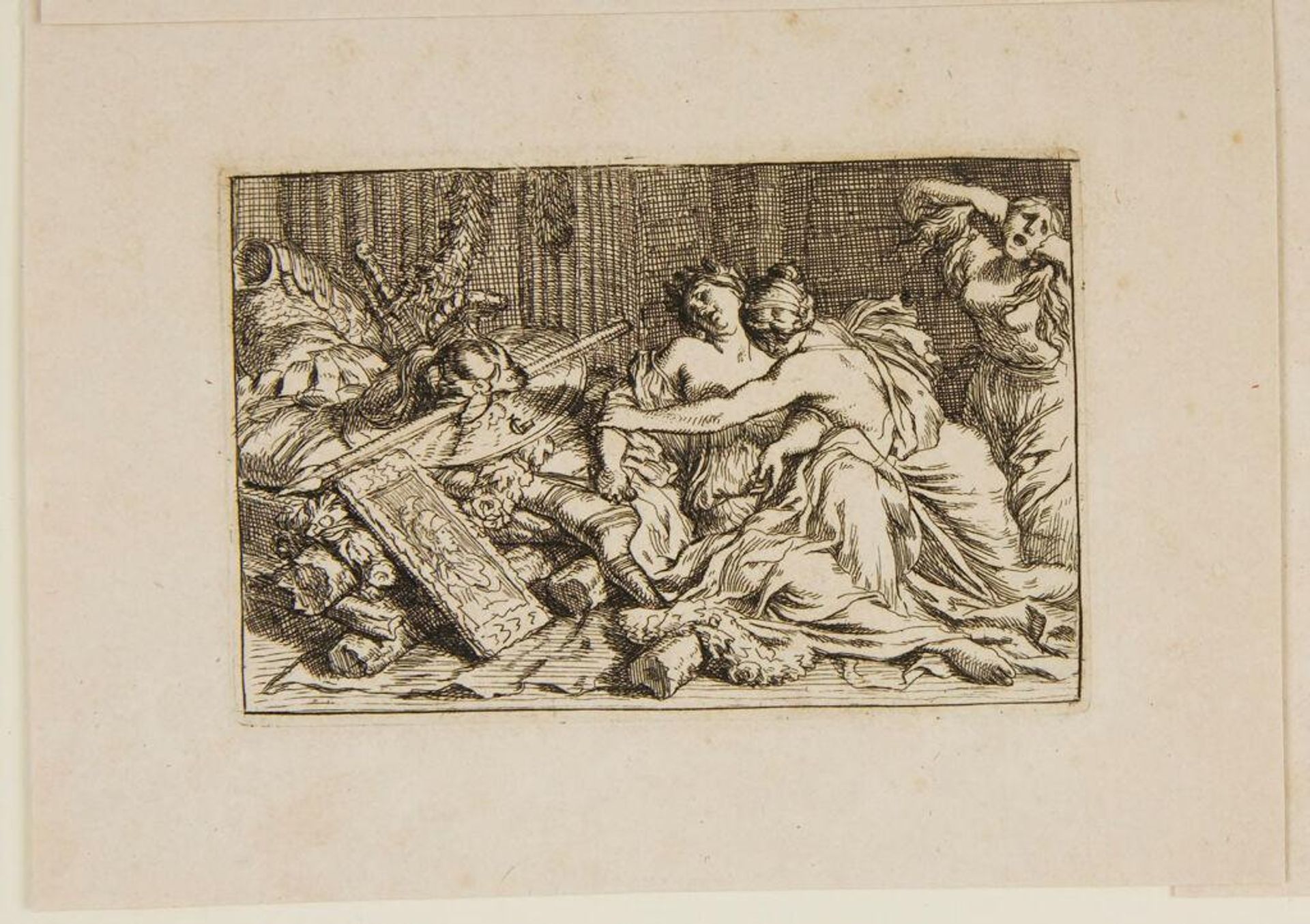
The Story of Dido and Aeneas

Listen to curator's interpretation
Curatorial notes
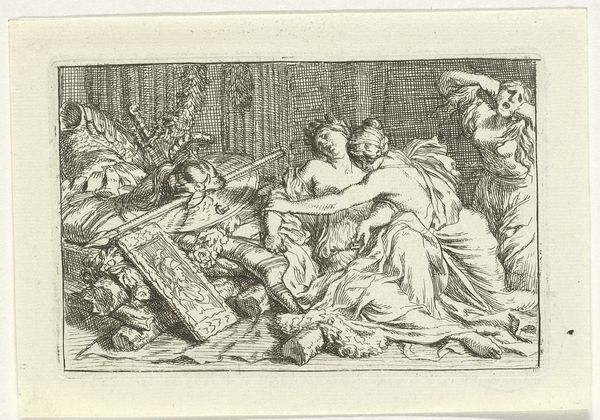
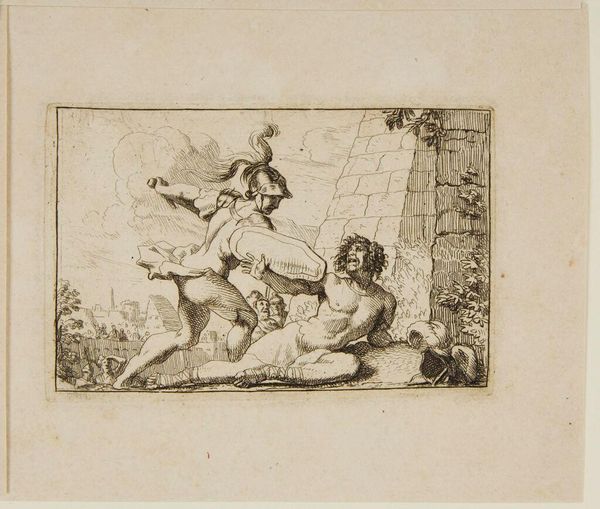
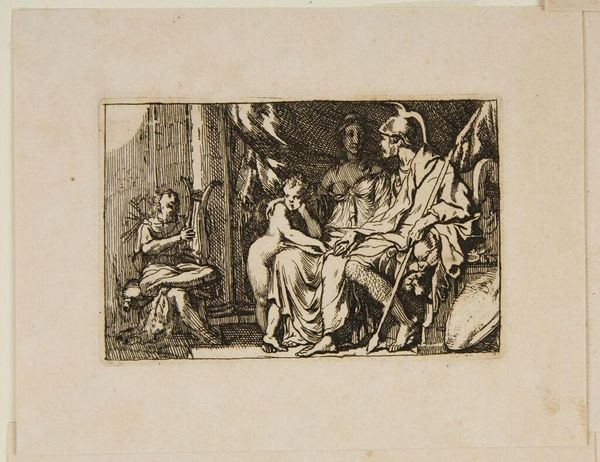
Curator: Look at this etching by Gérard de Lairesse; it depicts The Story of Dido and Aeneas and resides here at the Harvard Art Museums. It's quite small, only about 6.7 by 10.2 cm. Editor: My initial reaction is one of tragic drama. The figures are intertwined in what appears to be a moment of intense emotion. Curator: Indeed. The scene captures the poignant moment of Dido's suicide after Aeneas abandons her, as told in Virgil’s Aeneid. Notice the scattered armor and regal objects; they symbolize lost power and a kingdom in disarray. Editor: The woman in the background, her hands raised in despair, echoes the emotional turmoil. It’s a powerful visualization of abandonment and its consequences, repeated throughout history. Curator: The visual language here—the collapsed forms, the stark lines—speaks directly to the viewer, evoking a sense of empathy for Dido's plight, a queen betrayed. Editor: Seeing this, I'm reminded how artists choose certain moments to reflect on power, loss, and the politics of personal stories in the grander historical narrative.