About this artwork
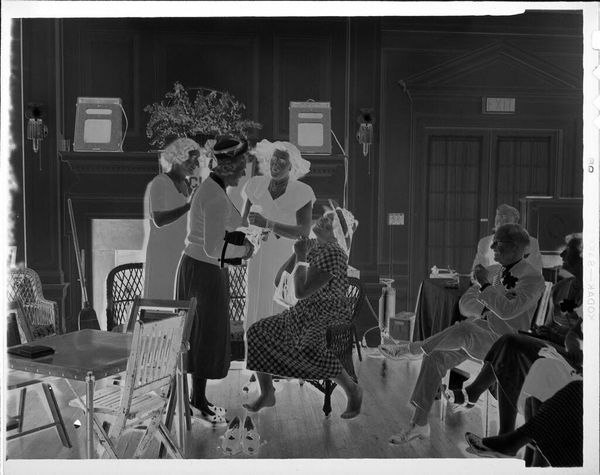
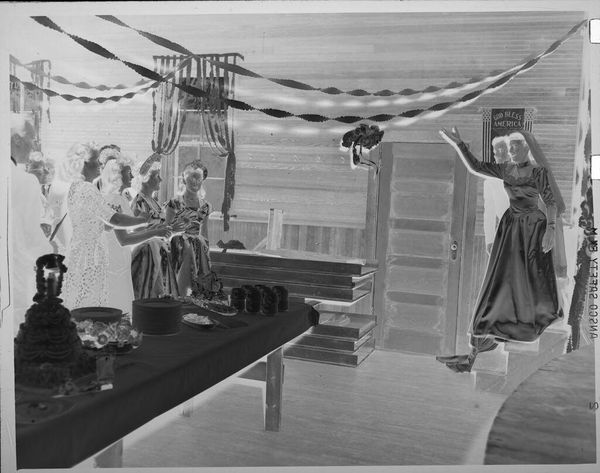
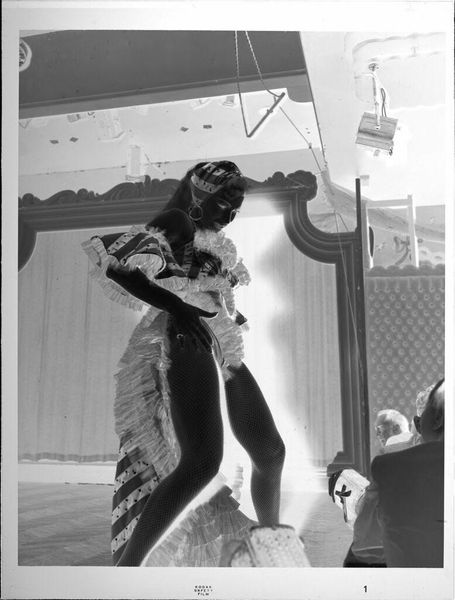
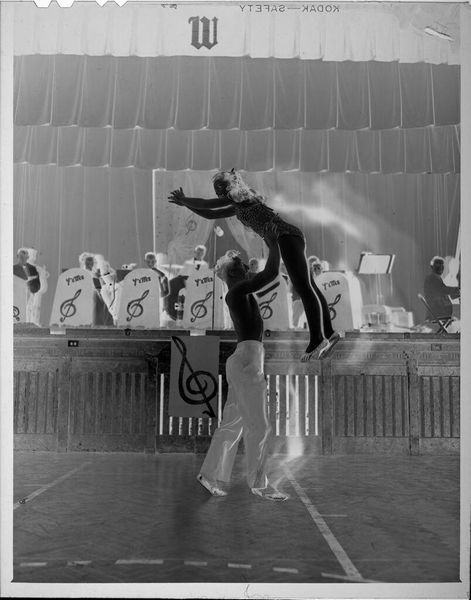
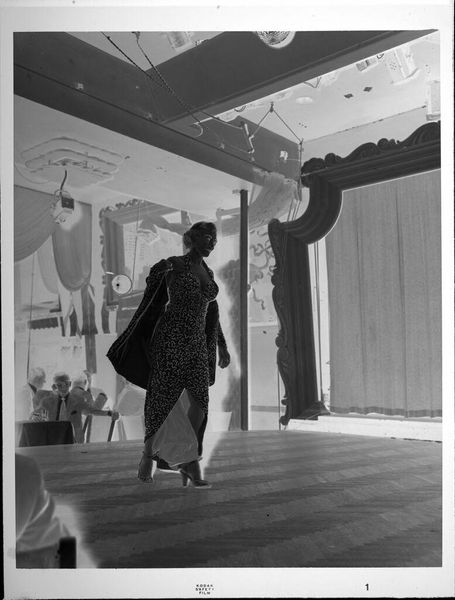
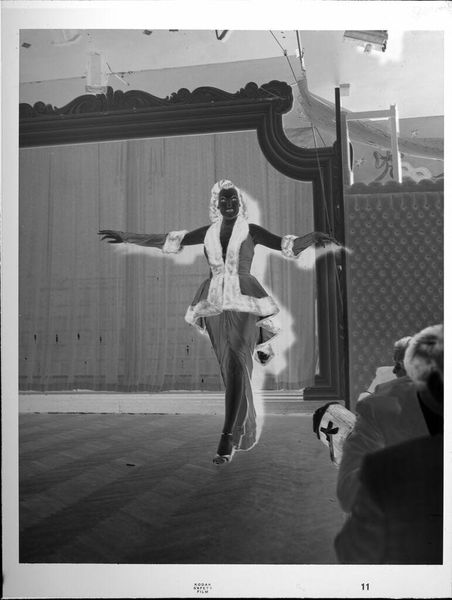
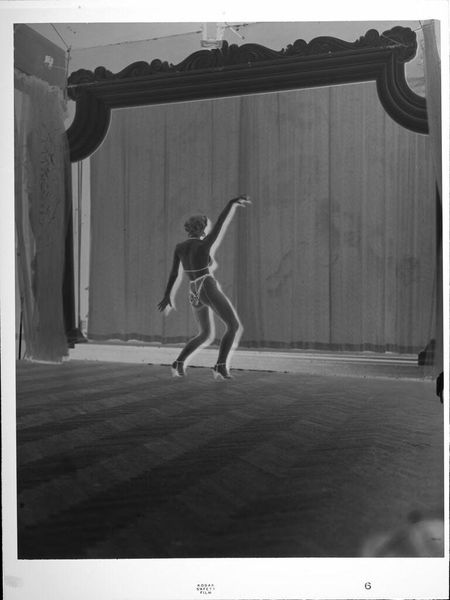
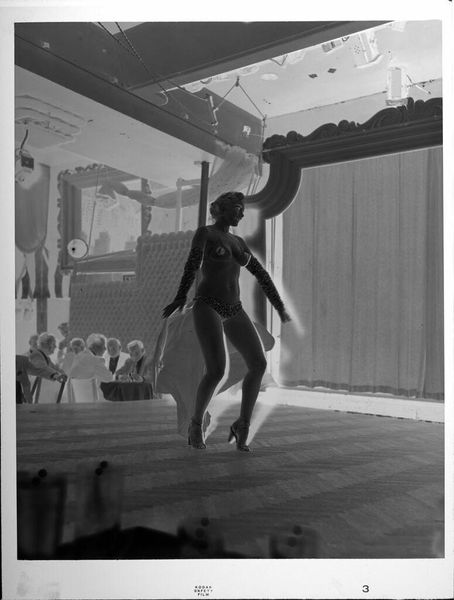
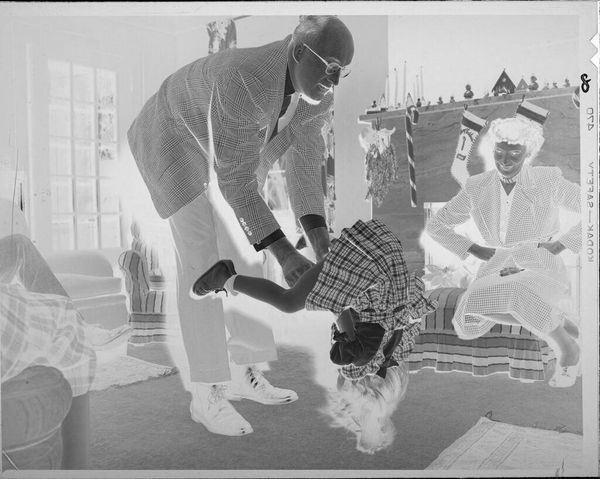
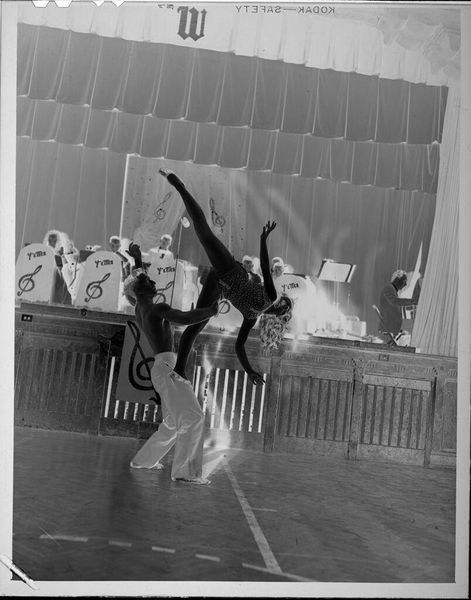
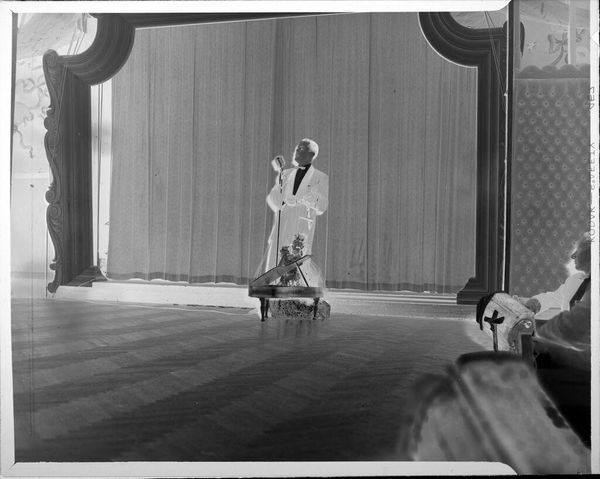
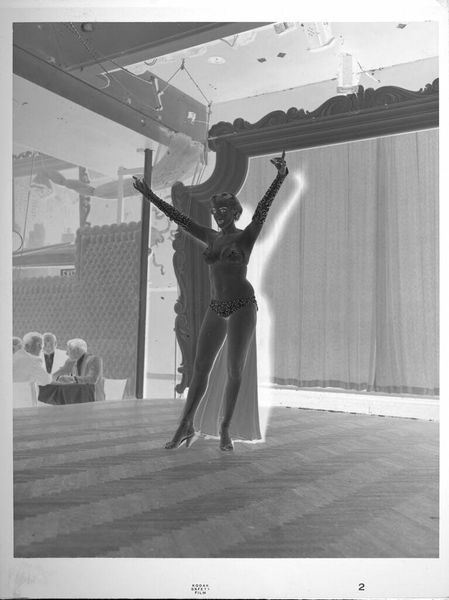
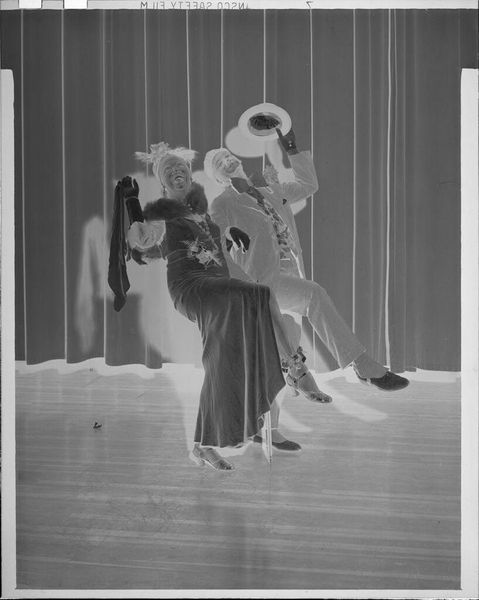
Editor: This photograph, "Untitled (performers on stage)" by Peter James Studio, presents a theatrical scene. Its negative format gives it an eerie, dreamlike quality. What emotional impact do you think this reversed tonality brings to the work? Curator: The negative image lends a ghostly quality. It recalls photographic techniques used to highlight social and political themes. Does the reversal affect how we read the narrative? The stage, the performers – are they symbols of transformation, of the hidden aspects of identity brought to light, so to speak? Editor: That's a thought-provoking point. It makes me wonder what the original image looked like and how that would change our perception. Curator: Precisely. The cultural memory embedded in images can shift with even slight alterations in form and context. Considering how often photographic images are manipulated today, understanding that shifting cultural memory feels more important than ever.
Untitled (performers on stage)
c. 1950

Artwork details
- Dimensions
- 10.16 x 12.7 cm (4 x 5 in.)
- Location
- Harvard Art Museums
- Copyright
- CC0 1.0
Comments
Share your thoughts
About this artwork
Editor: This photograph, "Untitled (performers on stage)" by Peter James Studio, presents a theatrical scene. Its negative format gives it an eerie, dreamlike quality. What emotional impact do you think this reversed tonality brings to the work? Curator: The negative image lends a ghostly quality. It recalls photographic techniques used to highlight social and political themes. Does the reversal affect how we read the narrative? The stage, the performers – are they symbols of transformation, of the hidden aspects of identity brought to light, so to speak? Editor: That's a thought-provoking point. It makes me wonder what the original image looked like and how that would change our perception. Curator: Precisely. The cultural memory embedded in images can shift with even slight alterations in form and context. Considering how often photographic images are manipulated today, understanding that shifting cultural memory feels more important than ever.
Comments
Share your thoughts