About this artwork
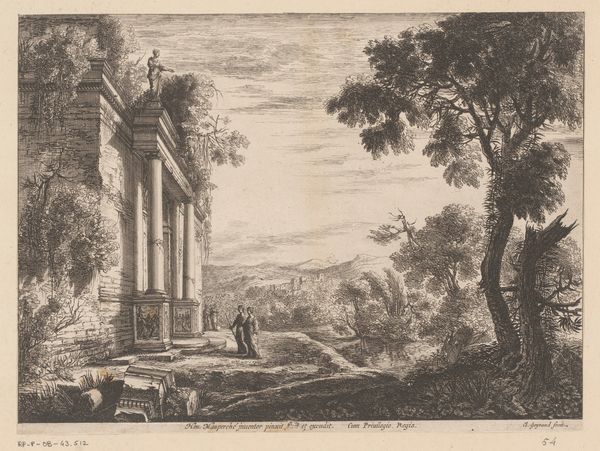
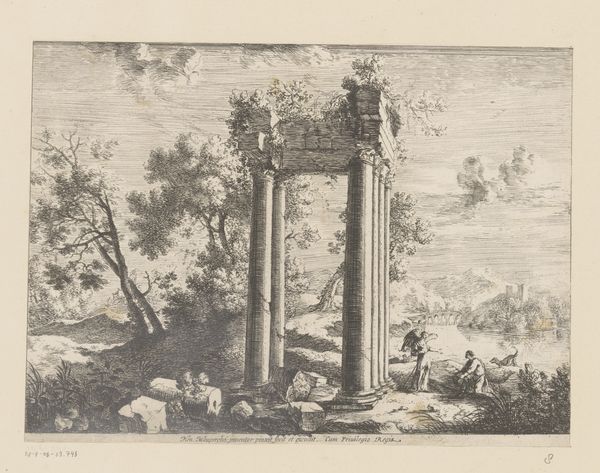
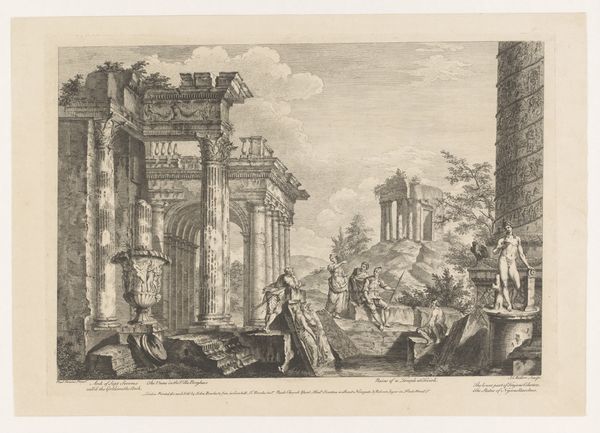
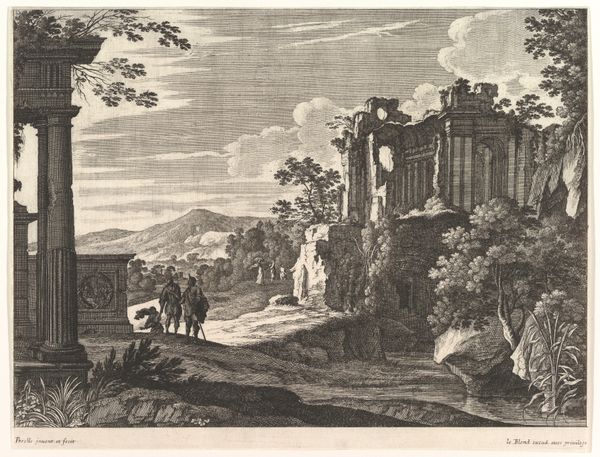
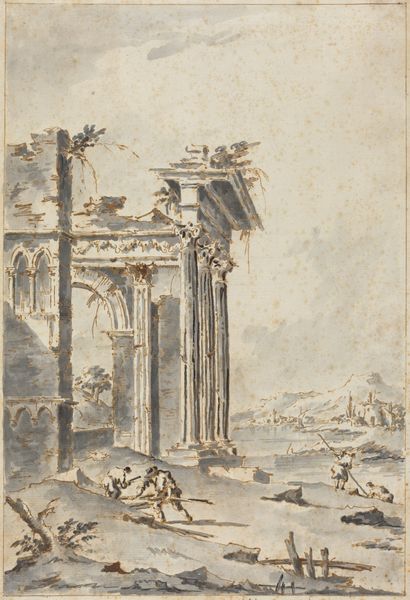
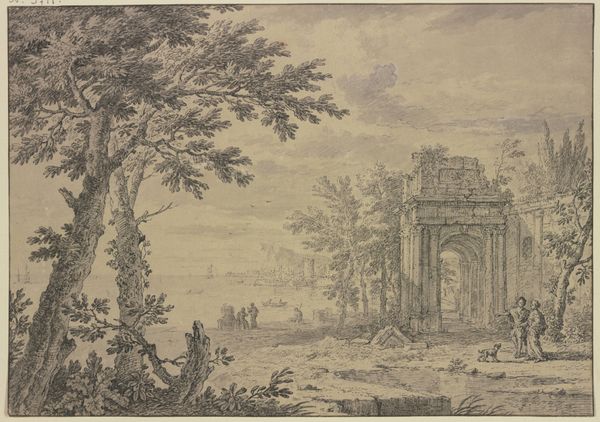
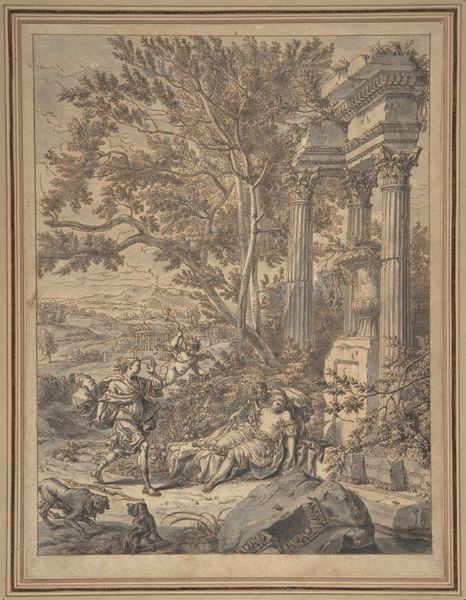
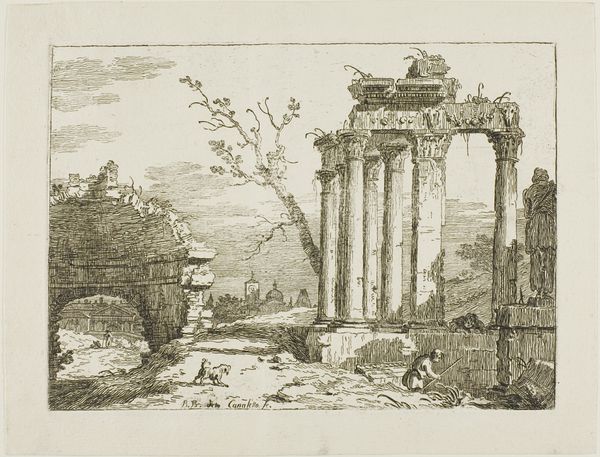
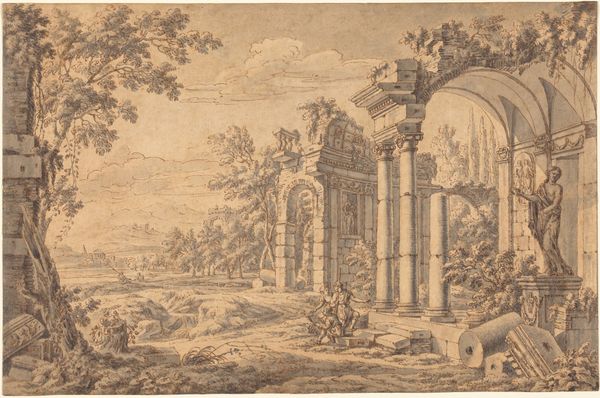
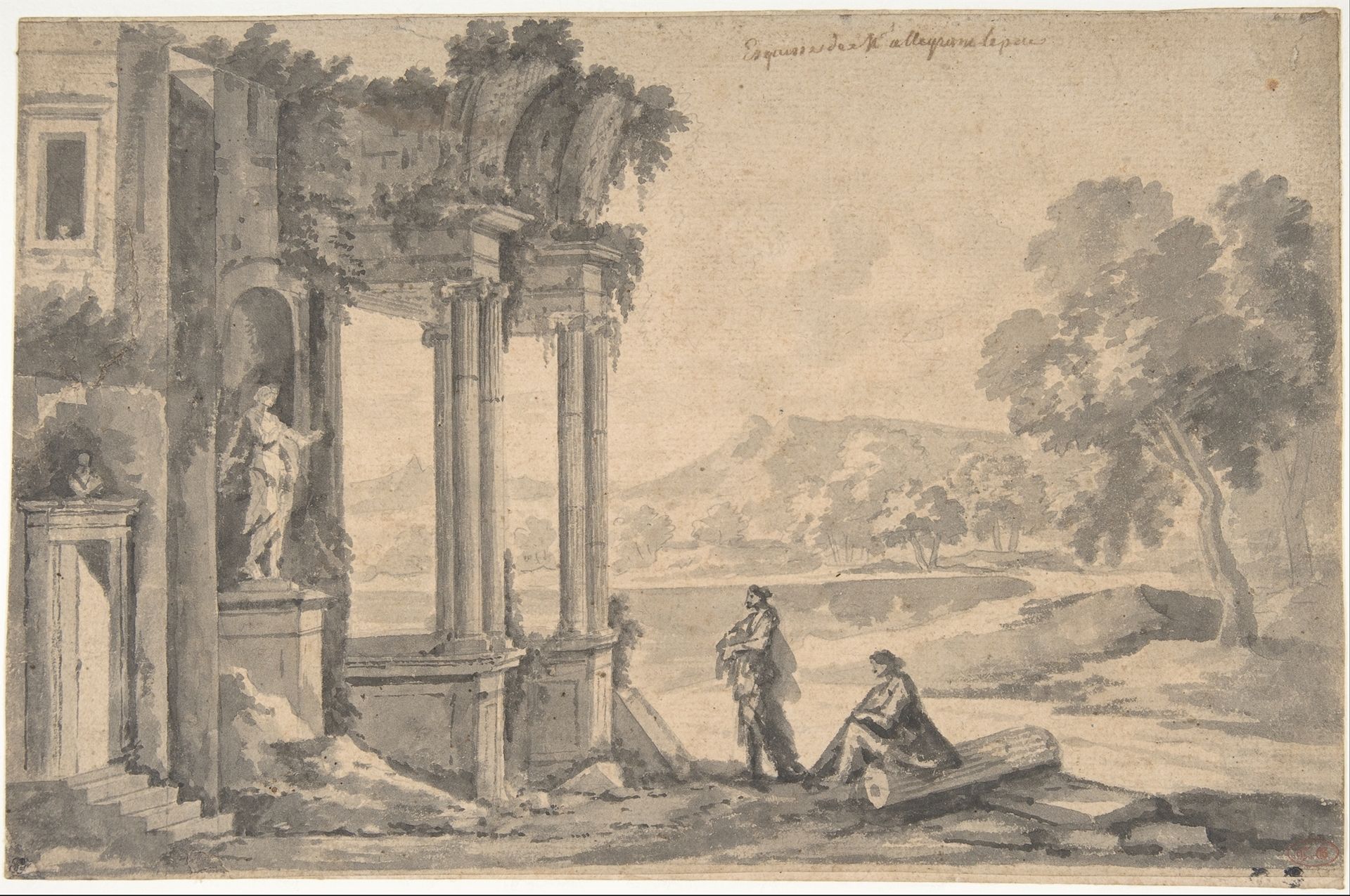
Etienne Allegrain created this drawing, "Ruins of a Temple by a Lake," using pen and brown ink with gray wash. The subdued palette creates a contemplative mood, drawing attention to the ruin's structural elements. Allegrain masterfully uses line and wash to define architectural forms, contrasting the temple's geometric rigidity with the organic decay. Notice how the deliberate arrangement of ruins against the natural backdrop exemplifies the picturesque aesthetic, where nature reclaims classical structures. The composition is carefully constructed, layering the architectural foreground with the distant landscape, inviting the viewer's gaze across space. These ruins can be interpreted through a semiotic lens as symbols of temporal change, and the transience of human endeavor. The emphasis on decay and ruin presents a dialogue between what once was and what remains, thus questioning the permanence of human achievement, a theme resonant with broader philosophical inquiries into time, memory, and the sublime.
Ruins of a Temple by a Lake 1644 - 1736


Artwork details
- Medium
- drawing, print
- Dimensions
- 7 1/2 X 11 5/8 in. (19.1 x 29.5 cm.)
- Location
- Metropolitan Museum of Art, New York, NY
- Copyright
- Public Domain
Tags
tree
landscape illustration sketch
drawing
lake
toned paper
light pencil work
pencil sketch
incomplete sketchy
personal sketchbook
ink drawing experimentation
pen-ink sketch
men
watercolour illustration
watercolor
Comments
No comments
About this artwork
Etienne Allegrain created this drawing, "Ruins of a Temple by a Lake," using pen and brown ink with gray wash. The subdued palette creates a contemplative mood, drawing attention to the ruin's structural elements. Allegrain masterfully uses line and wash to define architectural forms, contrasting the temple's geometric rigidity with the organic decay. Notice how the deliberate arrangement of ruins against the natural backdrop exemplifies the picturesque aesthetic, where nature reclaims classical structures. The composition is carefully constructed, layering the architectural foreground with the distant landscape, inviting the viewer's gaze across space. These ruins can be interpreted through a semiotic lens as symbols of temporal change, and the transience of human endeavor. The emphasis on decay and ruin presents a dialogue between what once was and what remains, thus questioning the permanence of human achievement, a theme resonant with broader philosophical inquiries into time, memory, and the sublime.
Comments
No comments