1866 - 1924
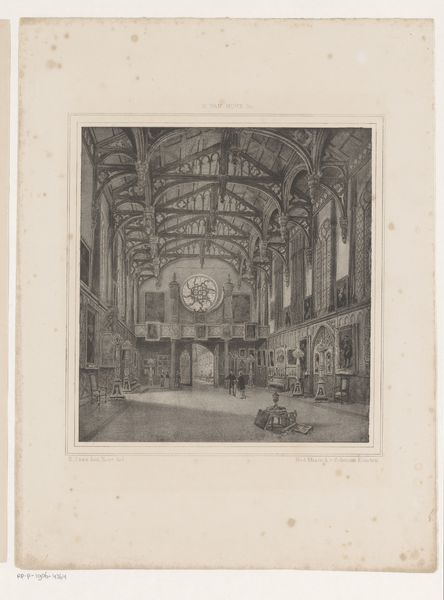
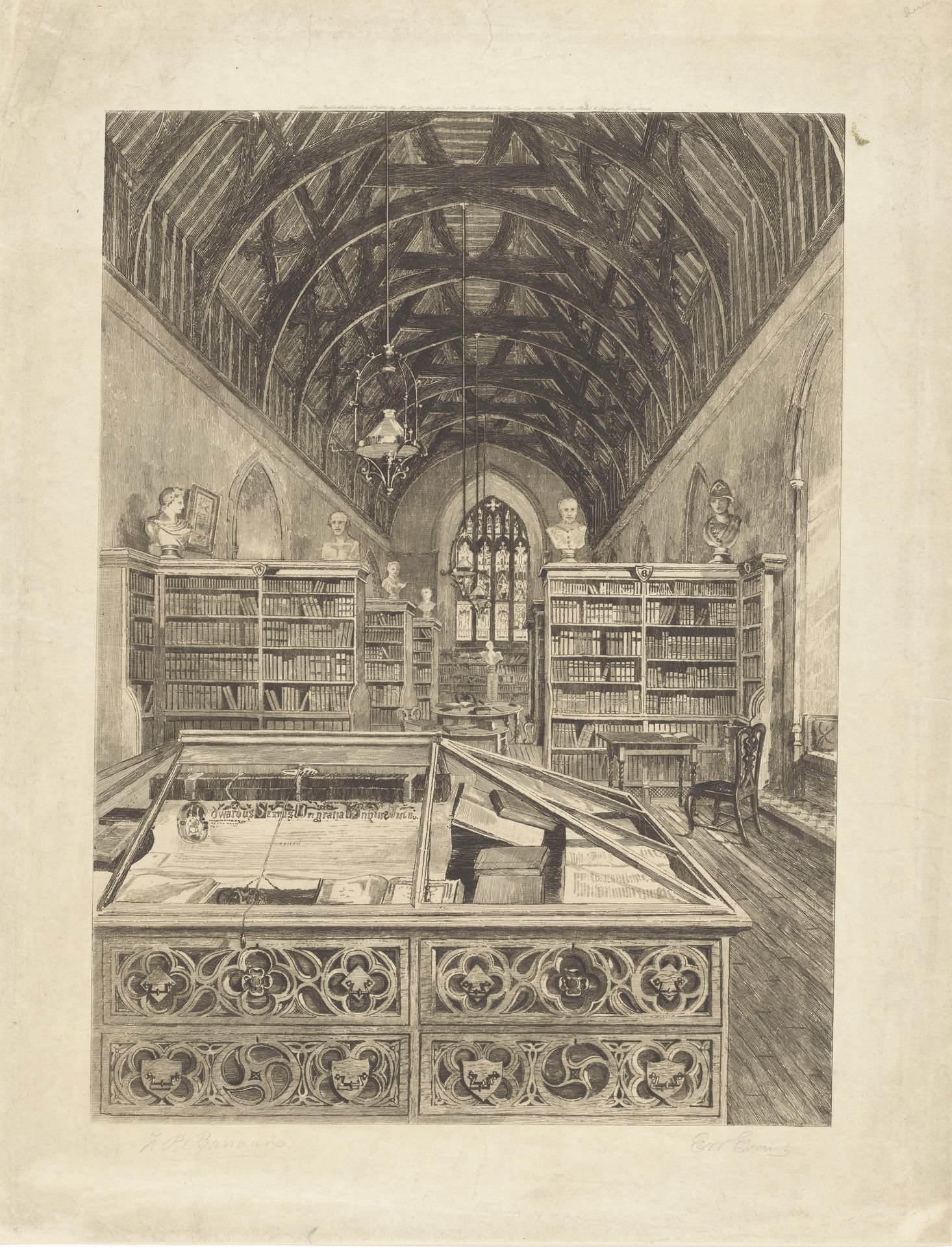
Interieur van een bibliotheek

Listen to curator's interpretation
Curatorial notes
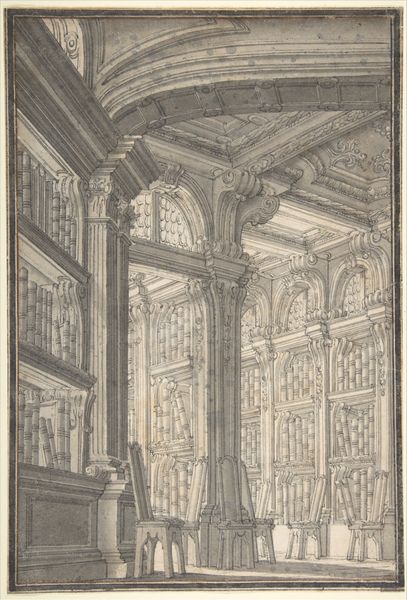
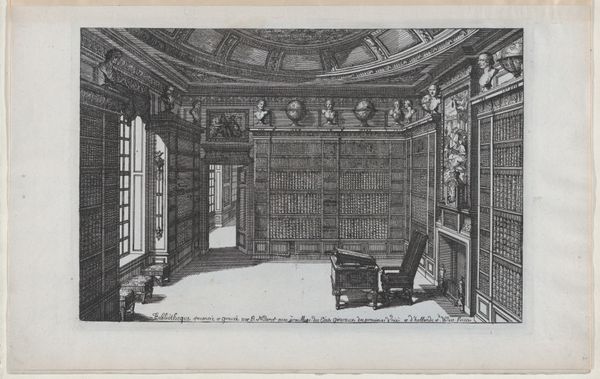
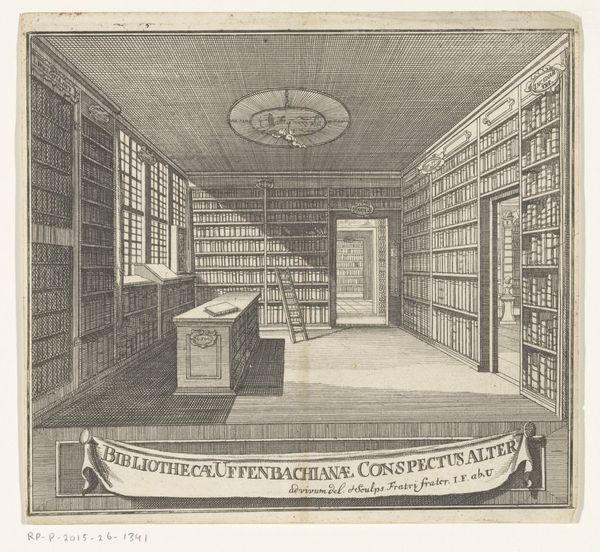
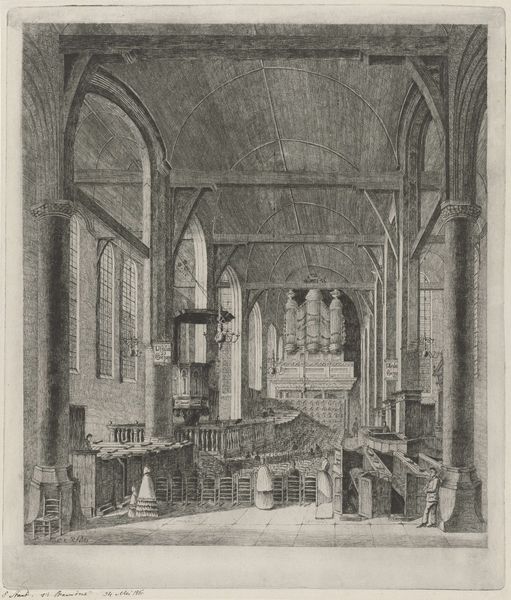
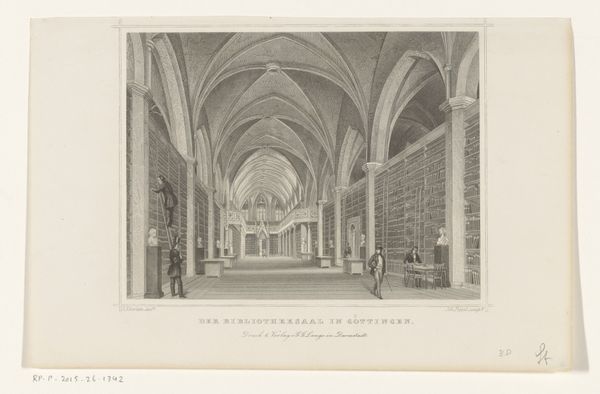
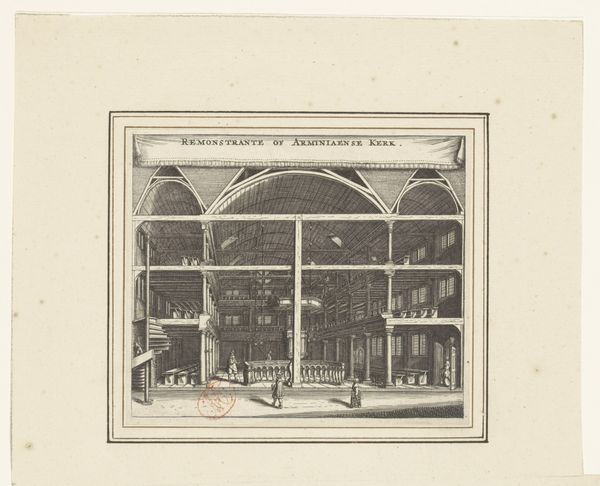
Editor: So this is "Interieur van een bibliotheek" by E.W. Evans, created sometime between 1866 and 1924. It looks like a pencil sketch. I'm struck by how detailed it is, especially the ceiling and the display case. What do you see in this piece, focusing on the art itself? Curator: The immediately striking element is the meticulous rendering of texture and form through purely linear means. Notice how the artist employs hatching and cross-hatching to build up tonal values, simulating light and shadow within this architectural space. What do you make of the perspective employed? Editor: Well, it seems fairly accurate, creating a sense of depth as your eyes move toward the back of the library with its large arched window. Curator: Precisely. But consider how the artist manipulates that perspective. The foreground is dominated by this elaborate display case, drawing the viewer's eye in. Then, notice the repetition of vertical elements – the bookshelves, the window mullions – creating a rhythmic structure. Does this structural emphasis have a specific meaning? Editor: Hmm, perhaps the rhythm of those verticals, contrasted by the arching ceiling, provides balance, creating visual harmony. But how does the aged, toned paper play into our formal analysis? Curator: The sepia tone contributes significantly. It mutes the contrasts, fostering a unified field, allowing our perception to attend to formal relationships without strong color distractions. How would you say this affects our experience of the drawing as a whole? Editor: I think it makes the piece feel timeless, classical even. I focused on the representational, but seeing your analysis has made me appreciate the underlying structural complexity of this sketch! Curator: And recognizing those structural relationships illuminates the meticulous craftsmanship, thereby affecting how we read what is being represented. Form and content work hand in hand.