About this artwork
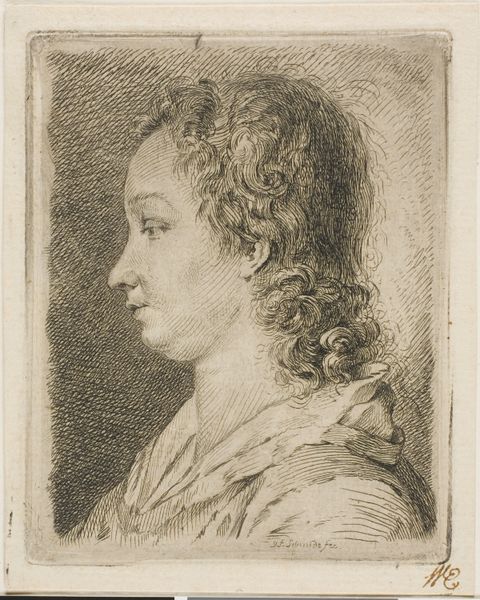
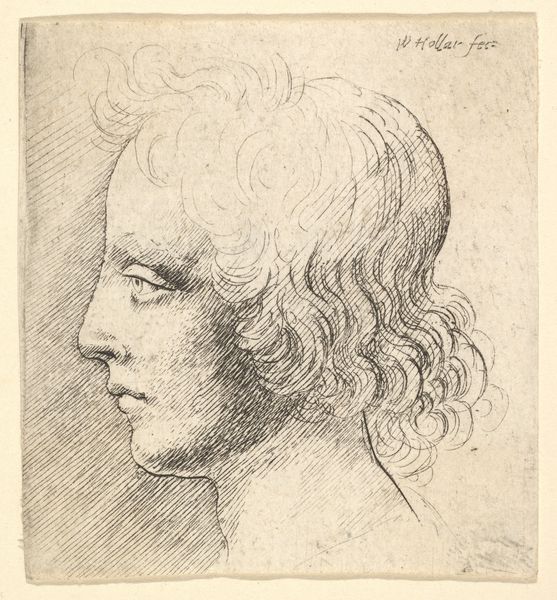
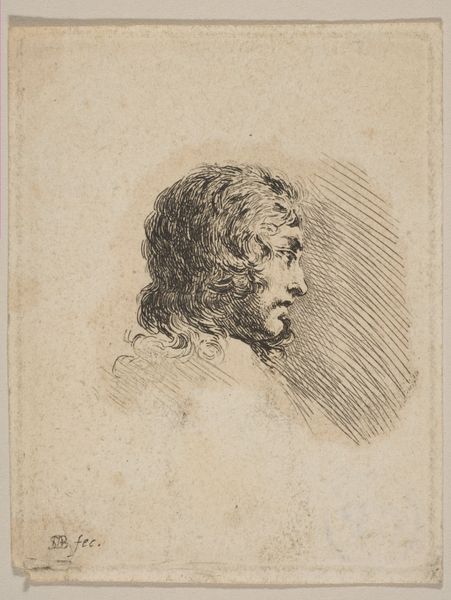
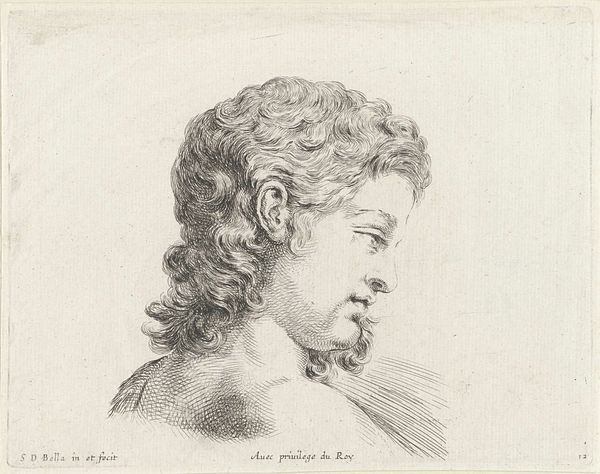
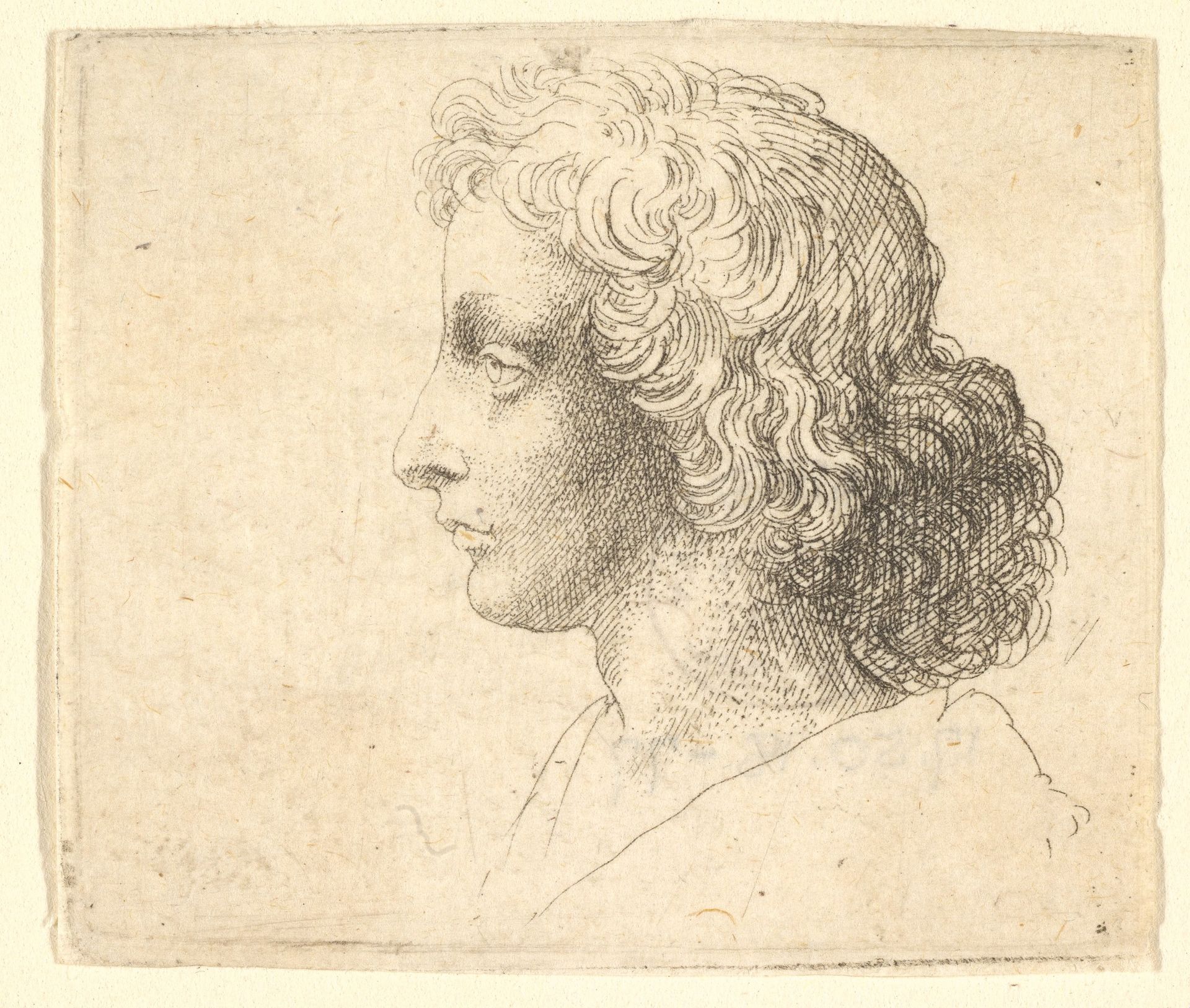
Wenceslaus Hollar created this etching of a young man's head in profile sometime in the 17th century. It embodies some of the contradictions of the artist's position in that period. Hollar, a Bohemian working in England, was employed by wealthy patrons such as the Earl of Arundel, but he also produced smaller, more accessible works like this one. This print speaks to the growing market for images and the increasing professionalization of the artist. The sitter's elegant, flowing hair and refined features place him within a specific social class, one that Hollar, as an artist dependent on patronage, sought to capture and serve. However, the very act of creating and distributing such images through printmaking also democratized access to them, challenging the exclusivity of aristocratic representation. By studying Hollar's life and the social context of his work, we can better understand the complex role of the artist in a rapidly changing society. We can see how he navigated the demands of patronage, the lure of the market, and the power of images to shape social identity.
Head of young man with long hair in profile to the left
1644 - 1652


Artwork details
- Medium
- drawing, print, engraving
- Dimensions
- Plate: 1 9/16 × 1 7/8 in. (4 × 4.8 cm) with thread margins
- Location
- Metropolitan Museum of Art, New York, NY
- Copyright
- Public Domain
Tags
Comments
Share your thoughts
About this artwork
Wenceslaus Hollar created this etching of a young man's head in profile sometime in the 17th century. It embodies some of the contradictions of the artist's position in that period. Hollar, a Bohemian working in England, was employed by wealthy patrons such as the Earl of Arundel, but he also produced smaller, more accessible works like this one. This print speaks to the growing market for images and the increasing professionalization of the artist. The sitter's elegant, flowing hair and refined features place him within a specific social class, one that Hollar, as an artist dependent on patronage, sought to capture and serve. However, the very act of creating and distributing such images through printmaking also democratized access to them, challenging the exclusivity of aristocratic representation. By studying Hollar's life and the social context of his work, we can better understand the complex role of the artist in a rapidly changing society. We can see how he navigated the demands of patronage, the lure of the market, and the power of images to shape social identity.
Comments
Share your thoughts