About this artwork
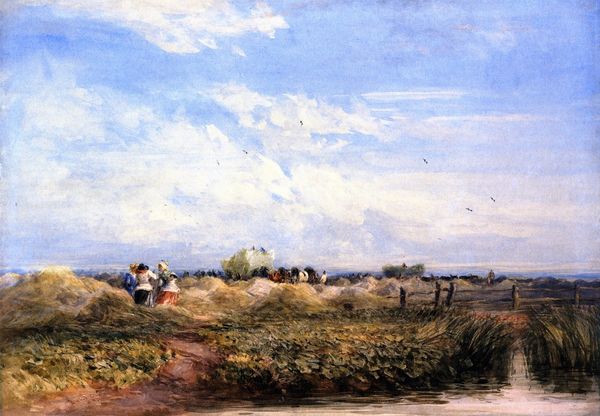
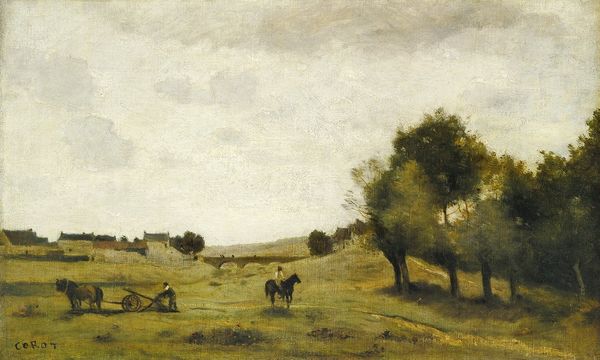
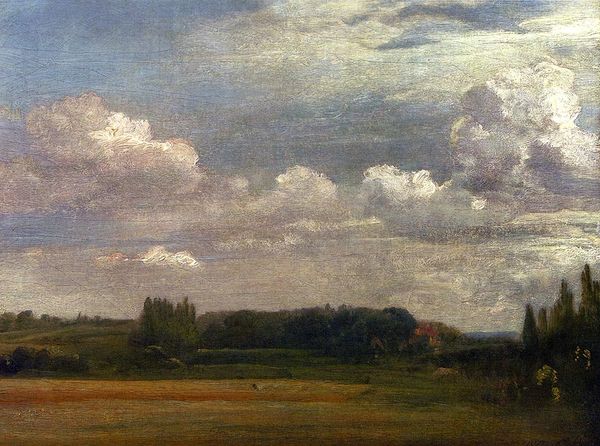
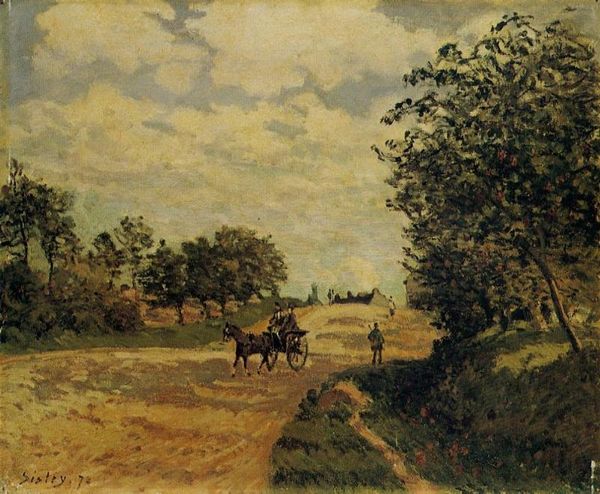
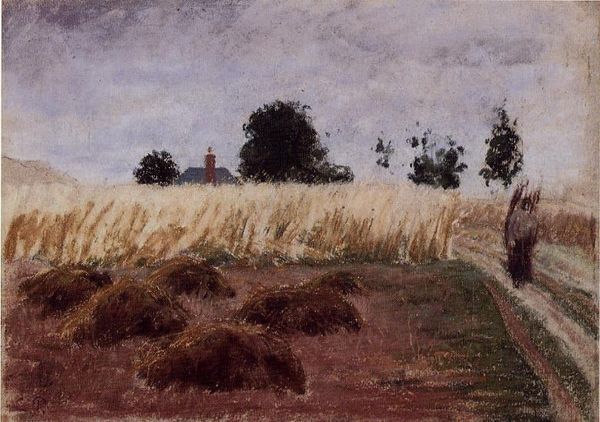
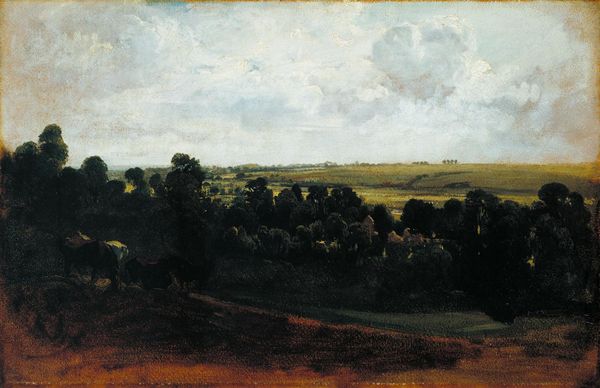
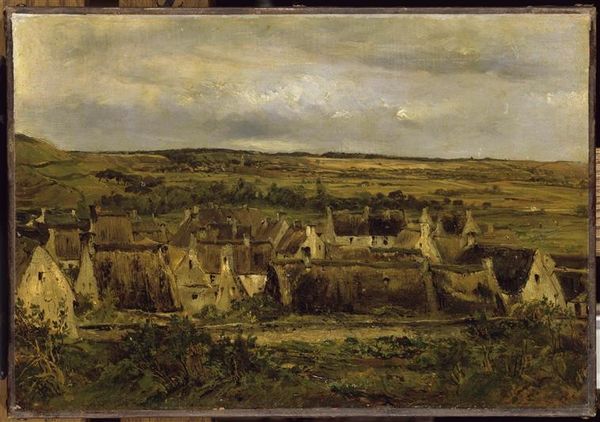
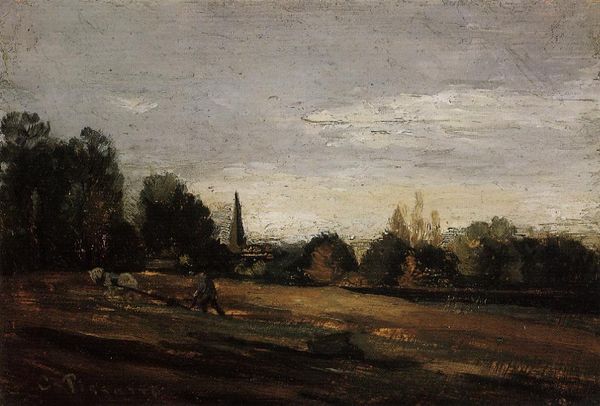
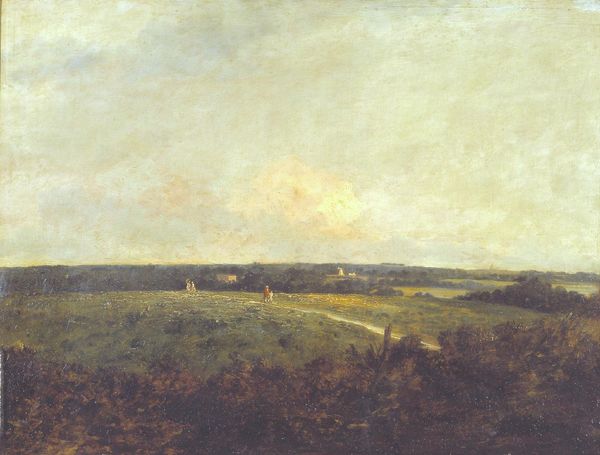
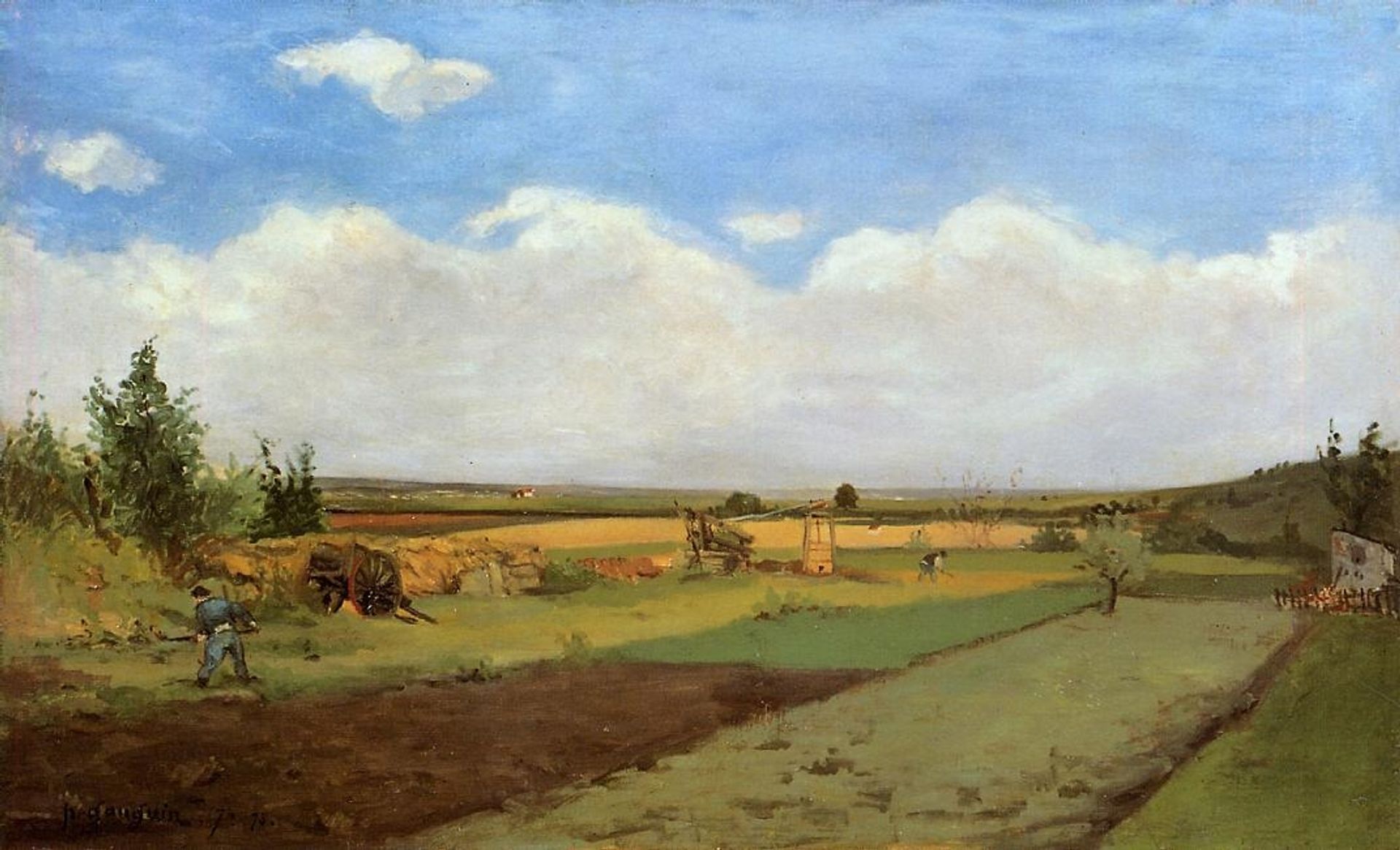
Paul Gauguin made this painting, "Working the Land," using oil paint on canvas. But consider the labor involved in the scene itself, the physical act of working the land. Here, the texture of the paint mimics the rough earth and the weight of the hay bales. Gauguin's brushstrokes capture the inherent qualities of the landscape, its vastness and the physical effort required to cultivate it. We see the sweat and toil in the field, the endless cycle of planting and harvesting. By depicting this scene, Gauguin engaged with the skilled traditions of agriculture, a practice as old as civilization itself. And like all labor, this work is tied to wider social issues of economics, politics, and consumption. How does this painting relate to Gauguin's other work depicting the lives of laborers? Ultimately, appreciating the materials, the making, and the context of this artwork challenges any rigid distinction between fine art and craft. It reminds us that art can be found in the everyday, in the act of working the land, in the very soil beneath our feet.
Working the land 1873

Paul Gauguin
1848 - 1903Location
Fitzwilliam Museum (University of Cambridge), Cambridge, UKArtwork details
- Medium
- plein-air, oil-paint, impasto
- Dimensions
- 50.5 x 81.6 cm
- Location
- Fitzwilliam Museum (University of Cambridge), Cambridge, UK
- Copyright
- Public domain
Tags
sky
rural-area
impressionism
plein-air
oil-paint
landscape
impressionist landscape
figuration
oil painting
impasto
natural-landscape
Comments
No comments
About this artwork
Paul Gauguin made this painting, "Working the Land," using oil paint on canvas. But consider the labor involved in the scene itself, the physical act of working the land. Here, the texture of the paint mimics the rough earth and the weight of the hay bales. Gauguin's brushstrokes capture the inherent qualities of the landscape, its vastness and the physical effort required to cultivate it. We see the sweat and toil in the field, the endless cycle of planting and harvesting. By depicting this scene, Gauguin engaged with the skilled traditions of agriculture, a practice as old as civilization itself. And like all labor, this work is tied to wider social issues of economics, politics, and consumption. How does this painting relate to Gauguin's other work depicting the lives of laborers? Ultimately, appreciating the materials, the making, and the context of this artwork challenges any rigid distinction between fine art and craft. It reminds us that art can be found in the everyday, in the act of working the land, in the very soil beneath our feet.
Comments
No comments