About this artwork
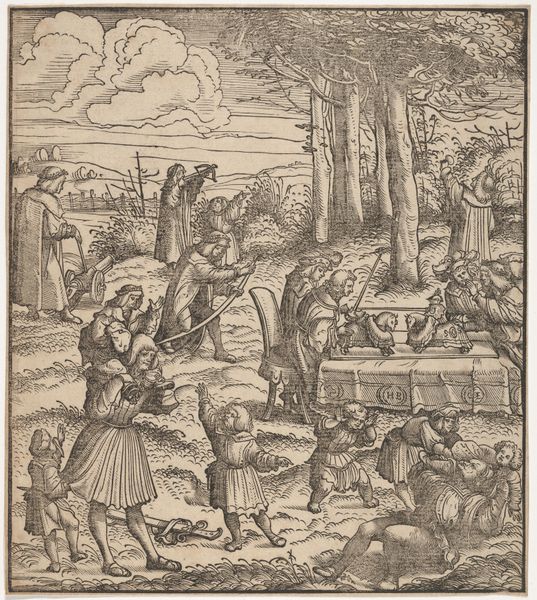
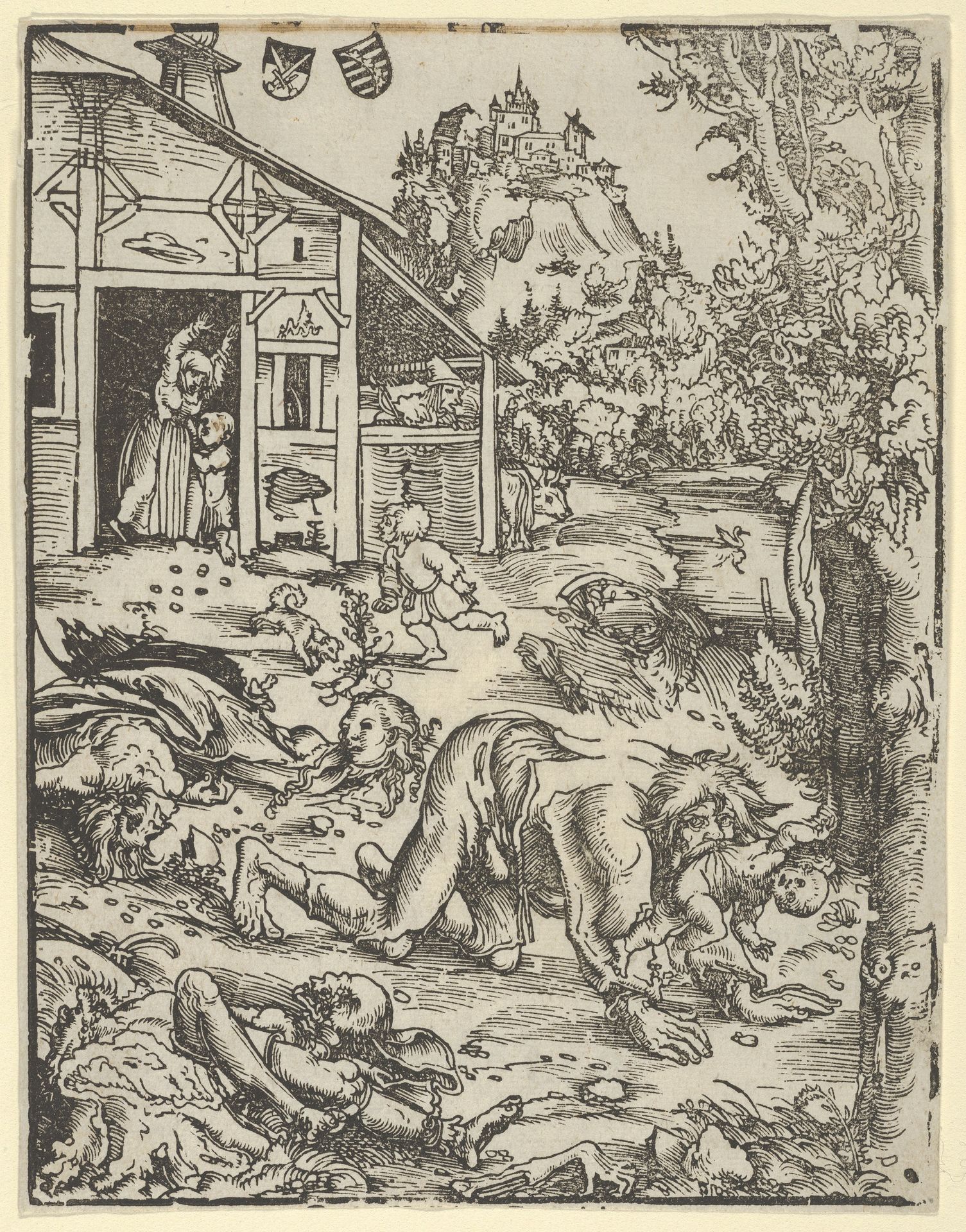
Lucas Cranach the Elder created this unsettling woodcut, "The Werewolf or the Cannibal," with stark contrasts of black ink on paper. The composition is densely packed, drawing the eye to a gruesome scene of violence and chaos in what could be a domestic setting. The sharp lines delineate forms with disturbing clarity, emphasizing the horror of the werewolf figure devouring a child amidst scattered limbs. Cranach's linear method creates a sense of unease, amplified by the jarring juxtaposition of rural life - such as peasants, farm animals and village life - with the monstrous. This highlights the intrusion of primal savagery into the everyday. The artist uses a high vantage point, creating a sense of distance from the horror, a gaze upon a fallen world. The detailed rendering of the figures and landscape is characteristic of the Northern Renaissance, but here, it serves to underscore the darker aspects of human existence and its potential collapse into barbarity. The artist challenges the Renaissance ideals of order and rationality, revealing unsettling possibilities of the human psyche.
The Werewolf or the Cannibal
1472 - 1553

Lucas Cranach the Elder
1472 - 1553
The Metropolitan Museum of Art
Metropolitan Museum of Art, New York, NYArtwork details
- Medium
- drawing, print, engraving
- Dimensions
- Sheet: 6 1/2 × 5 1/16 in. (16.5 × 12.8 cm)
- Location
- Metropolitan Museum of Art, New York, NY
- Copyright
- Public Domain
Tags
drawing
narrative-art
pen drawing
pen illustration
pen sketch
figuration
child
men
line
history-painting
northern-renaissance
engraving
Comments
Be the first to share your thoughts about this work.
About this artwork
Lucas Cranach the Elder created this unsettling woodcut, "The Werewolf or the Cannibal," with stark contrasts of black ink on paper. The composition is densely packed, drawing the eye to a gruesome scene of violence and chaos in what could be a domestic setting. The sharp lines delineate forms with disturbing clarity, emphasizing the horror of the werewolf figure devouring a child amidst scattered limbs. Cranach's linear method creates a sense of unease, amplified by the jarring juxtaposition of rural life - such as peasants, farm animals and village life - with the monstrous. This highlights the intrusion of primal savagery into the everyday. The artist uses a high vantage point, creating a sense of distance from the horror, a gaze upon a fallen world. The detailed rendering of the figures and landscape is characteristic of the Northern Renaissance, but here, it serves to underscore the darker aspects of human existence and its potential collapse into barbarity. The artist challenges the Renaissance ideals of order and rationality, revealing unsettling possibilities of the human psyche.
Comments
Be the first to share your thoughts about this work.