About this artwork
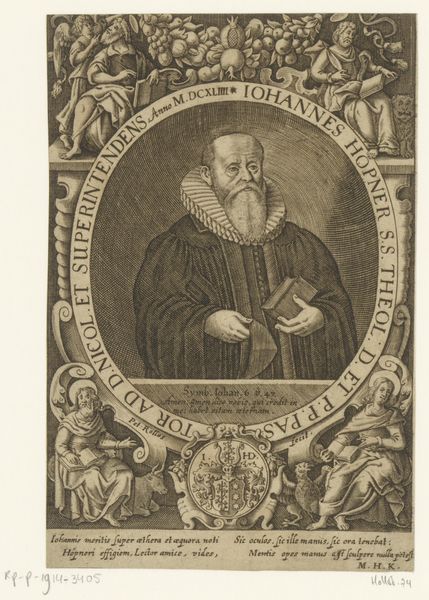
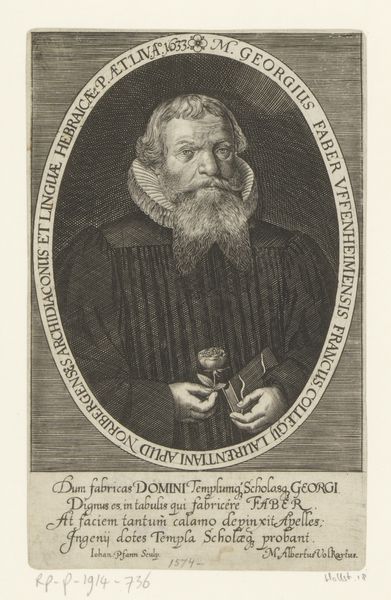
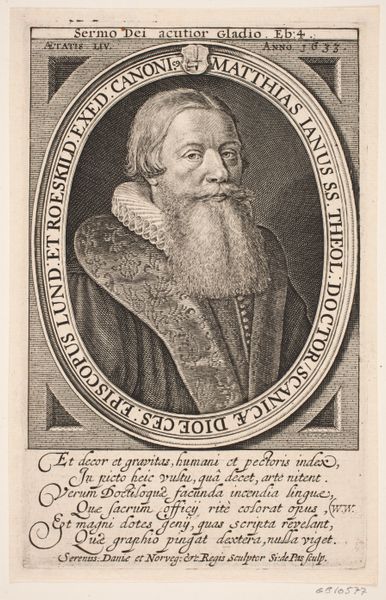
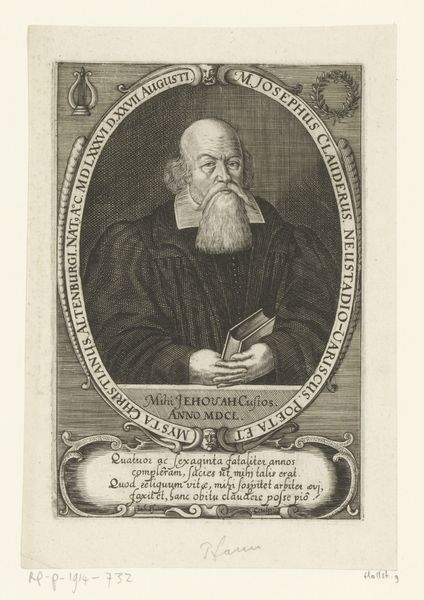
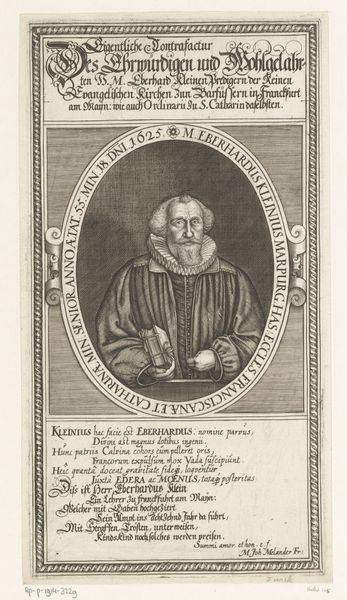
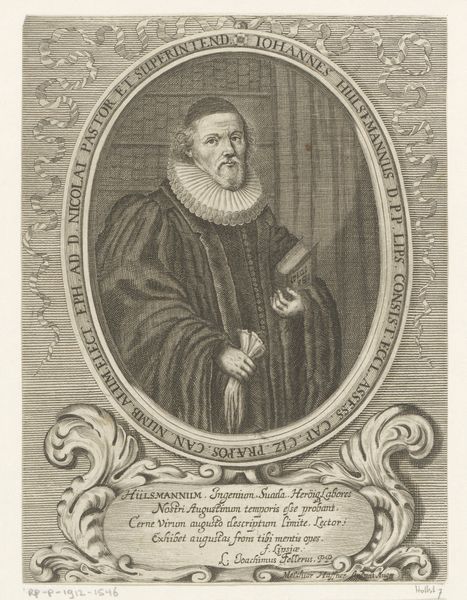
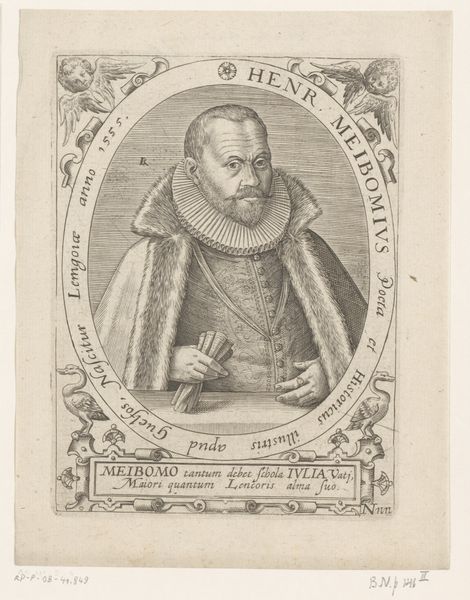
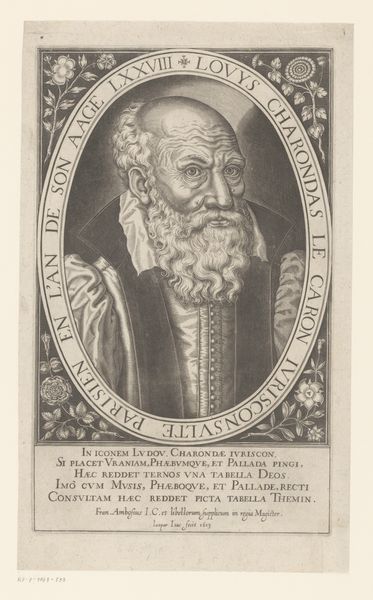
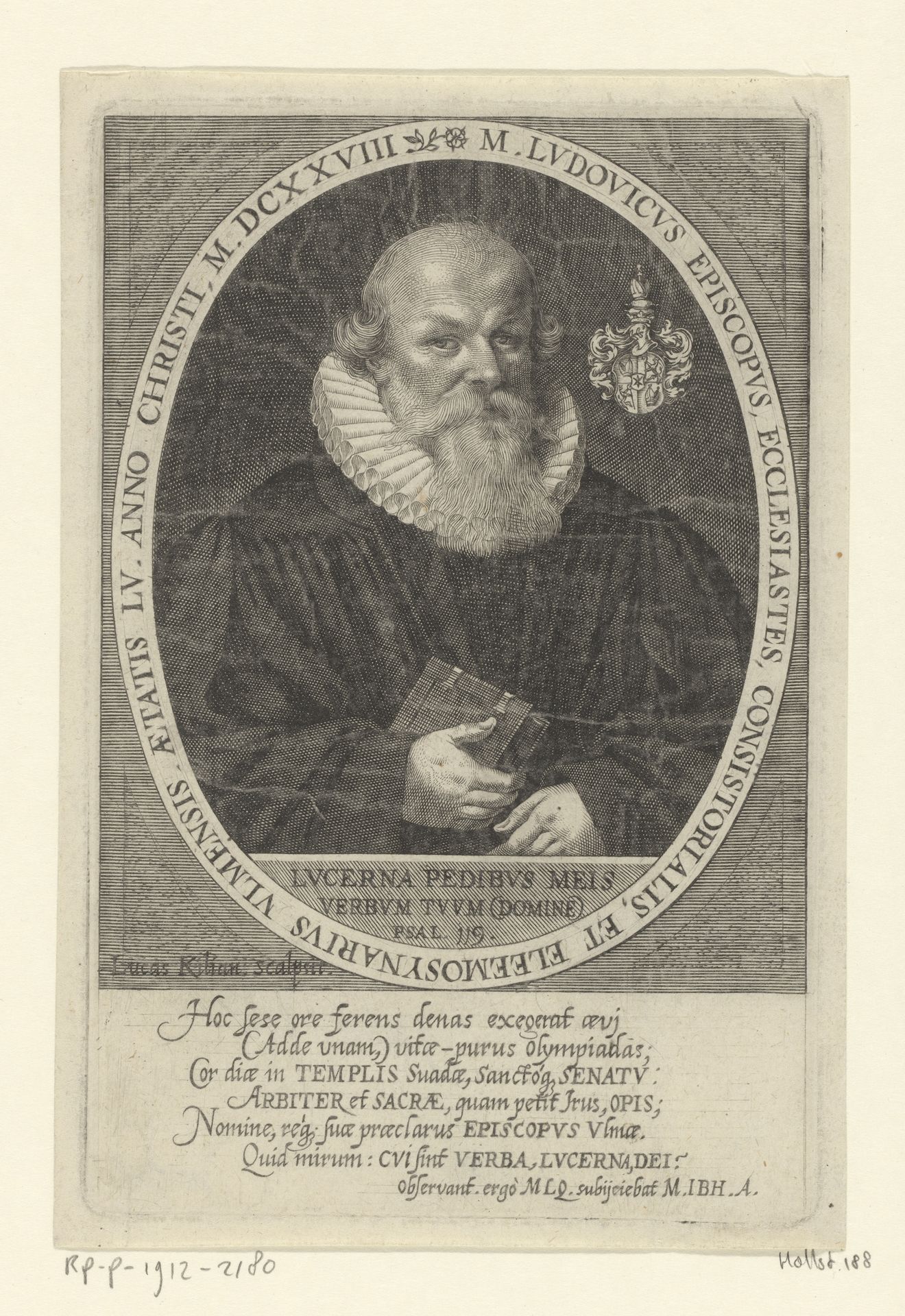
Lucas Kilian created this engraving, "Portret van Ludwig Bischoff op 55-jarige leeftijd," sometime in the early 17th century. This portrait captures Bischoff, a prominent bishop, within the rigid social and religious structures of his time. Consider the power dynamics at play here. Bischoff's identity as a man of the church is emphasized through symbolic elements like his book, dress and the Bishop’s coat-of-arms, which speak to his religious authority. The Latin inscriptions surrounding the portrait reinforce his learned status and connection to religious doctrine. However, it’s also worth pondering the limitations placed upon individuals, particularly within the church, where adherence to religious dogma often came at the expense of personal expression. Kilian’s work provides a glimpse into a world where identity was deeply intertwined with religious and social expectations, inviting us to reflect on the complexities of self-representation and the negotiation of identity within prescribed roles.
Portret van Ludwig Bischoff op 55-jarige leeftijd 1627

Lucas Kilian
1579 - 1637Location
RijksmuseumArtwork details
- Medium
- print, engraving
- Dimensions
- height 181 mm, width 120 mm
- Location
- Rijksmuseum
- Copyright
- Rijks Museum: Open Domain
Tags
baroque
old engraving style
engraving
Comments
No comments
About this artwork
Lucas Kilian created this engraving, "Portret van Ludwig Bischoff op 55-jarige leeftijd," sometime in the early 17th century. This portrait captures Bischoff, a prominent bishop, within the rigid social and religious structures of his time. Consider the power dynamics at play here. Bischoff's identity as a man of the church is emphasized through symbolic elements like his book, dress and the Bishop’s coat-of-arms, which speak to his religious authority. The Latin inscriptions surrounding the portrait reinforce his learned status and connection to religious doctrine. However, it’s also worth pondering the limitations placed upon individuals, particularly within the church, where adherence to religious dogma often came at the expense of personal expression. Kilian’s work provides a glimpse into a world where identity was deeply intertwined with religious and social expectations, inviting us to reflect on the complexities of self-representation and the negotiation of identity within prescribed roles.
Comments
No comments