About this artwork
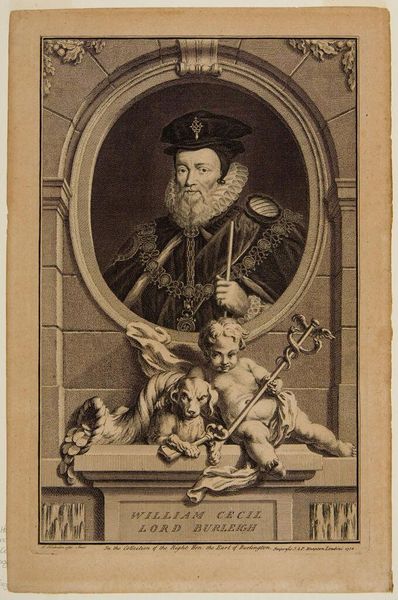
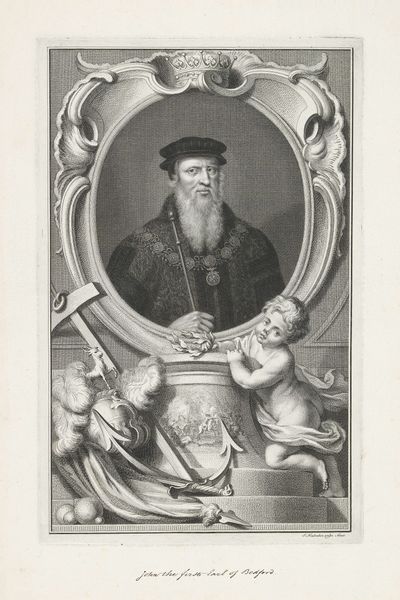
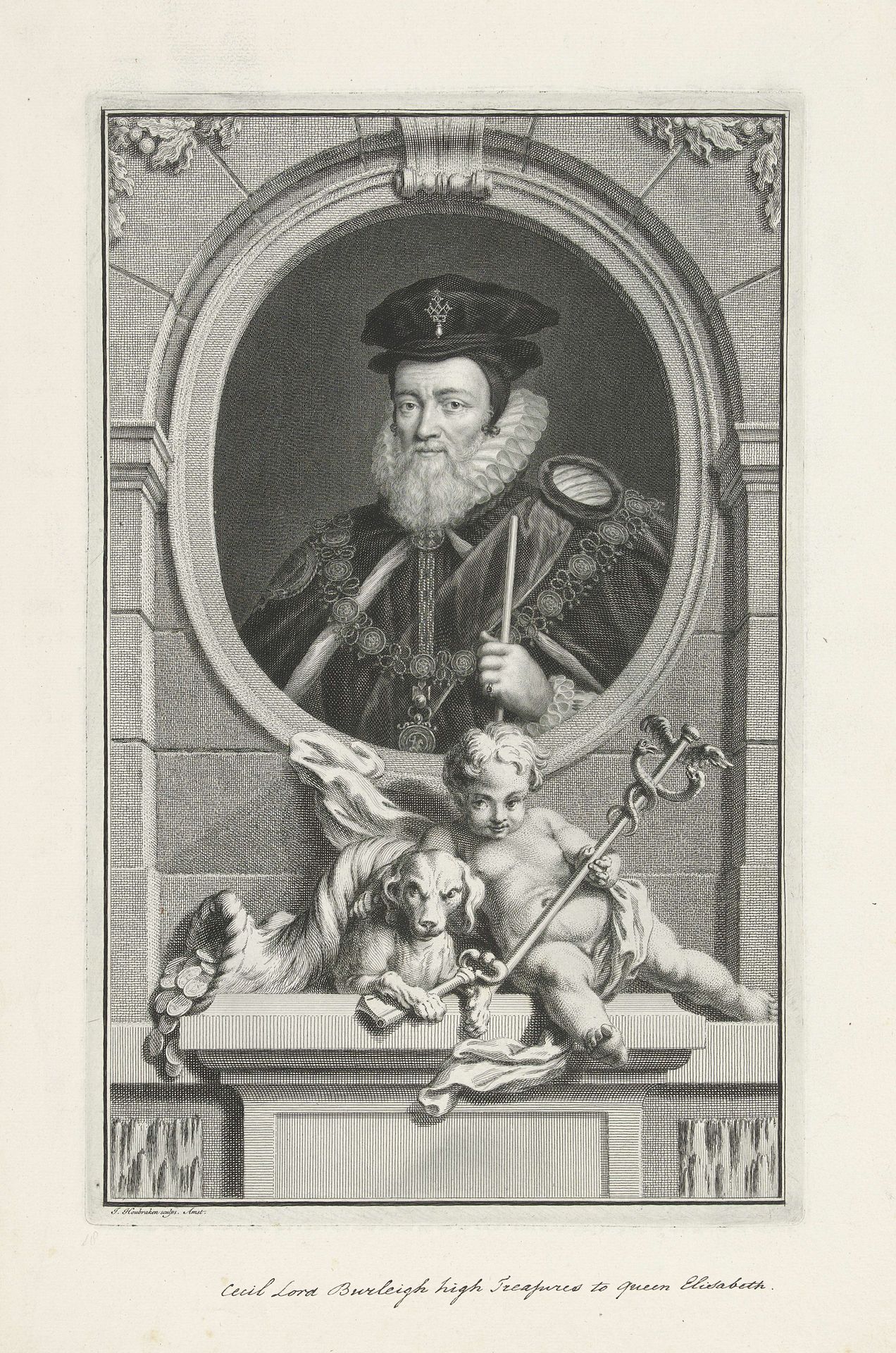
Curator: Gosh, isn't that just utterly fascinating? Look at that man staring out across the centuries. It makes you wonder what he would make of us today, doesn't it? Editor: Indeed. This print, created between 1736 and 1738, is a portrait of William Cecil, Lord Burghley, by Jacob Houbraken. Observe how Houbraken employs intricate engraving to create depth and texture. Curator: He certainly looks…important. And slightly grumpy, I must say. But incredibly grand. High neck ruff and everything! Like he owns the place. What was Burghley's story, then? I always love a bit of historical gossip. Editor: William Cecil was the chief advisor to Queen Elizabeth the First. A formidable statesman who steered England through some treacherous times. Note the careful arrangement of symbolic elements – the dog representing loyalty, the cherub, and even his attire, all speak to his power and status. Curator: Oh, the dog! I hadn't really clocked him. He looks much more approachable than his Lord. It's almost as if the dog and cherub, soften the imposing look of Lord Burghley. Like history is dressed with endearing things to invite approach and remind that they are as we are! Editor: That's perceptive. It exemplifies how portraiture served as a form of idealization, where individuals were not merely represented, but strategically constructed within visual systems that reinforced their socio-political standing. Curator: So much weight! You know, looking at that ruff and his serious gaze. All of it feels a little staged. Makes me wonder what he really thought behind all that finery. That print leaves us both a peek into the historical past and an intrigue about what can't be framed! Editor: Agreed, there is a compelling duality to be discerned. It captures not only his physical presence but also insinuates that perhaps a touch of distance might deepen his impact on his audience.
Portret van William Cecil, lord Burghley
1736 - 1738

Jacob Houbraken
1698 - 1780Location
RijksmuseumArtwork details
- Medium
- print, engraving
- Dimensions
- height 373 mm, width 236 mm
- Location
- Rijksmuseum
- Copyright
- Rijks Museum: Open Domain
Tags
Comments
Share your thoughts
About this artwork
Curator: Gosh, isn't that just utterly fascinating? Look at that man staring out across the centuries. It makes you wonder what he would make of us today, doesn't it? Editor: Indeed. This print, created between 1736 and 1738, is a portrait of William Cecil, Lord Burghley, by Jacob Houbraken. Observe how Houbraken employs intricate engraving to create depth and texture. Curator: He certainly looks…important. And slightly grumpy, I must say. But incredibly grand. High neck ruff and everything! Like he owns the place. What was Burghley's story, then? I always love a bit of historical gossip. Editor: William Cecil was the chief advisor to Queen Elizabeth the First. A formidable statesman who steered England through some treacherous times. Note the careful arrangement of symbolic elements – the dog representing loyalty, the cherub, and even his attire, all speak to his power and status. Curator: Oh, the dog! I hadn't really clocked him. He looks much more approachable than his Lord. It's almost as if the dog and cherub, soften the imposing look of Lord Burghley. Like history is dressed with endearing things to invite approach and remind that they are as we are! Editor: That's perceptive. It exemplifies how portraiture served as a form of idealization, where individuals were not merely represented, but strategically constructed within visual systems that reinforced their socio-political standing. Curator: So much weight! You know, looking at that ruff and his serious gaze. All of it feels a little staged. Makes me wonder what he really thought behind all that finery. That print leaves us both a peek into the historical past and an intrigue about what can't be framed! Editor: Agreed, there is a compelling duality to be discerned. It captures not only his physical presence but also insinuates that perhaps a touch of distance might deepen his impact on his audience.
Comments
Share your thoughts