c. 1894
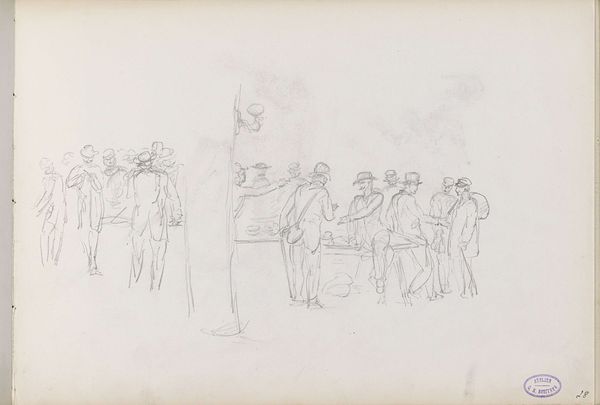
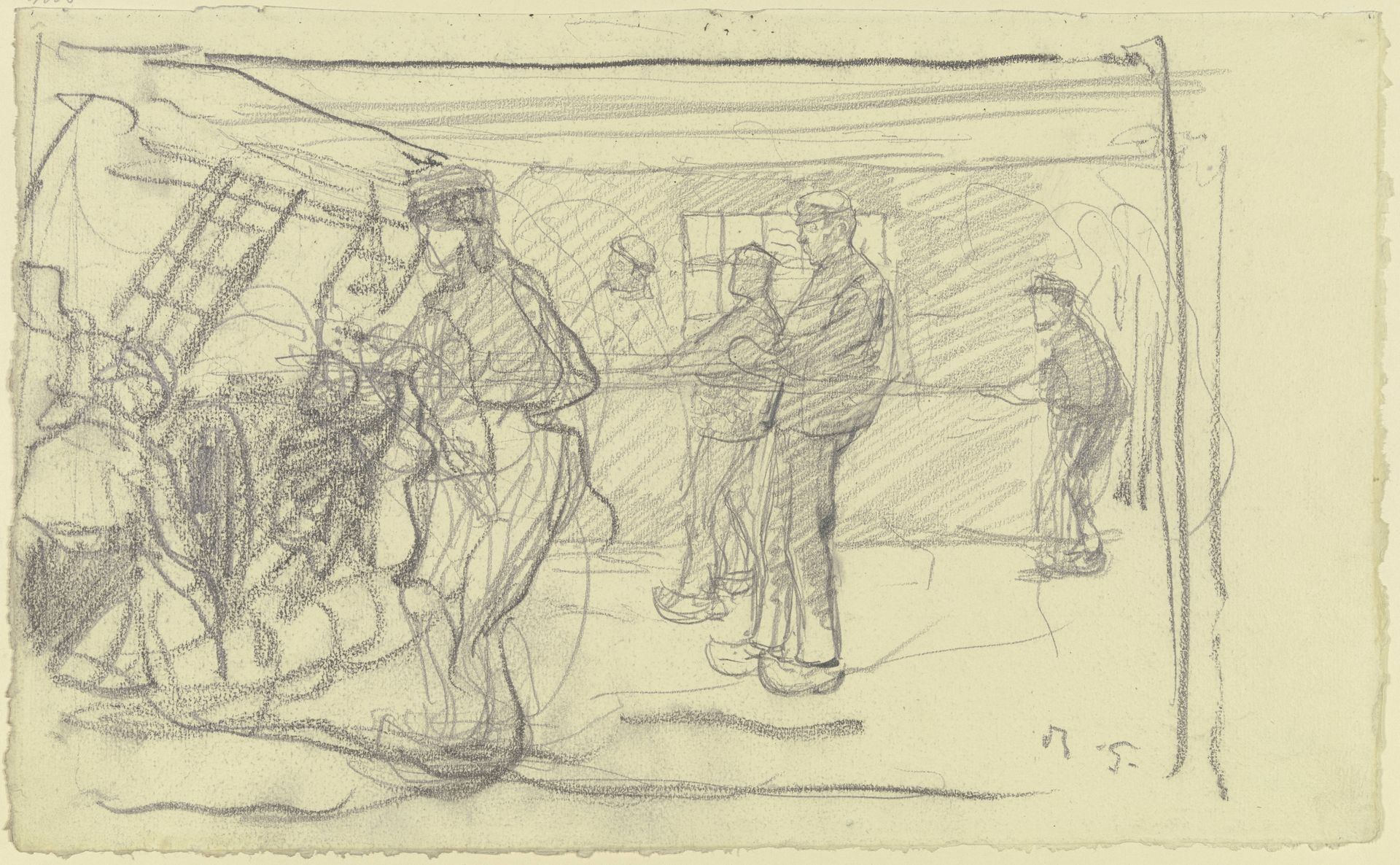
Arbeiter aus der _Großen Spinnerei von Edam_


Listen to curator's interpretation
Curatorial notes
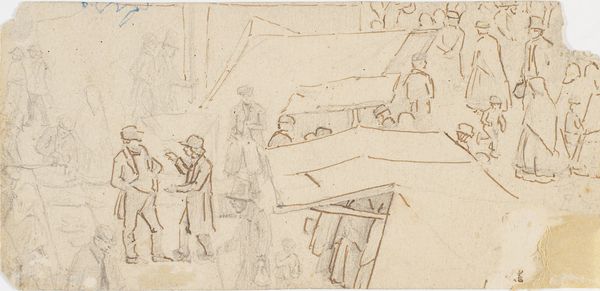
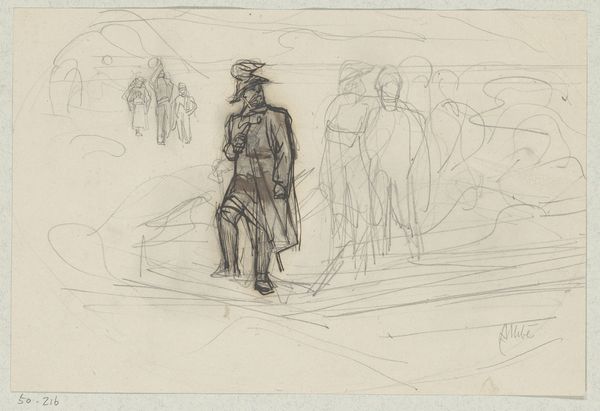
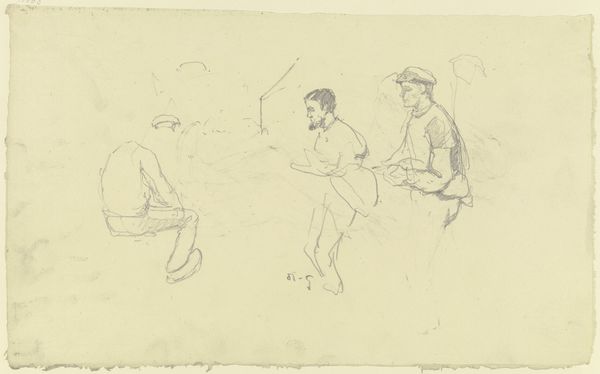
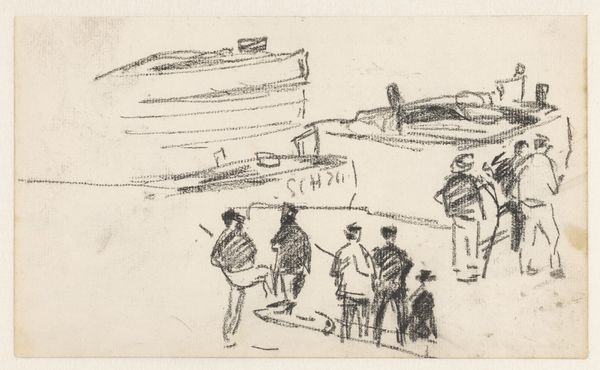
Editor: This is "Arbeiter aus der Grossen Spinnerei von Edam," or "Workers from the Great Edam Spinning Mill," a pencil drawing by Rudolf Gudden, circa 1894. It’s a snapshot of laborers inside what I imagine is a textile mill. The sketch-like quality really captures the raw, almost exhausting atmosphere. What stands out to you about this work? Curator: Immediately, I think about the conditions of production here. Look at the repetitive gestures captured – pulling, lifting, attending to machinery we can barely make out. Gudden’s choice of pencil – a relatively inexpensive and accessible material – mirrors the accessibility and arguably, the exploitation of labor in the 19th century. Editor: Exploitation, that’s a strong word! But it does feel like a glimpse into a world far removed from idealized art. Is Gudden commenting on this exploitation or simply documenting? Curator: The fact that he chose this subject matter – these workers – and gave it artistic attention is itself a commentary. Think about who art was typically made *for* and *about* at this time. These aren't portraits of wealthy patrons, but a glimpse into the working class’s environment and the machinery they worked with. He's also elevating the status of drawing itself – often seen as preparatory – to a finished work of art. What does that suggest to you about art's traditional value hierarchies? Editor: It really pushes me to rethink what "art" can be. It's not just beauty; it can be a record, a commentary, even an act of bearing witness. Seeing the process – the pencil strokes – makes the work feel immediate, like it’s happening right in front of us. Curator: Exactly. The means of production here – the pencil on paper, the artist's hand observing the workers' hands – creates a dialogue between labor, materiality, and social context. It forces us to question the very fabric of society represented by this piece. Editor: I will certainly be thinking about the act of creation as work going forward! Thanks for the insights.