About this artwork
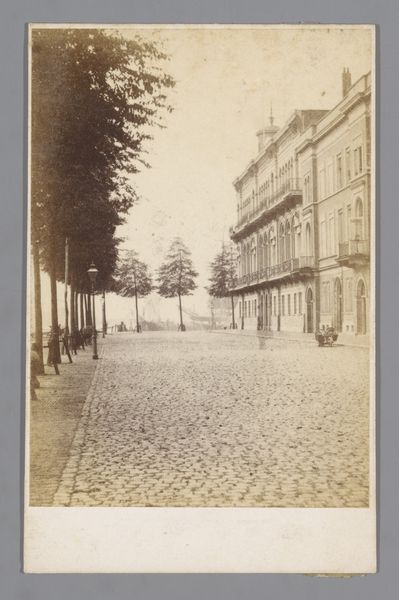
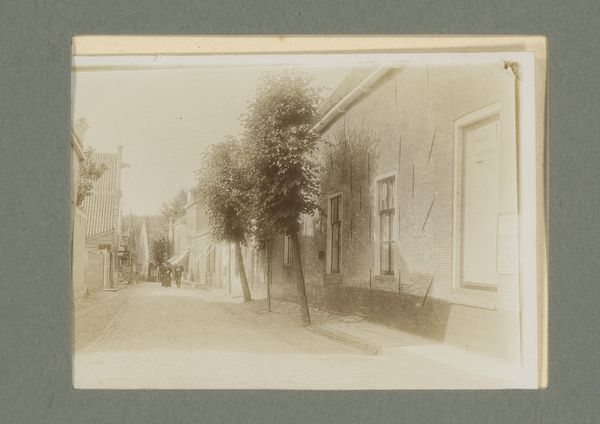
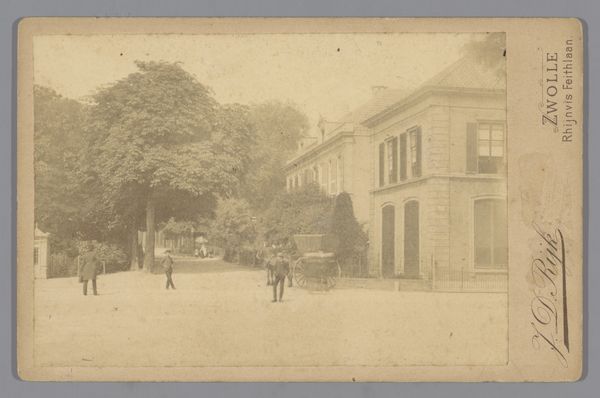
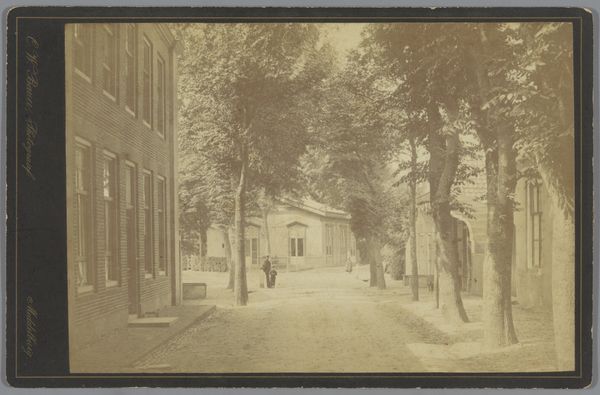
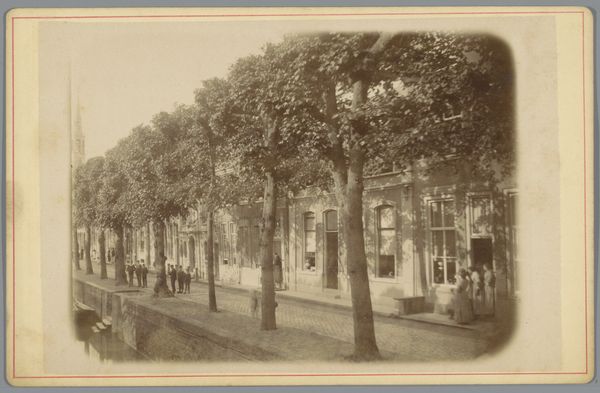
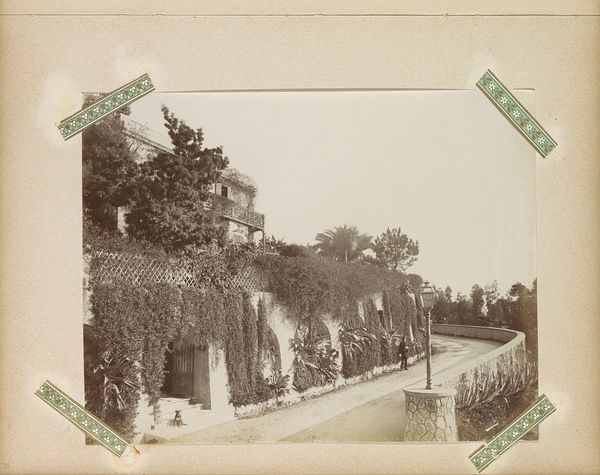
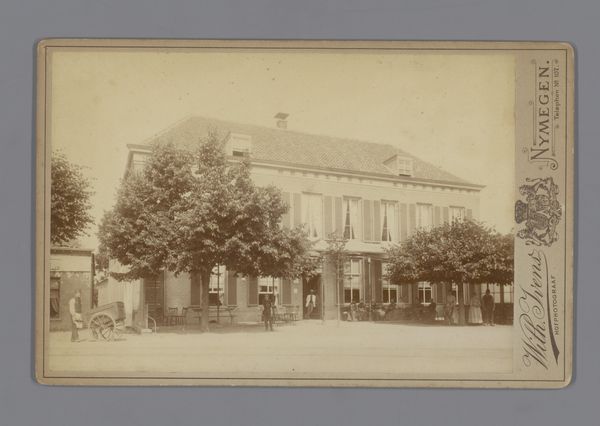
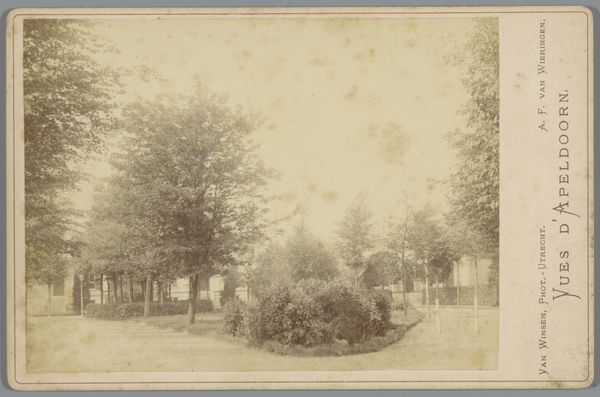
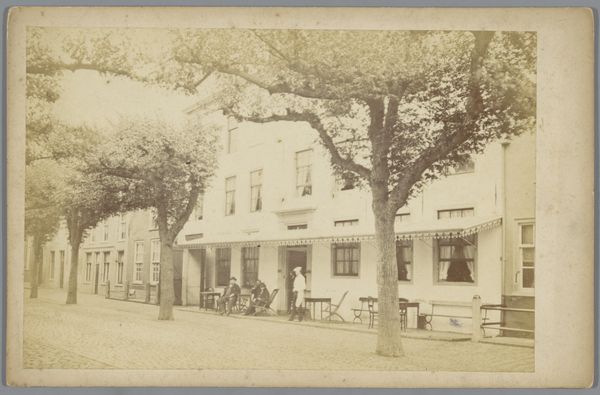
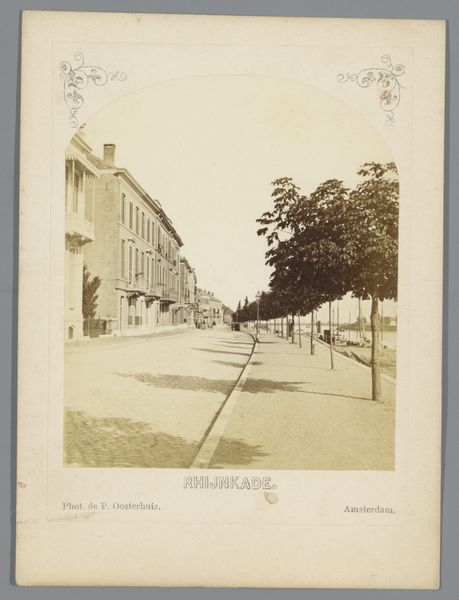
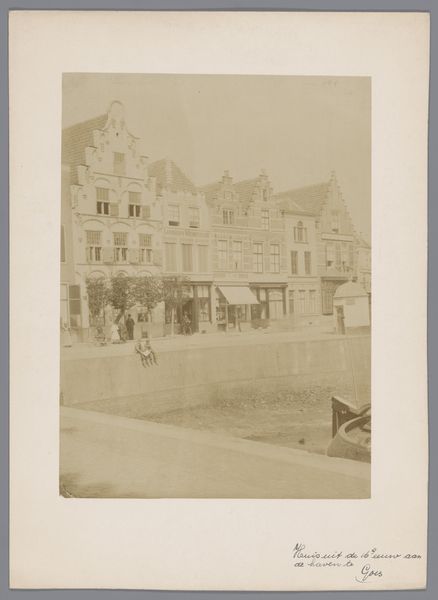
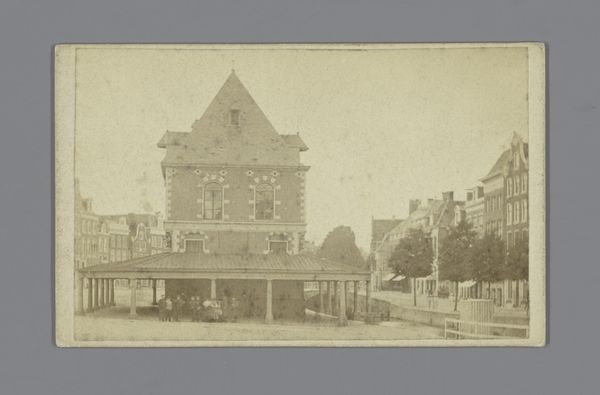
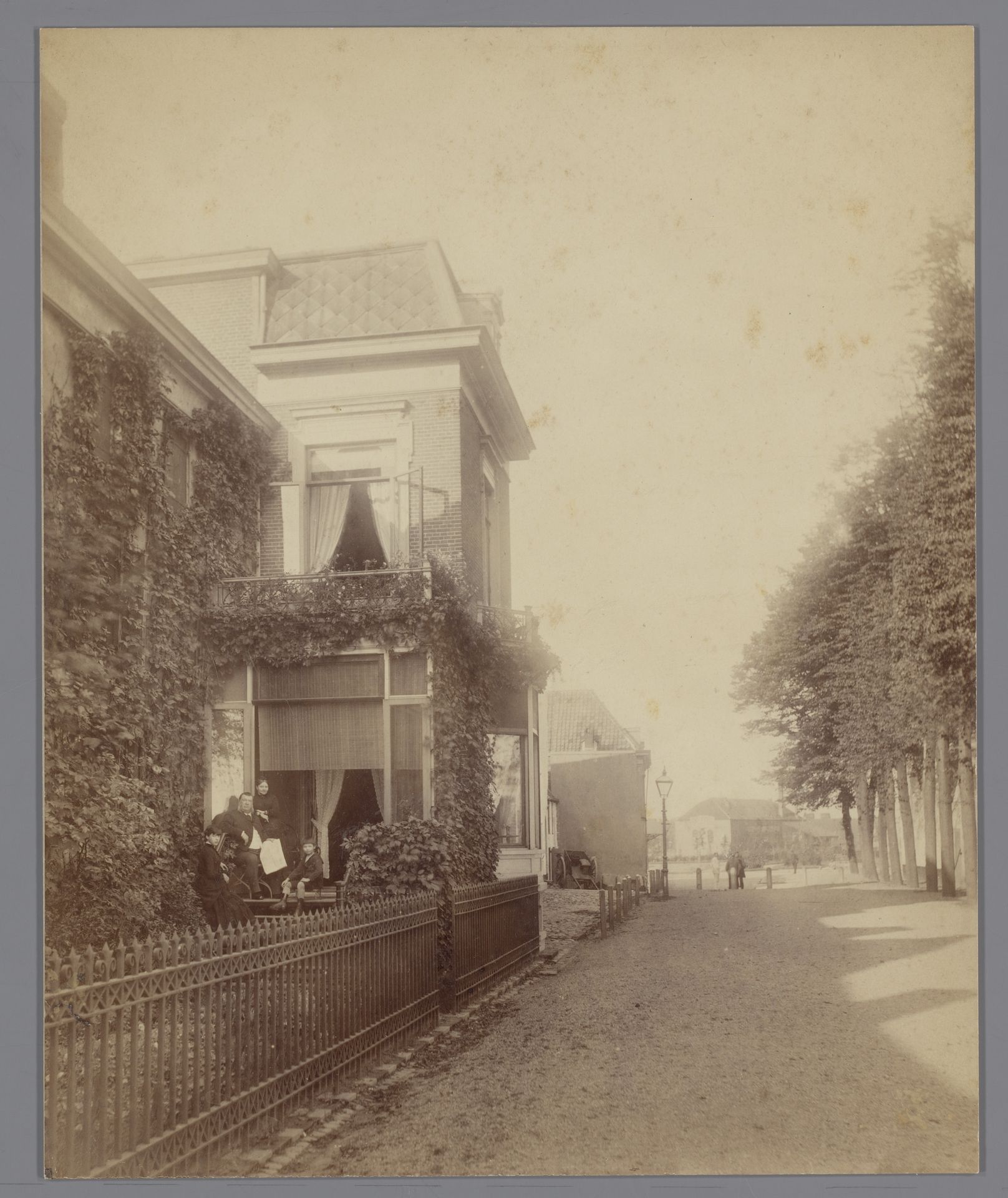
Wilhelm Ivens made this albumen print, likely in the Netherlands, sometime in the late 19th century. What grabs me is the way he renders the scene in tones of brown, like an old sepia photograph, or a memory fading around the edges. The texture of the print itself, the way the light seems to catch on its surface, becomes part of the story. Look at the way the leaves growing up the side of the house seem to almost merge with the building itself. The light is diffused, and it softens everything. It's like Ivens isn't just showing us a street, but a feeling, a sense of being in a particular place at a particular time. Think about how someone like Eugène Atget uses similar techniques to document the streets of Paris, but with a sharper focus, a more documentary approach. With Ivens, the mood is everything, and that's why this piece lingers in the mind.
Straatgezicht, met man en vrouw en twee kinderen voor een huis c. 1890 - 1915

Artwork details
- Medium
- photography, gelatin-silver-print
- Dimensions
- height 270 mm, width 220 mm
- Copyright
- Rijks Museum: Open Domain
Tags
landscape
street-photography
photography
gelatin-silver-print
genre-painting
realism
Comments
No comments
About this artwork
Wilhelm Ivens made this albumen print, likely in the Netherlands, sometime in the late 19th century. What grabs me is the way he renders the scene in tones of brown, like an old sepia photograph, or a memory fading around the edges. The texture of the print itself, the way the light seems to catch on its surface, becomes part of the story. Look at the way the leaves growing up the side of the house seem to almost merge with the building itself. The light is diffused, and it softens everything. It's like Ivens isn't just showing us a street, but a feeling, a sense of being in a particular place at a particular time. Think about how someone like Eugène Atget uses similar techniques to document the streets of Paris, but with a sharper focus, a more documentary approach. With Ivens, the mood is everything, and that's why this piece lingers in the mind.
Comments
No comments