About this artwork
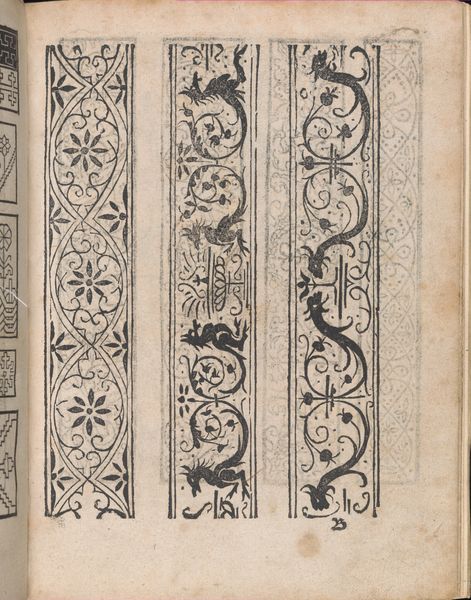
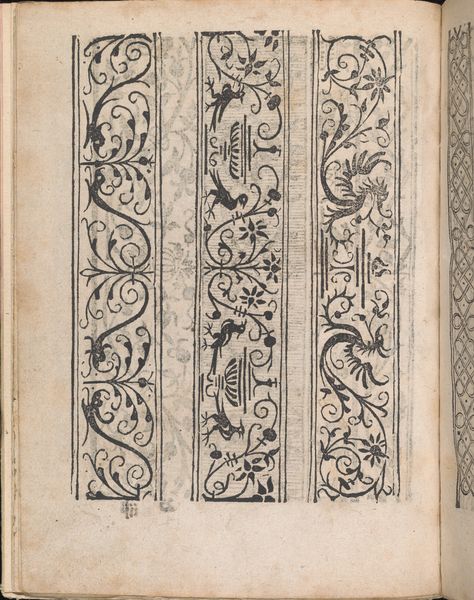
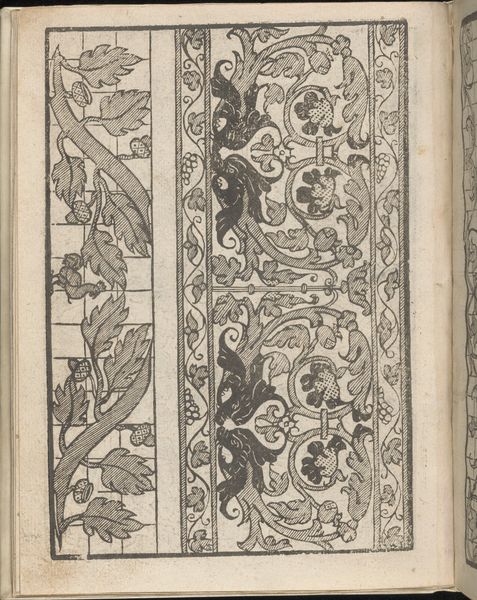
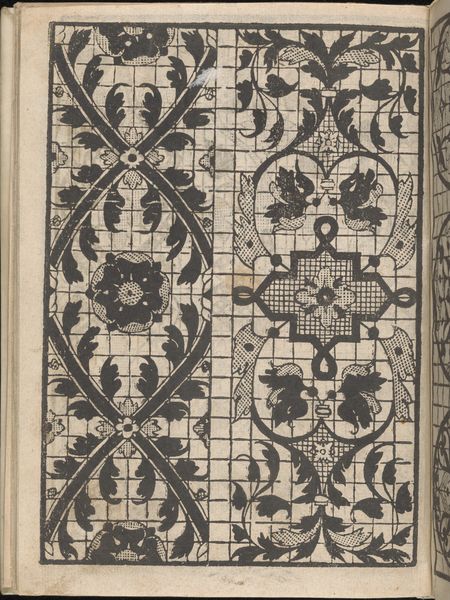
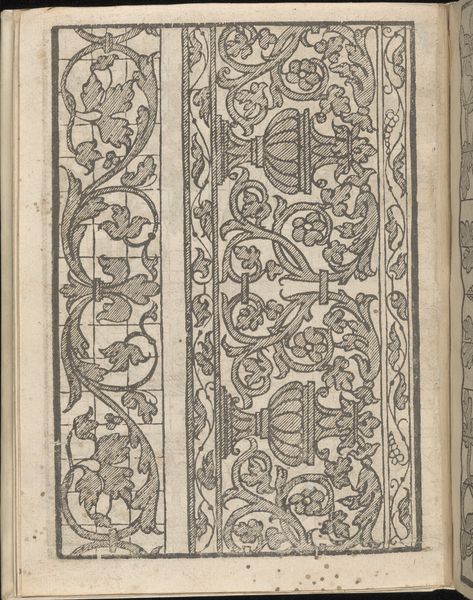
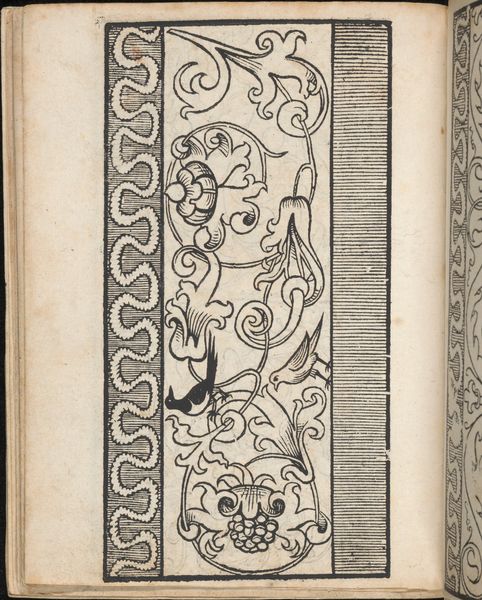
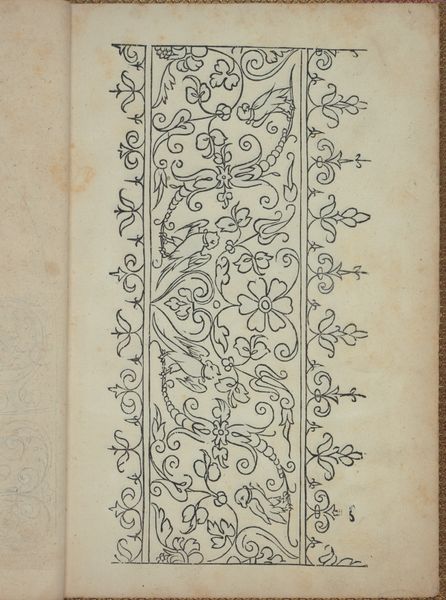
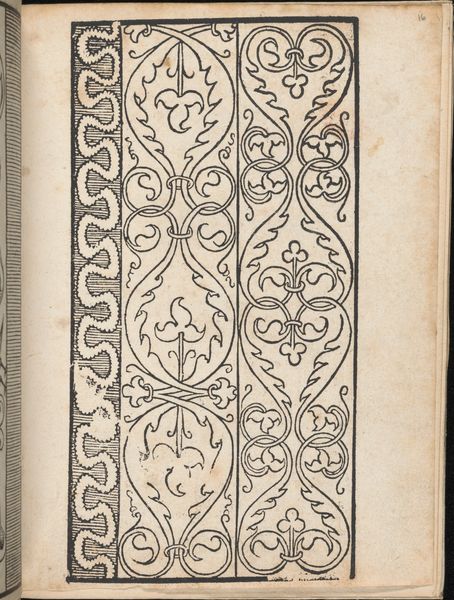
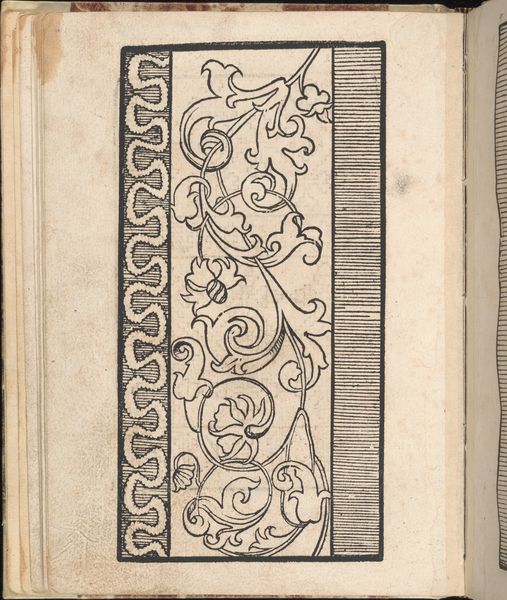
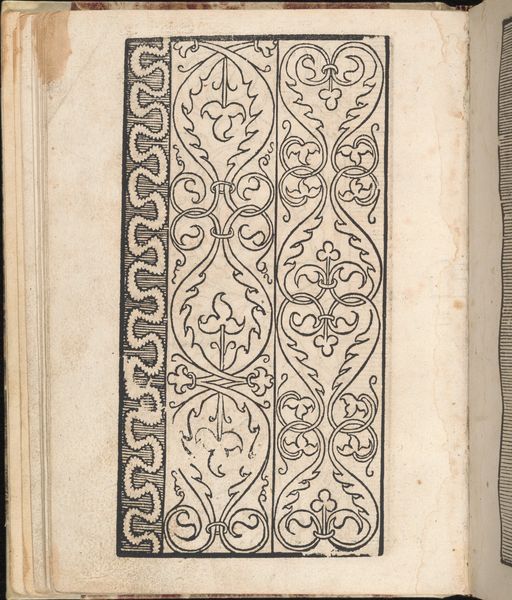
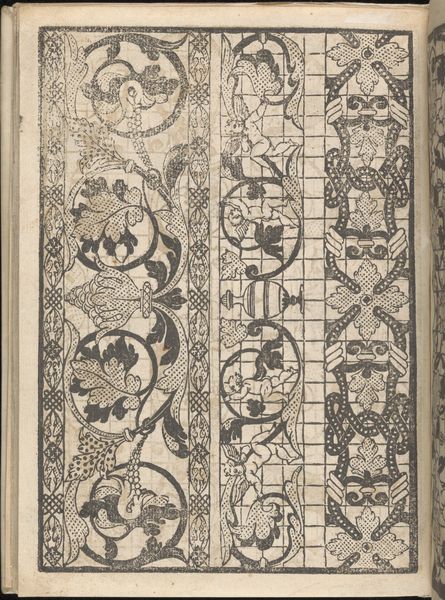
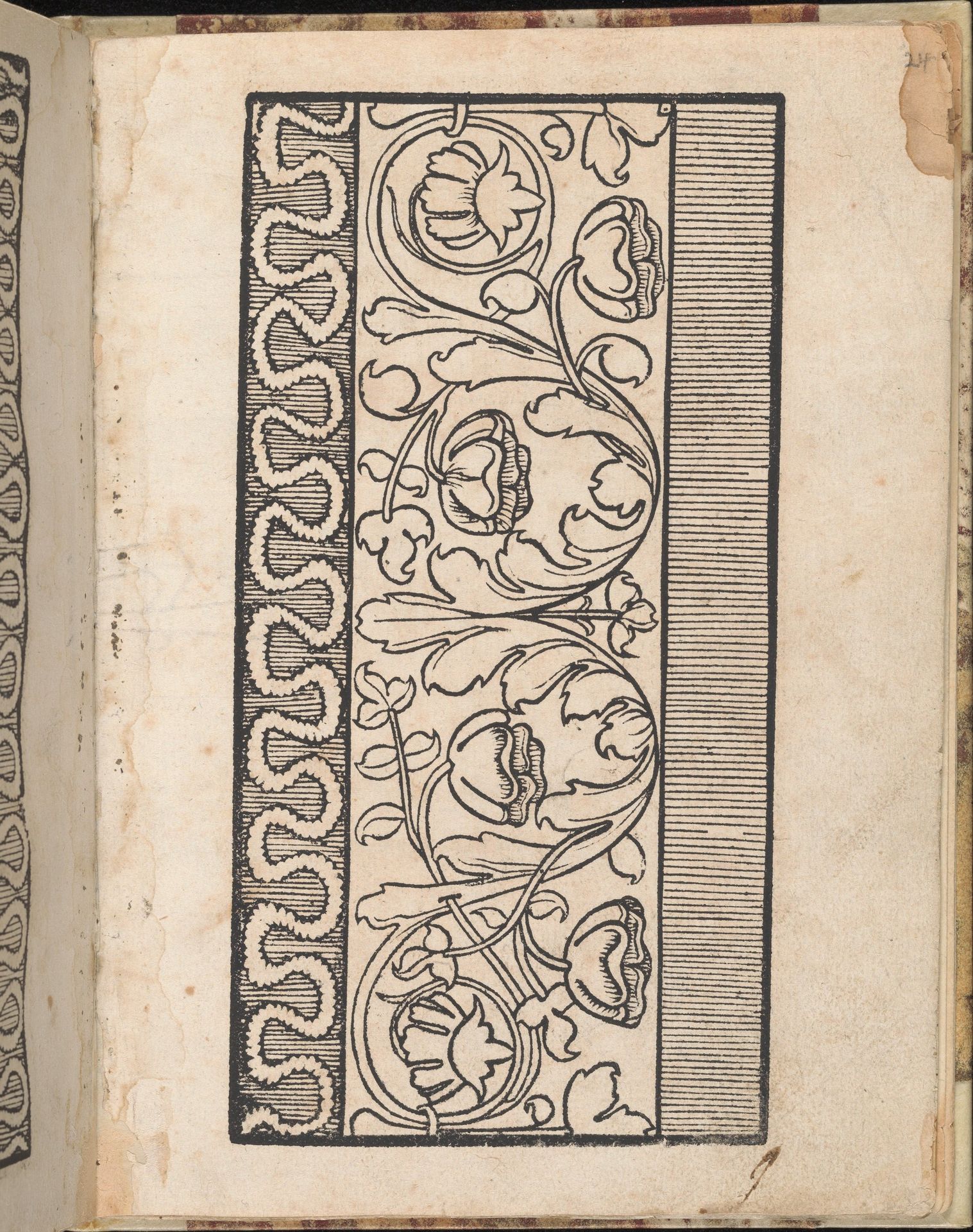
This is page 24 recto from "Ein new getruckt model Büchli," a woodcut created by Johann Schönsperger the Younger around the early 16th century. The print presents us with a striking contrast between organic and geometric forms, immediately drawing the eye. Notice the intricate floral pattern, flowing with naturalistic curves, juxtaposed against the rigid vertical lines and the serpentine band. This interplay isn't merely decorative; it creates a dynamic tension. The artist uses the visual language of his time to explore ideas around order and nature, maybe even chaos. The composition invites semiotic interpretation; each element functions as a sign. What do these forms communicate about the relationship between the natural world and human design? Does the artist reinforce or challenge the prevailing Renaissance values? This page, through its deliberate arrangement of form, serves as a site for ongoing interpretation.
Ein new getruckt model Büchli...Page 24, recto 1529

Johann Schönsperger the Younger
1490 - 1550
The Metropolitan Museum of Art
Metropolitan Museum of Art, New York, NYArtwork details
- Medium
- drawing, print, paper, ink, woodcut
- Dimensions
- Overall: 7 7/8 x 6 1/8 in. (20 x 15.5 cm)
- Location
- Metropolitan Museum of Art, New York, NY
- Copyright
- Public Domain
Tags
drawing
paper
11_renaissance
ink
geometric
woodcut
line
northern-renaissance
Comments
No comments
About this artwork
This is page 24 recto from "Ein new getruckt model Büchli," a woodcut created by Johann Schönsperger the Younger around the early 16th century. The print presents us with a striking contrast between organic and geometric forms, immediately drawing the eye. Notice the intricate floral pattern, flowing with naturalistic curves, juxtaposed against the rigid vertical lines and the serpentine band. This interplay isn't merely decorative; it creates a dynamic tension. The artist uses the visual language of his time to explore ideas around order and nature, maybe even chaos. The composition invites semiotic interpretation; each element functions as a sign. What do these forms communicate about the relationship between the natural world and human design? Does the artist reinforce or challenge the prevailing Renaissance values? This page, through its deliberate arrangement of form, serves as a site for ongoing interpretation.
Comments
No comments