About this artwork
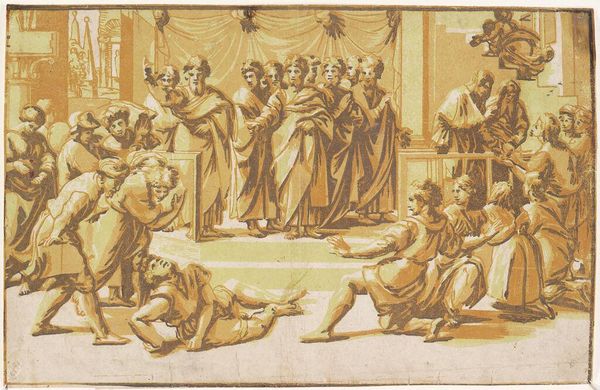
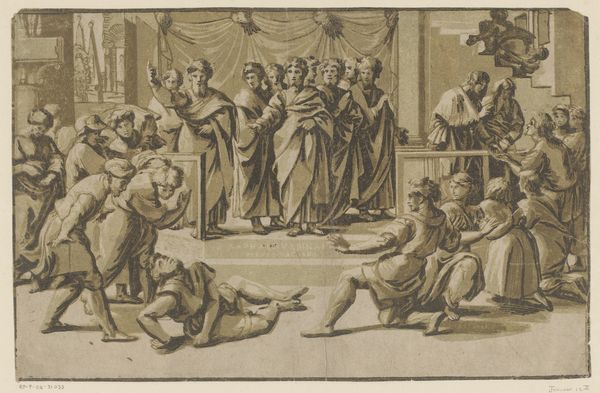
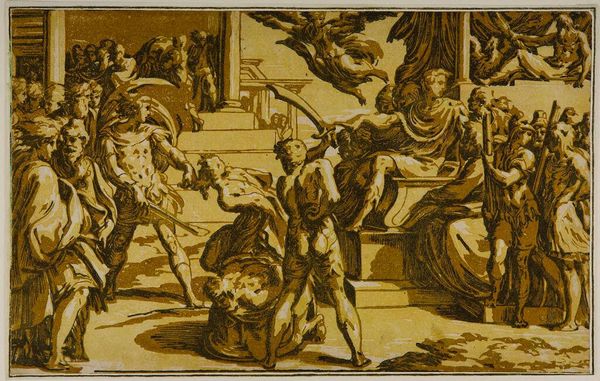
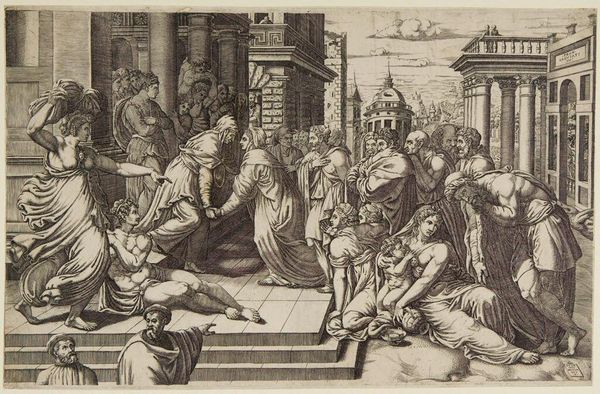
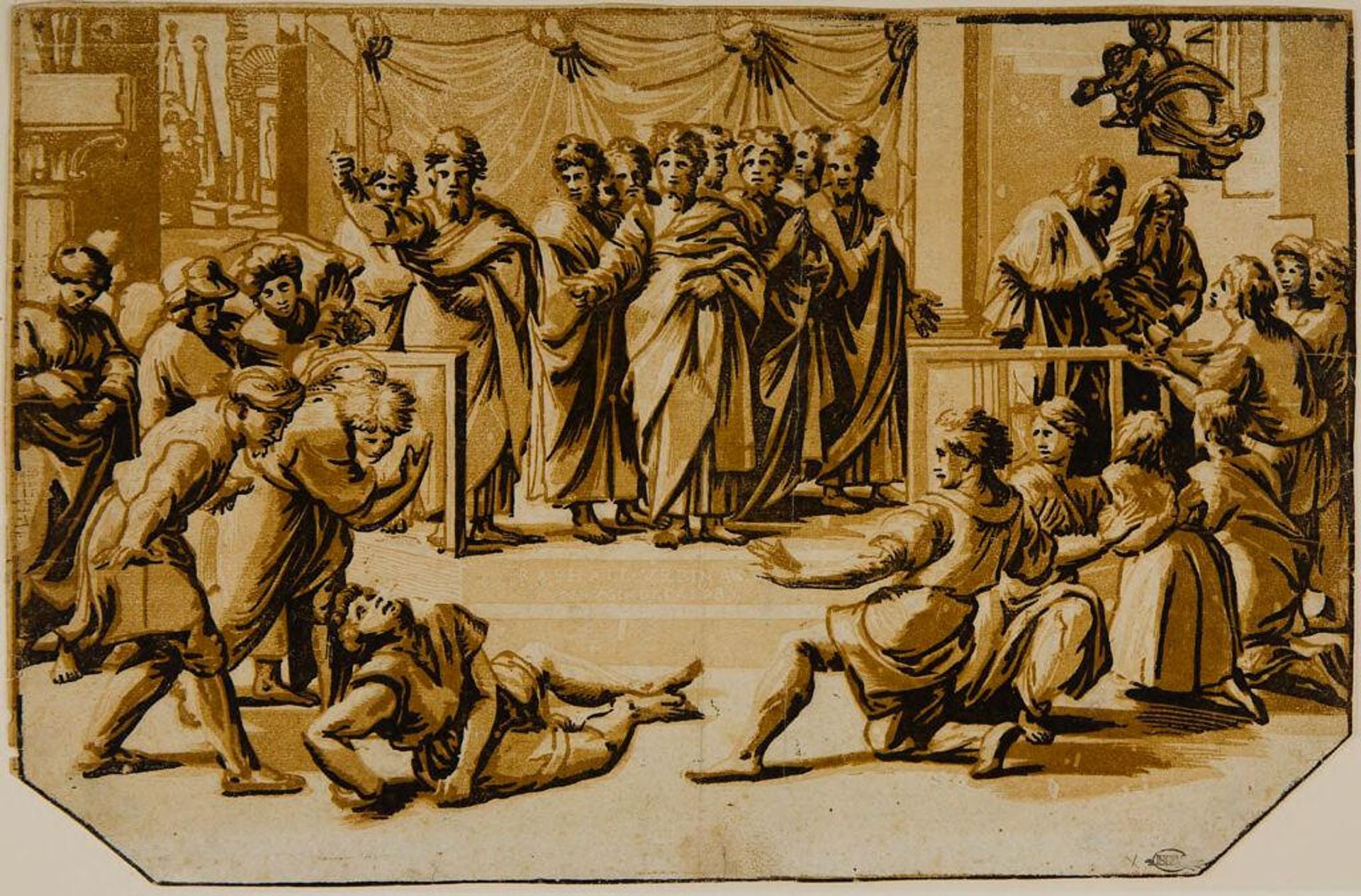
Curator: Ugo da Carpi's "Death of Ananias" is a woodcut, dating back to the early 16th century. The monochrome feels very striking. Editor: I'm immediately struck by the theatricality, a very stage-like presentation. The figures seem posed, almost self-aware. Curator: Da Carpi was quite innovative with his use of chiaroscuro, the strong contrast between light and dark, to create a sense of depth. It’s dramatic, wouldn’t you say? Editor: Absolutely, though I read something disturbing in it. The power dynamic is so stark. The collective judgment and punishment feels like a precursor to modern forms of social control. Curator: I see what you mean; the community looks a bit judgmental. And that poor Ananias—to die for lying about money! Editor: Well, perhaps it's a reminder that transparency is crucial, even if enforced through somewhat violent, gendered gazes. Curator: Perhaps. I'll certainly carry that thought with me. It's fascinating how a work from so long ago can still spark such relevant conversations.
Death of Ananias
c. 16th century


Artwork details
- Location
- Harvard Art Museums
- Copyright
- CC0 1.0
Comments
Share your thoughts
About this artwork
Curator: Ugo da Carpi's "Death of Ananias" is a woodcut, dating back to the early 16th century. The monochrome feels very striking. Editor: I'm immediately struck by the theatricality, a very stage-like presentation. The figures seem posed, almost self-aware. Curator: Da Carpi was quite innovative with his use of chiaroscuro, the strong contrast between light and dark, to create a sense of depth. It’s dramatic, wouldn’t you say? Editor: Absolutely, though I read something disturbing in it. The power dynamic is so stark. The collective judgment and punishment feels like a precursor to modern forms of social control. Curator: I see what you mean; the community looks a bit judgmental. And that poor Ananias—to die for lying about money! Editor: Well, perhaps it's a reminder that transparency is crucial, even if enforced through somewhat violent, gendered gazes. Curator: Perhaps. I'll certainly carry that thought with me. It's fascinating how a work from so long ago can still spark such relevant conversations.
Comments
Share your thoughts