About this artwork
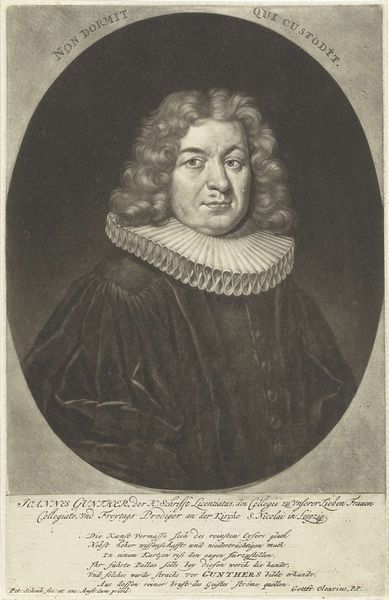
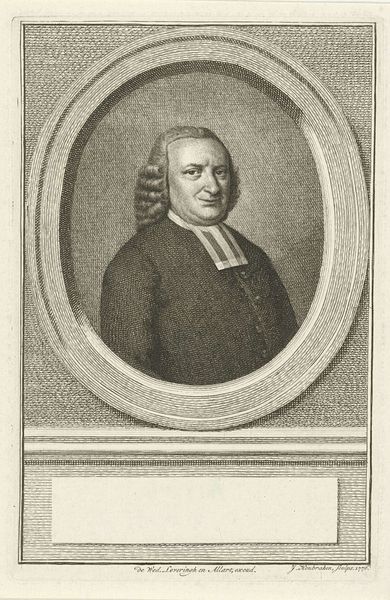
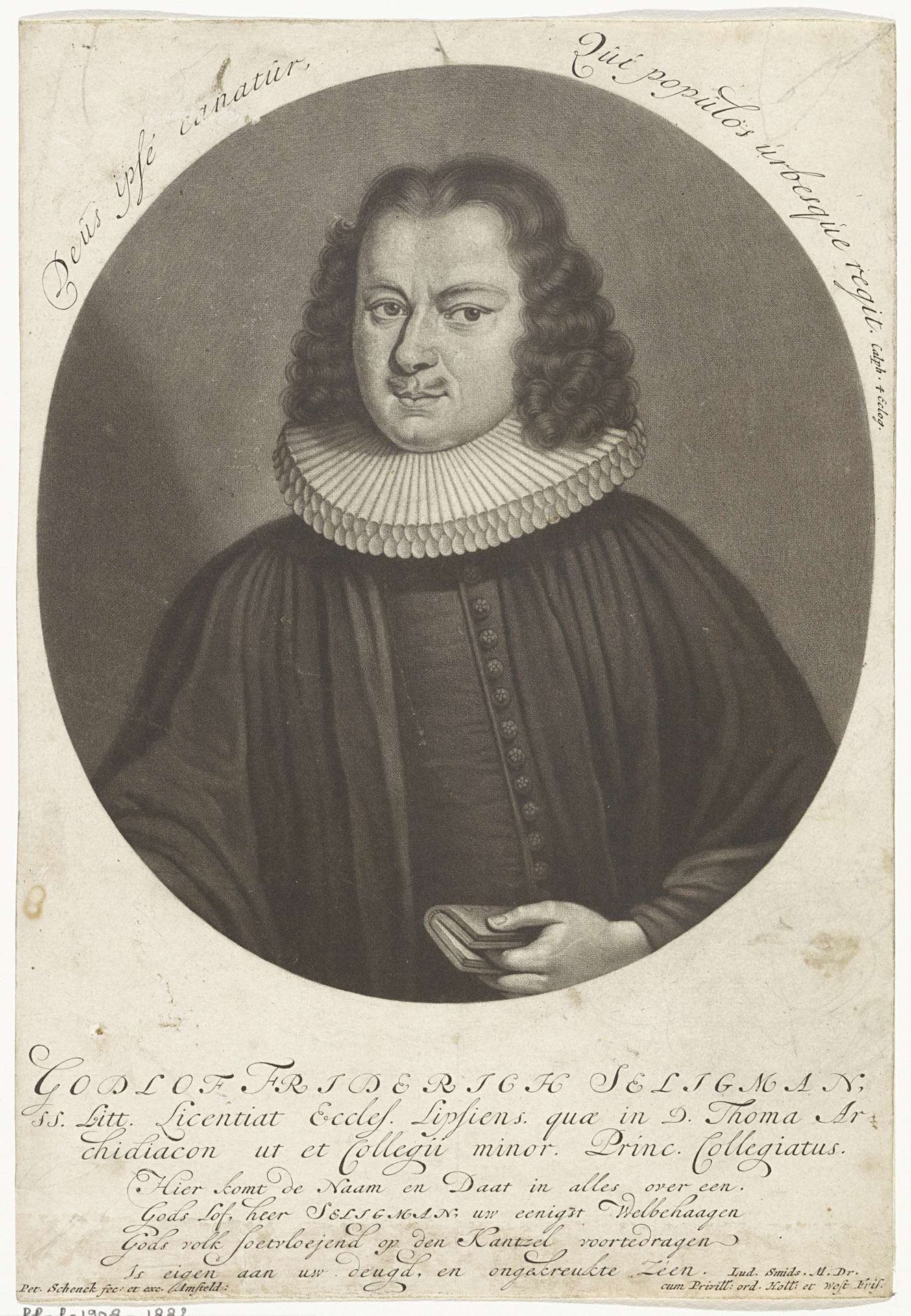
This is Pieter Schenk's portrait of the preacher Gottlob Friedrich Seligmann, an engraving on paper. Note how Schenk uses the oval shape to frame the sitter, creating a tight, intimate composition. The dark tones of the coat and background contrast sharply with the bright, almost luminous quality of Seligmann's face and the intricate ruff around his neck. This contrast draws our eye directly to the face, emphasizing his expression and features. The texture of the engraving, achieved through fine lines and shading, adds depth and realism to the portrait. In terms of semiotics, the formal attire and book held in his hands are signs of Seligmann’s profession and status. Yet, Schenk’s use of light and shadow, coupled with the oval frame, destabilizes a straightforward reading, inviting a deeper contemplation on representation and identity. The portrait's meaning, therefore, is not fixed but rather emerges from the interplay between its formal elements and cultural codes.
Portret van de predikant Gottlob Friedrich Seligmann
1670 - 1713

Pieter Schenk
1660 - 1711Location
RijksmuseumArtwork details
- Medium
- print, engraving
- Dimensions
- height 257 mm, width 176 mm
- Location
- Rijksmuseum
- Copyright
- Rijks Museum: Open Domain
Tags
Comments
Share your thoughts
About this artwork
This is Pieter Schenk's portrait of the preacher Gottlob Friedrich Seligmann, an engraving on paper. Note how Schenk uses the oval shape to frame the sitter, creating a tight, intimate composition. The dark tones of the coat and background contrast sharply with the bright, almost luminous quality of Seligmann's face and the intricate ruff around his neck. This contrast draws our eye directly to the face, emphasizing his expression and features. The texture of the engraving, achieved through fine lines and shading, adds depth and realism to the portrait. In terms of semiotics, the formal attire and book held in his hands are signs of Seligmann’s profession and status. Yet, Schenk’s use of light and shadow, coupled with the oval frame, destabilizes a straightforward reading, inviting a deeper contemplation on representation and identity. The portrait's meaning, therefore, is not fixed but rather emerges from the interplay between its formal elements and cultural codes.
Comments
Share your thoughts