About this artwork
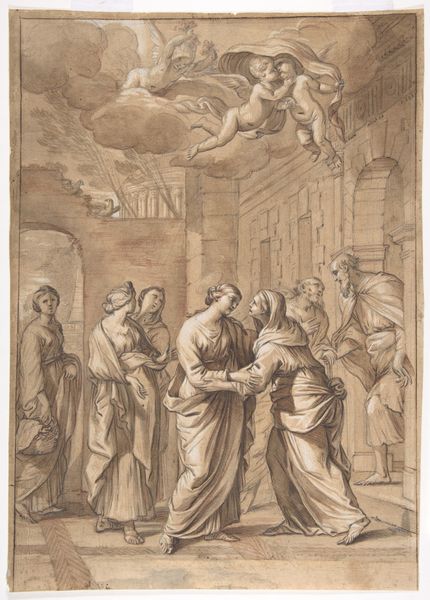
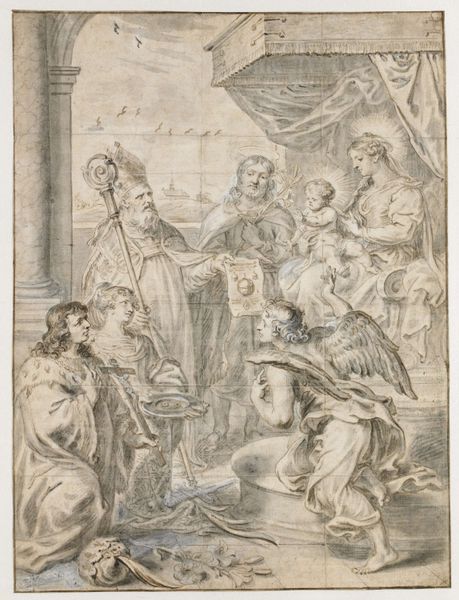
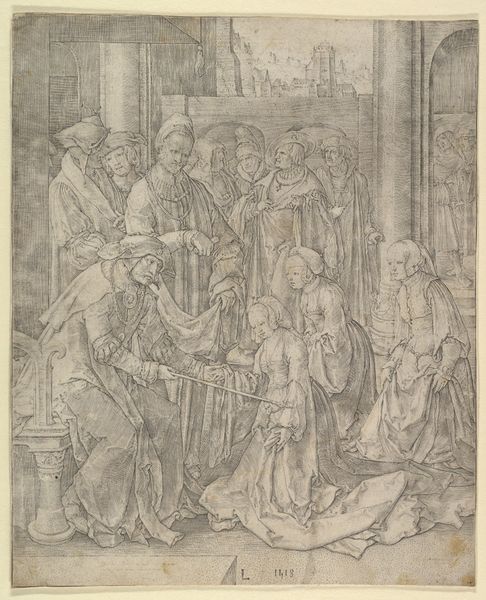
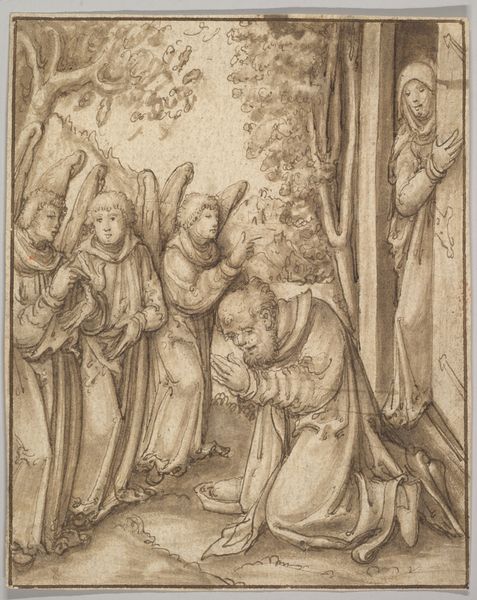
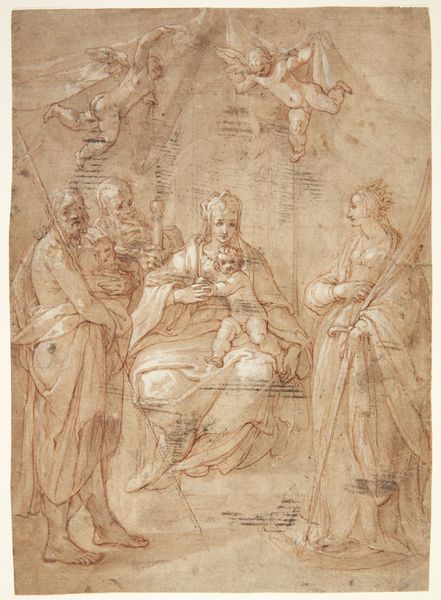
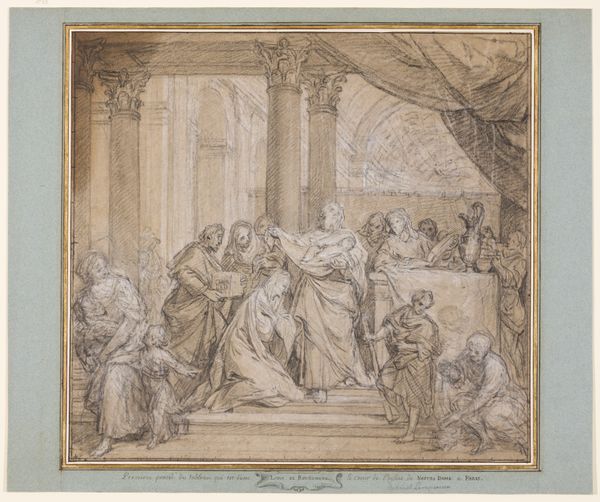
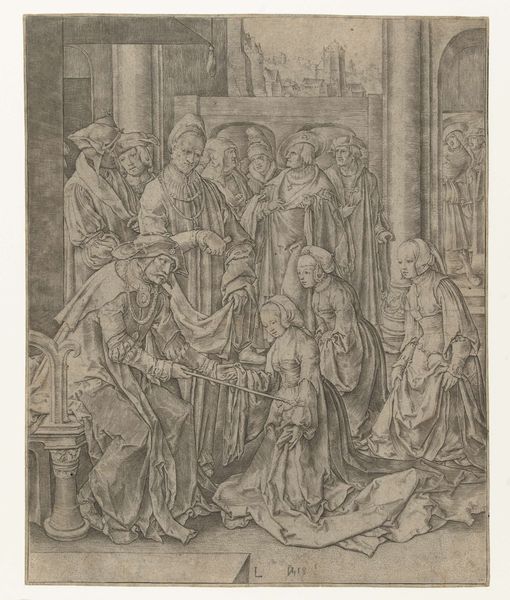
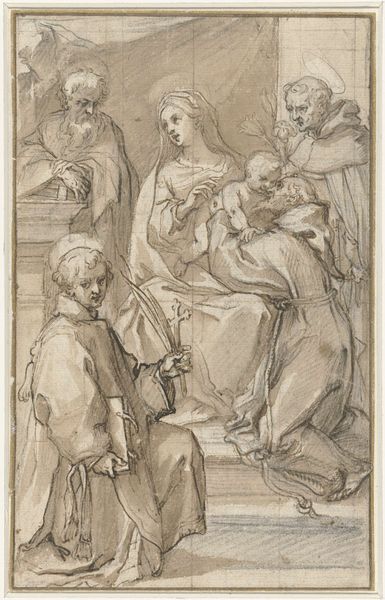
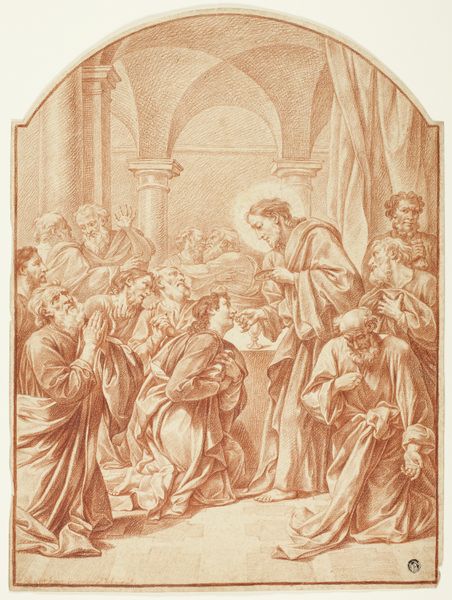
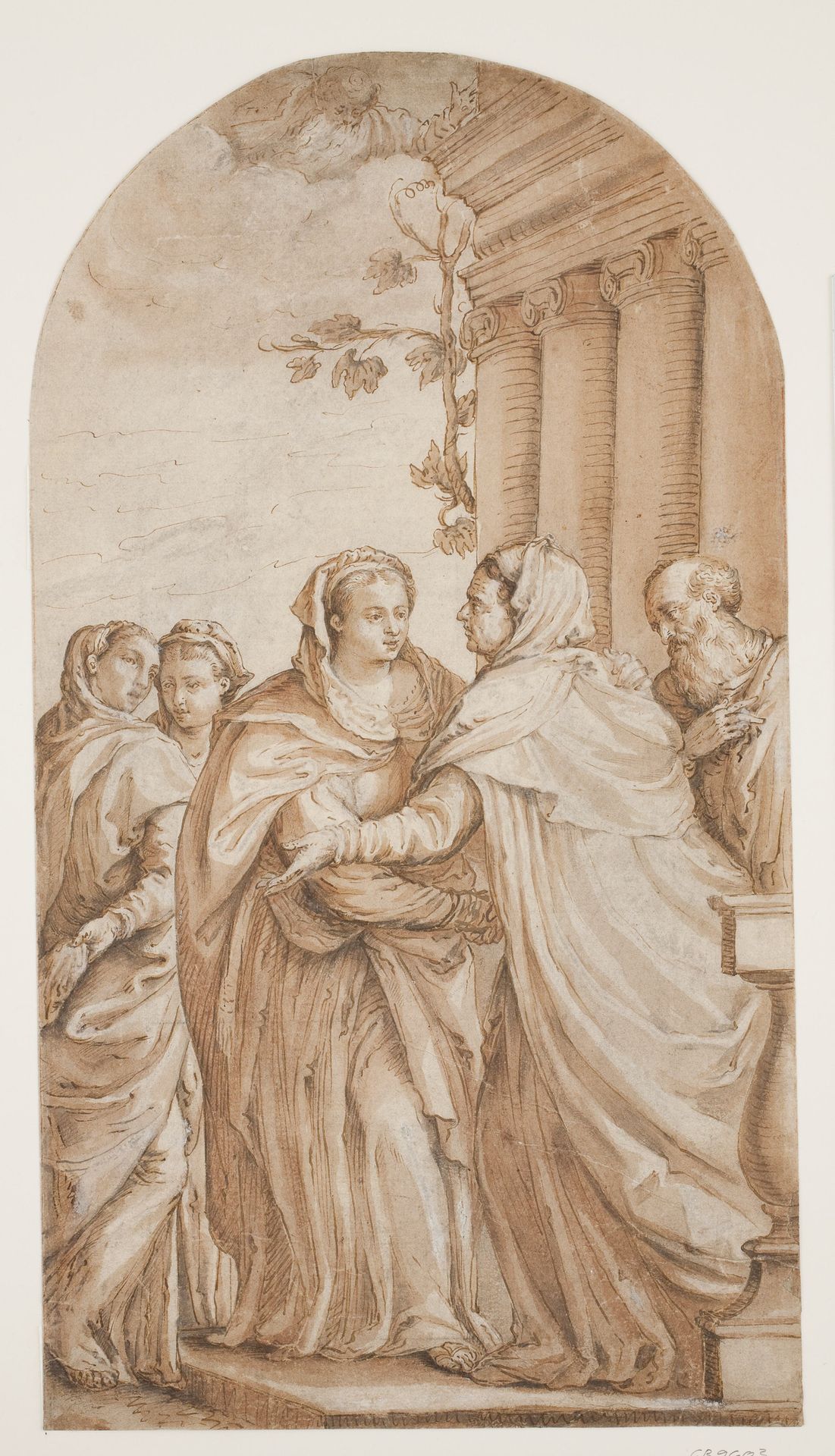
This drawing, “The Visitation,” shows Mary's visit to her cousin Elizabeth. It was created by an anonymous artist and it is unknown when exactly it was made. The image represents a key moment in Christian history. The monumental architecture suggests a society rooted in classical traditions, probably somewhere in Europe. The artist uses linear perspective to create a sense of depth, a technique that became popular during the Renaissance and Baroque periods. But how does this image relate to its social context? Well, the Catholic Church was a major patron of the arts, dictating much of the subject matter. Artists often worked within this framework to express personal or political views. The question of patronage is relevant here: who commissioned this work? What were their intentions? To understand this artwork better, we might consult religious texts, historical documents, and art historical scholarship. By considering the social and institutional context, we can interpret the meaning of the artwork and its impact on the society in which it was created.
The Visitation 1571 - 1631


Artwork details
- Medium
- drawing, ink, charcoal
- Dimensions
- 393 mm (height) x 218 mm (width) (bladmaal)
- Location
- SMK - Statens Museum for Kunst
Tags
drawing
charcoal drawing
figuration
11_renaissance
ink
pencil drawing
charcoal
history-painting
Comments
No comments
About this artwork
This drawing, “The Visitation,” shows Mary's visit to her cousin Elizabeth. It was created by an anonymous artist and it is unknown when exactly it was made. The image represents a key moment in Christian history. The monumental architecture suggests a society rooted in classical traditions, probably somewhere in Europe. The artist uses linear perspective to create a sense of depth, a technique that became popular during the Renaissance and Baroque periods. But how does this image relate to its social context? Well, the Catholic Church was a major patron of the arts, dictating much of the subject matter. Artists often worked within this framework to express personal or political views. The question of patronage is relevant here: who commissioned this work? What were their intentions? To understand this artwork better, we might consult religious texts, historical documents, and art historical scholarship. By considering the social and institutional context, we can interpret the meaning of the artwork and its impact on the society in which it was created.
Comments
No comments