About this artwork
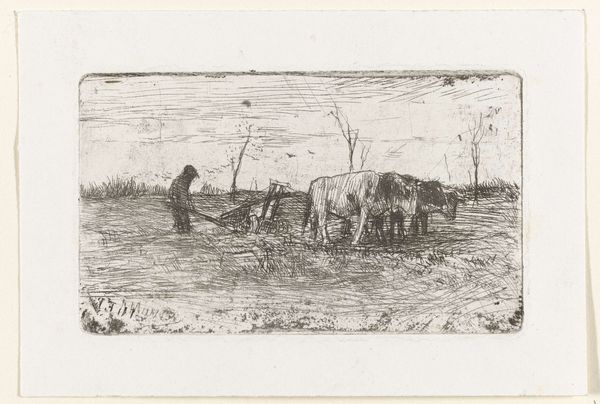
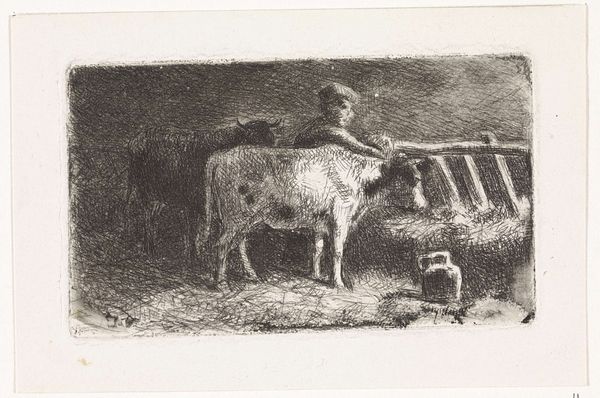
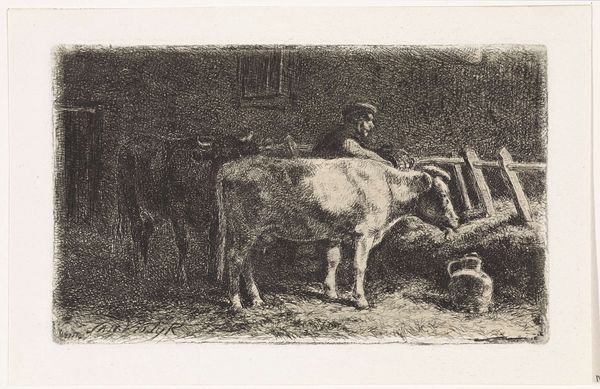
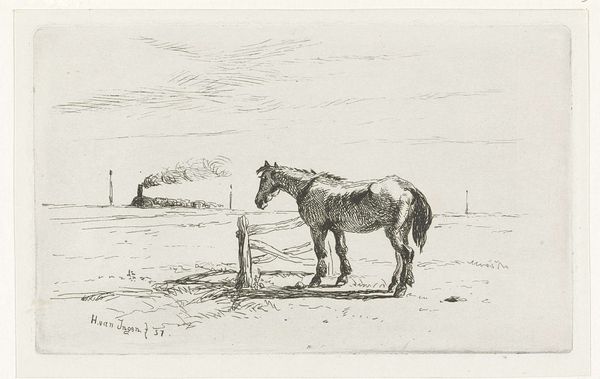
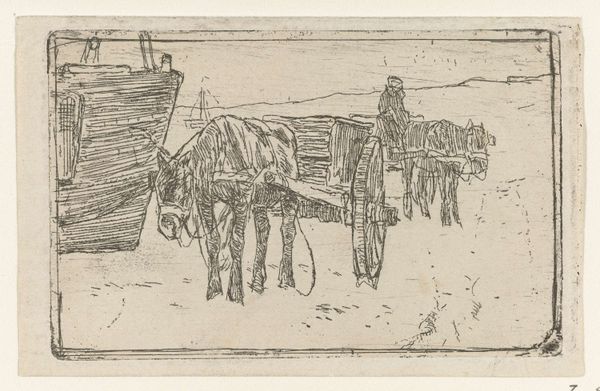
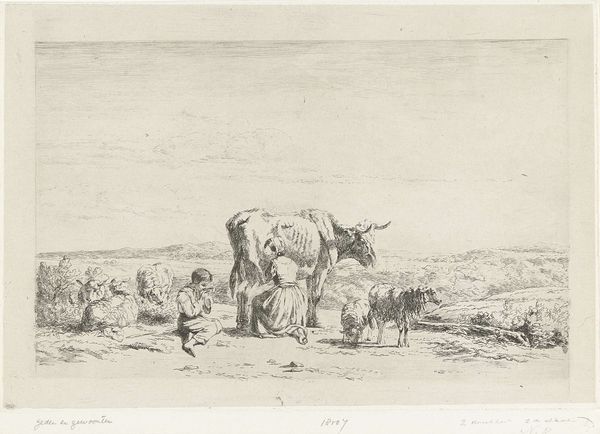
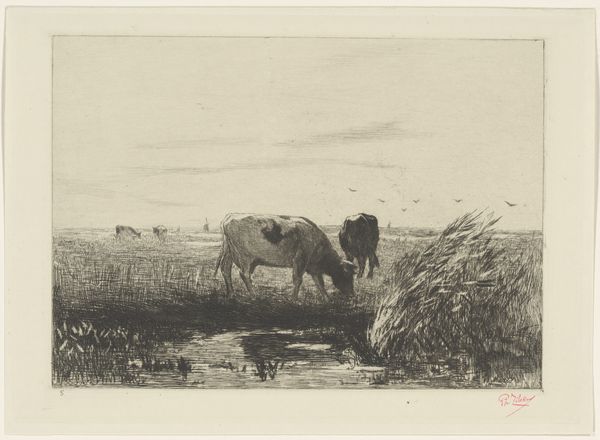
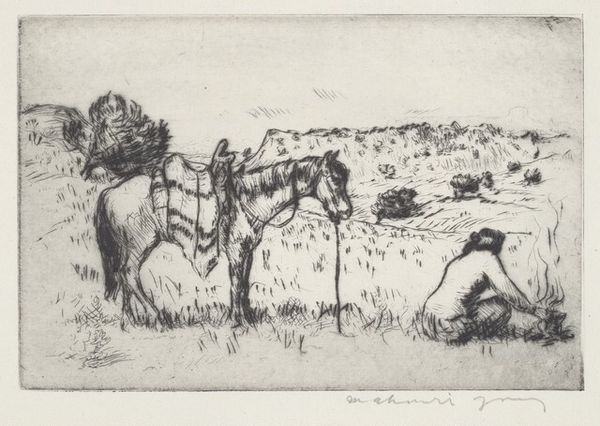
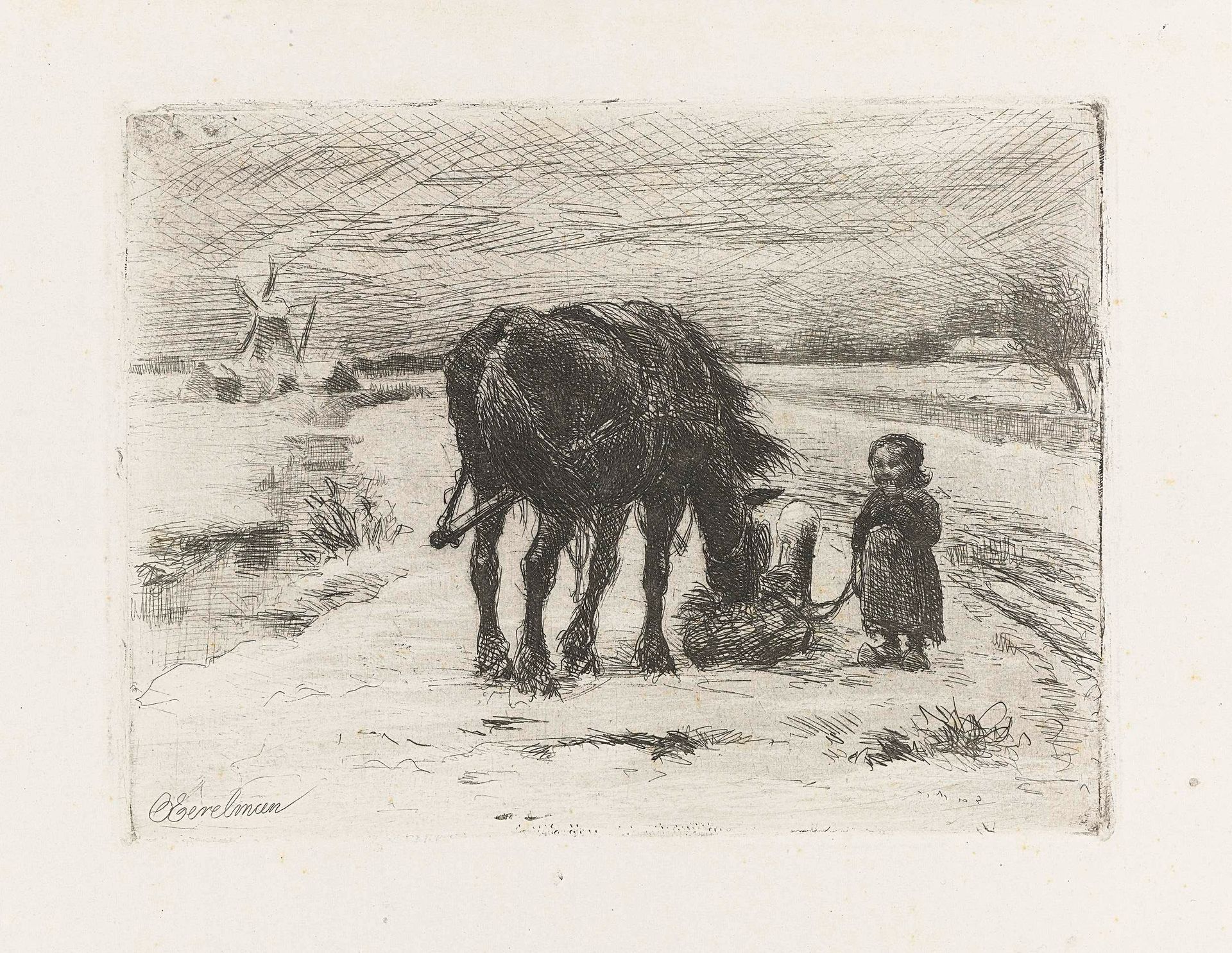
Curator: This delicate drawing, titled "Sneeuwlandschap met kind en paard"—"Snow Landscape with Child and Horse"—is attributed to Otto Eerelman and dates from sometime between 1849 and 1892. It's a pencil and print work held at the Rijksmuseum. What are your initial thoughts? Editor: Well, beyond the technical skill, the overwhelming feeling is bleakness. The wintry, washed-out tones certainly contribute, but there’s also a sense of stark solitude in this desolate scene, conveyed in the lines themselves. Curator: Yes, and note the subtle symbolism here. We see a child, small and almost swallowed by the landscape, tethered to a working animal. The image speaks to childhood labor, the burdens placed on the young in rural communities. The horse represents a bygone era of agriculture. It evokes collective memories of hardship and endurance. Editor: The contrast between the heavy, overworked lines of the horse and the sparse, almost airy strokes elsewhere creates a distinct visual hierarchy, emphasizing its toil, wouldn't you agree? I find it so interesting how Eerelman has constructed the emotional narrative via tonal variety alone. Curator: Absolutely, the contrast accentuates that tension, doesn’t it? Notice, too, the distant windmill, a symbol of human industry dwarfed by the vastness of the natural world. The child and horse form a connection to both the landscape, with its heavy sky and cold atmosphere. I believe that it embodies our continued interaction and sometimes uneasy association with work, childhood, nature and industrial progress. Editor: I concur. Looking at this seemingly simple sketch reveals layers of symbolic meaning—of a culture reliant on both youthful labor and the harnessed power of animals. The linear qualities amplify the stark realism here. Thank you for clarifying some of that symbolism. Curator: A fruitful exchange, indeed! The seemingly simple scenes can sometimes carry so many stories.

Artwork details
- Medium
- drawing, print, pencil
- Dimensions
- height 116 mm, width 160 mm
- Location
- Rijksmuseum
- Copyright
- Rijks Museum: Open Domain
Tags
Comments
Share your thoughts
About this artwork
Curator: This delicate drawing, titled "Sneeuwlandschap met kind en paard"—"Snow Landscape with Child and Horse"—is attributed to Otto Eerelman and dates from sometime between 1849 and 1892. It's a pencil and print work held at the Rijksmuseum. What are your initial thoughts? Editor: Well, beyond the technical skill, the overwhelming feeling is bleakness. The wintry, washed-out tones certainly contribute, but there’s also a sense of stark solitude in this desolate scene, conveyed in the lines themselves. Curator: Yes, and note the subtle symbolism here. We see a child, small and almost swallowed by the landscape, tethered to a working animal. The image speaks to childhood labor, the burdens placed on the young in rural communities. The horse represents a bygone era of agriculture. It evokes collective memories of hardship and endurance. Editor: The contrast between the heavy, overworked lines of the horse and the sparse, almost airy strokes elsewhere creates a distinct visual hierarchy, emphasizing its toil, wouldn't you agree? I find it so interesting how Eerelman has constructed the emotional narrative via tonal variety alone. Curator: Absolutely, the contrast accentuates that tension, doesn’t it? Notice, too, the distant windmill, a symbol of human industry dwarfed by the vastness of the natural world. The child and horse form a connection to both the landscape, with its heavy sky and cold atmosphere. I believe that it embodies our continued interaction and sometimes uneasy association with work, childhood, nature and industrial progress. Editor: I concur. Looking at this seemingly simple sketch reveals layers of symbolic meaning—of a culture reliant on both youthful labor and the harnessed power of animals. The linear qualities amplify the stark realism here. Thank you for clarifying some of that symbolism. Curator: A fruitful exchange, indeed! The seemingly simple scenes can sometimes carry so many stories.
Comments
Share your thoughts