About this artwork
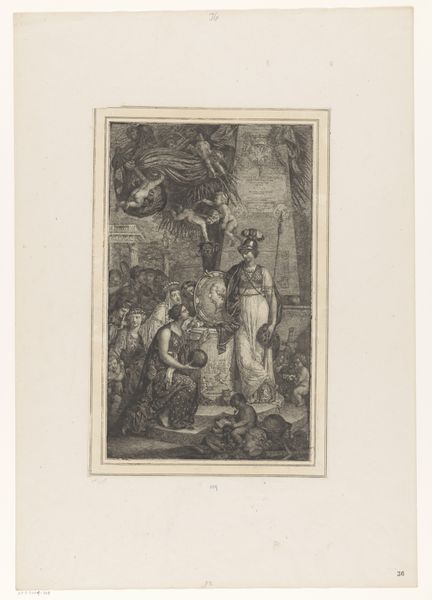
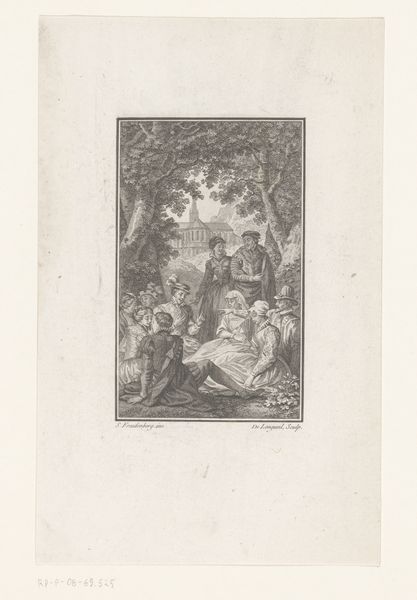
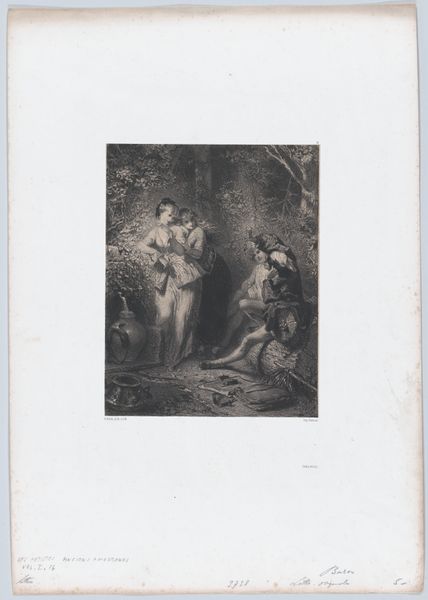
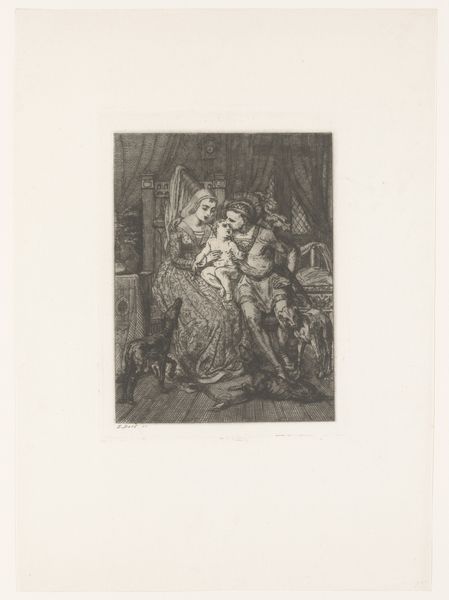
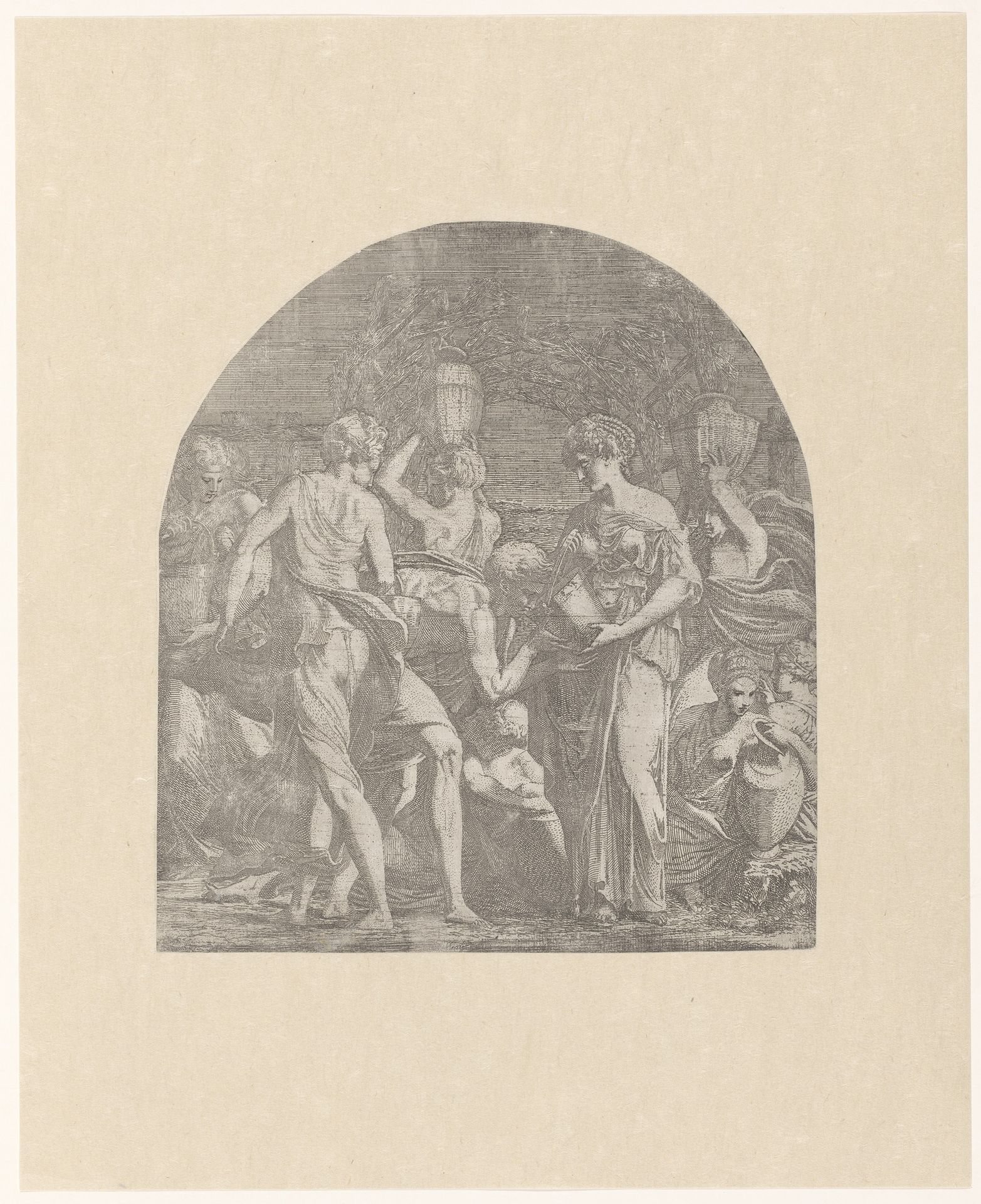
Léon Davent's "Vrouw geeft een man te drinken uit een emmer, mogelijk Eliëzer en Rebekka," made sometime between 1540 and 1556, presents us with a bustling scene rendered through intricate lines and delicate shading. The composition, shaped by an arch, directs our focus to the central figures: a woman offering water to a man, possibly Rebekah and Eliezer. The artist uses line and form to convey a sense of classical grace and movement. The tight clustering of figures, and the contrast between light and shadow, creates a dynamic rhythm that enlivens the entire print. Davent, working within the Mannerist tradition, destabilizes the classical harmony of the Renaissance by employing a complex arrangement of bodies and a certain elongation of forms. The scene can be decoded through the visual language of its time, where gestures and poses carried symbolic weight. Davent's work prompts us to consider how even seemingly straightforward images are constructed through a web of cultural codes and artistic conventions, inviting us to question fixed meanings and engage in a continuous process of interpretation.
Vrouw geeft een man te drinken uit een emmer, mogelijk Eliëzer en Rebekka
1540 - 1556

Artwork details
- Medium
- print, engraving
- Dimensions
- height 293 mm, width 264 mm
- Copyright
- Rijks Museum: Open Domain
Tags
Comments
Share your thoughts
About this artwork
Léon Davent's "Vrouw geeft een man te drinken uit een emmer, mogelijk Eliëzer en Rebekka," made sometime between 1540 and 1556, presents us with a bustling scene rendered through intricate lines and delicate shading. The composition, shaped by an arch, directs our focus to the central figures: a woman offering water to a man, possibly Rebekah and Eliezer. The artist uses line and form to convey a sense of classical grace and movement. The tight clustering of figures, and the contrast between light and shadow, creates a dynamic rhythm that enlivens the entire print. Davent, working within the Mannerist tradition, destabilizes the classical harmony of the Renaissance by employing a complex arrangement of bodies and a certain elongation of forms. The scene can be decoded through the visual language of its time, where gestures and poses carried symbolic weight. Davent's work prompts us to consider how even seemingly straightforward images are constructed through a web of cultural codes and artistic conventions, inviting us to question fixed meanings and engage in a continuous process of interpretation.
Comments
Share your thoughts