drawing, paper, pencil
drawing
amateur sketch
light pencil work
baroque
pencil sketch
incomplete sketchy
fantasy-art
paper
form
personal sketchbook
ink drawing experimentation
pencil
sketchbook drawing
genre-painting
academic-art
sketchbook art
fantasy sketch
initial sketch
Dimensions: height 161 mm, width 210 mm
Copyright: Rijks Museum: Open Domain
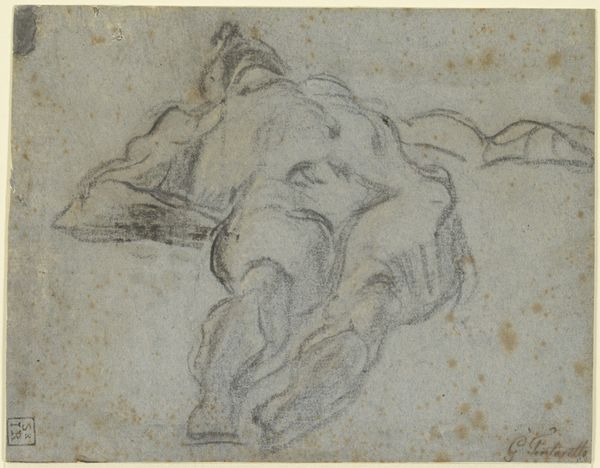
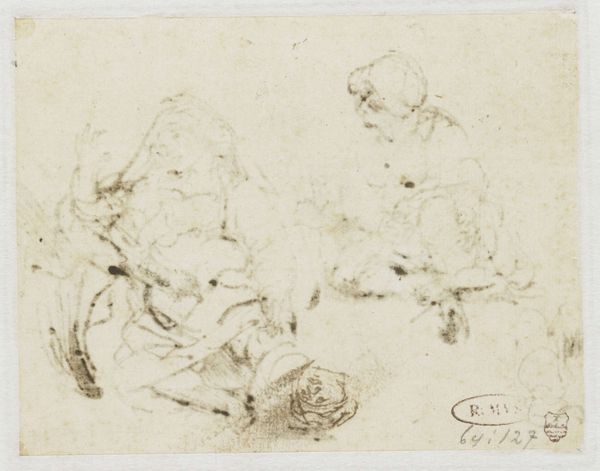
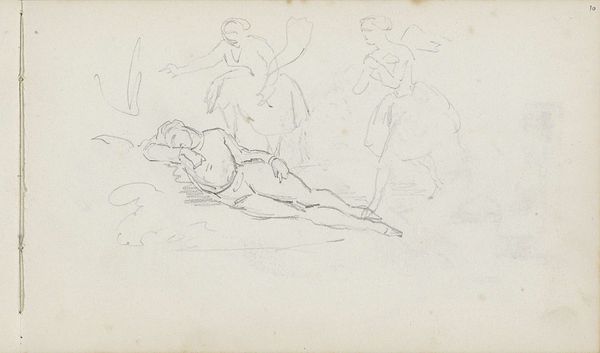
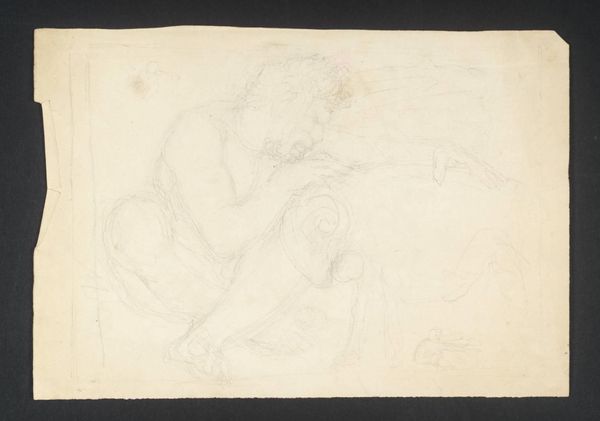
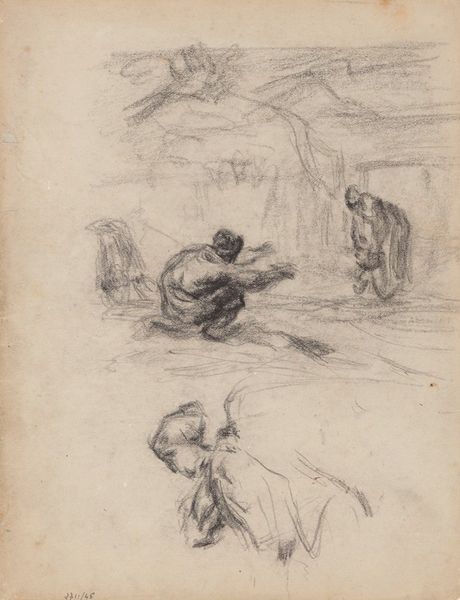
Editor: Here we have Moses ter Borch's "Studieblad met twee saters," a pencil drawing from around 1656. It feels so fleeting, like a captured thought. What strikes you most when you look at it? Curator: The satyr, as an image, holds such potent symbolism. They embody the primal, instinctual aspects of humanity, often suppressed by civilization. Ter Borch offers us not idealized gods, but glimpses into the untamed, the Dionysian spirit. Look how the rough lines communicate raw energy, it feels so alive! Editor: That makes sense. I was focused on the 'unfinished' look, but I see your point. The looseness really suits the subject. Curator: Precisely. Notice the tension between the figures – one almost upright, the other contorted, bent over? One seems to resist gravity and embrace something transcendental, the other yields to purely corporeal drives. Ter Borch suggests this dichotomy dwells within us. What do these symbols mean for the culture interpreting them? Editor: So it's not just a mythological sketch, but a commentary on human nature? I hadn't considered that! Curator: Consider how prevalent these archetypes remained in Baroque art! Each age imbues the Satyr figure with fresh nuance to their collective identity, continuing dialogues concerning body and spirit. Editor: That gives me a lot to think about. I see how these sketchy lines aren't just lines; they’re carrying centuries of cultural baggage! Curator: Exactly! Art invites conversations across time and space. Each mark bears witness to stories. It also carries them forward.
Comments
No comments
Be the first to comment and join the conversation on the ultimate creative platform.
 React
React Comment