About this artwork
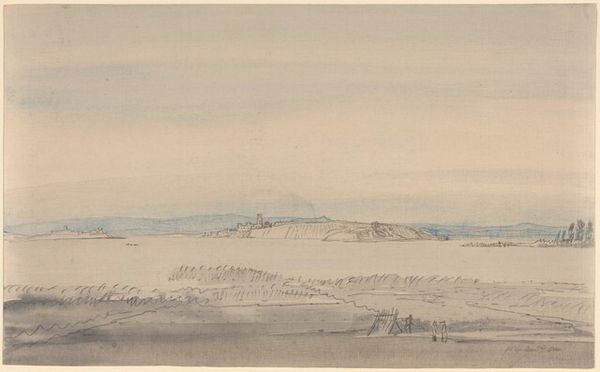
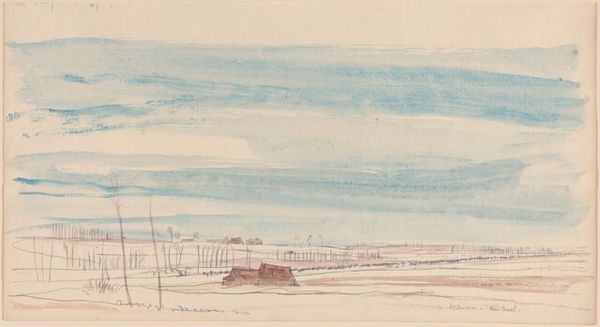
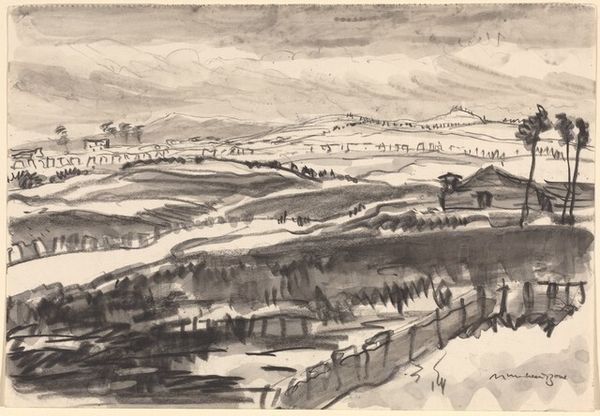
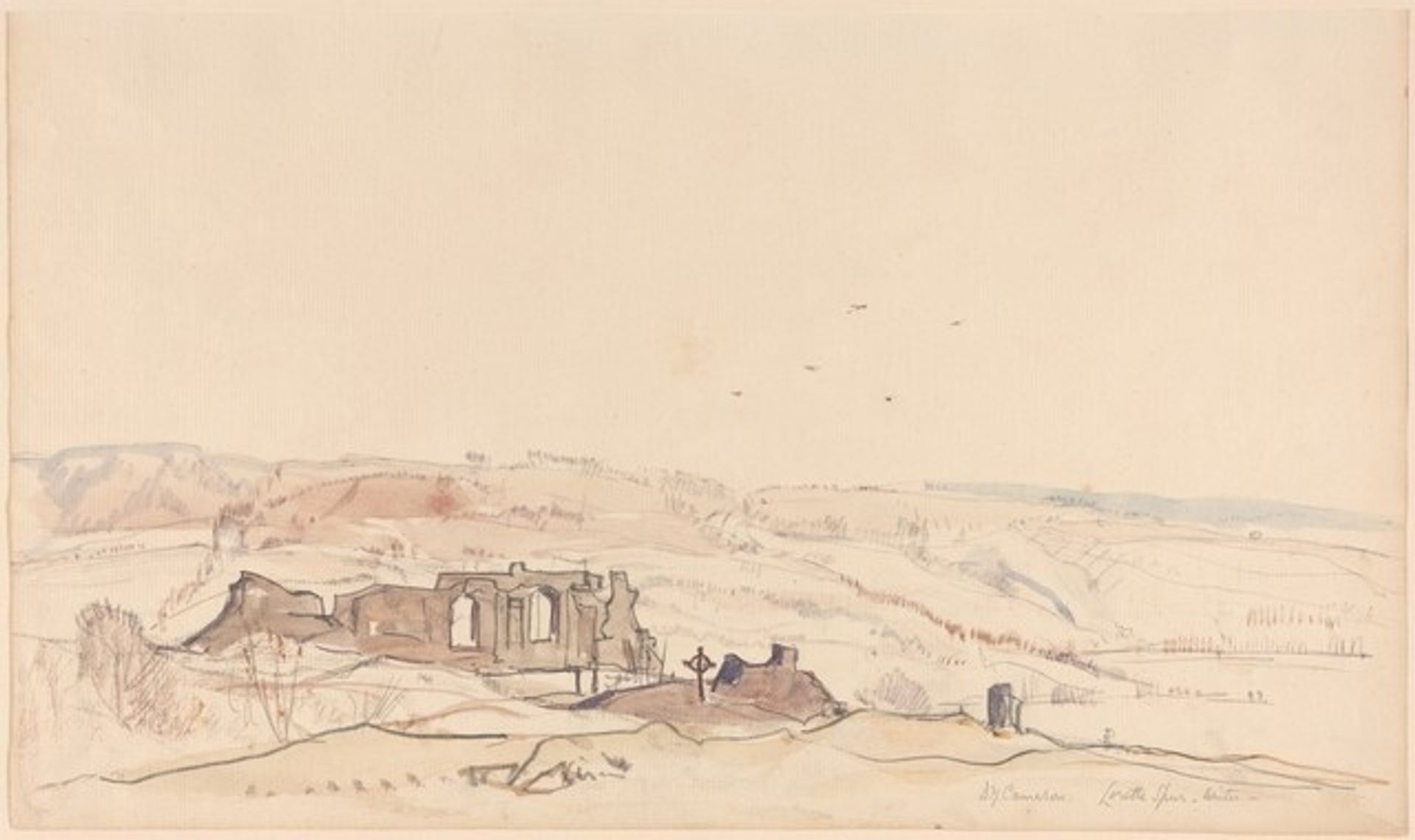
Editor: We're looking at David Young Cameron's watercolor and drawing, *Lorette Spur, Winter*. It’s pretty understated; muted colors and delicate lines. There's something almost desolate about it. What’s your take on it? Curator: Desolate is a good word. The skeletal remains of buildings and that simple cross… I can almost feel the chill. This reminds me a bit of early war photography, which also often possessed this very austere beauty in depicting devastation. Consider how Cameron employs the stark watercolor to suggest a landscape scarred, perhaps by conflict, or simply the harsh hand of time. It’s more than just a landscape; it whispers of absence. What do you feel when you notice the subtle use of light and shadow, creating depth? Editor: It definitely enhances that sense of emptiness. So it’s like the artist uses the scenery to talk about something deeper, something beyond just a pretty view? Curator: Exactly. Cameron captures a place, yes, but also an emotion, a reflection. It is sparse; not every element needs to be precisely rendered. Think about it – sometimes what’s *not* there tells us even more. What do you make of the open sky dominating so much of the image? Editor: I guess it could mean hope or maybe even isolation… like this place is exposed and vulnerable. Curator: Precisely. The painting is a masterclass in understated storytelling, wouldn't you agree? Editor: Totally! It really hits you, even with so little going on. I get it now; sometimes less really *is* more. Curator: Glad to see you connect to the beauty of it! This dialogue makes one see with fresh eyes.


Artwork details
- Medium
- drawing, watercolor
- Dimensions
- overall (approximate): 22.2 x 33.6 cm (8 3/4 x 13 1/4 in.)
- Copyright
- National Gallery of Art: CC0 1.0
Tags
Comments
Share your thoughts
About this artwork
Editor: We're looking at David Young Cameron's watercolor and drawing, *Lorette Spur, Winter*. It’s pretty understated; muted colors and delicate lines. There's something almost desolate about it. What’s your take on it? Curator: Desolate is a good word. The skeletal remains of buildings and that simple cross… I can almost feel the chill. This reminds me a bit of early war photography, which also often possessed this very austere beauty in depicting devastation. Consider how Cameron employs the stark watercolor to suggest a landscape scarred, perhaps by conflict, or simply the harsh hand of time. It’s more than just a landscape; it whispers of absence. What do you feel when you notice the subtle use of light and shadow, creating depth? Editor: It definitely enhances that sense of emptiness. So it’s like the artist uses the scenery to talk about something deeper, something beyond just a pretty view? Curator: Exactly. Cameron captures a place, yes, but also an emotion, a reflection. It is sparse; not every element needs to be precisely rendered. Think about it – sometimes what’s *not* there tells us even more. What do you make of the open sky dominating so much of the image? Editor: I guess it could mean hope or maybe even isolation… like this place is exposed and vulnerable. Curator: Precisely. The painting is a masterclass in understated storytelling, wouldn't you agree? Editor: Totally! It really hits you, even with so little going on. I get it now; sometimes less really *is* more. Curator: Glad to see you connect to the beauty of it! This dialogue makes one see with fresh eyes.
Comments
Share your thoughts