About this artwork
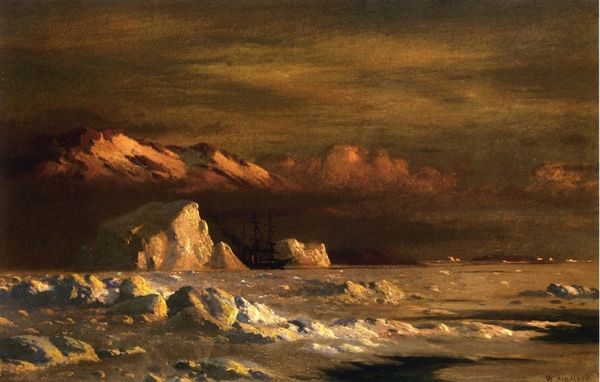
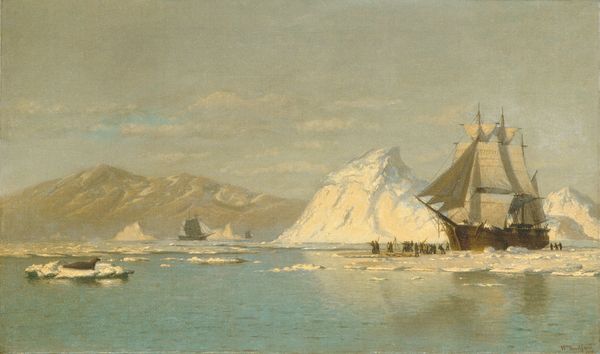
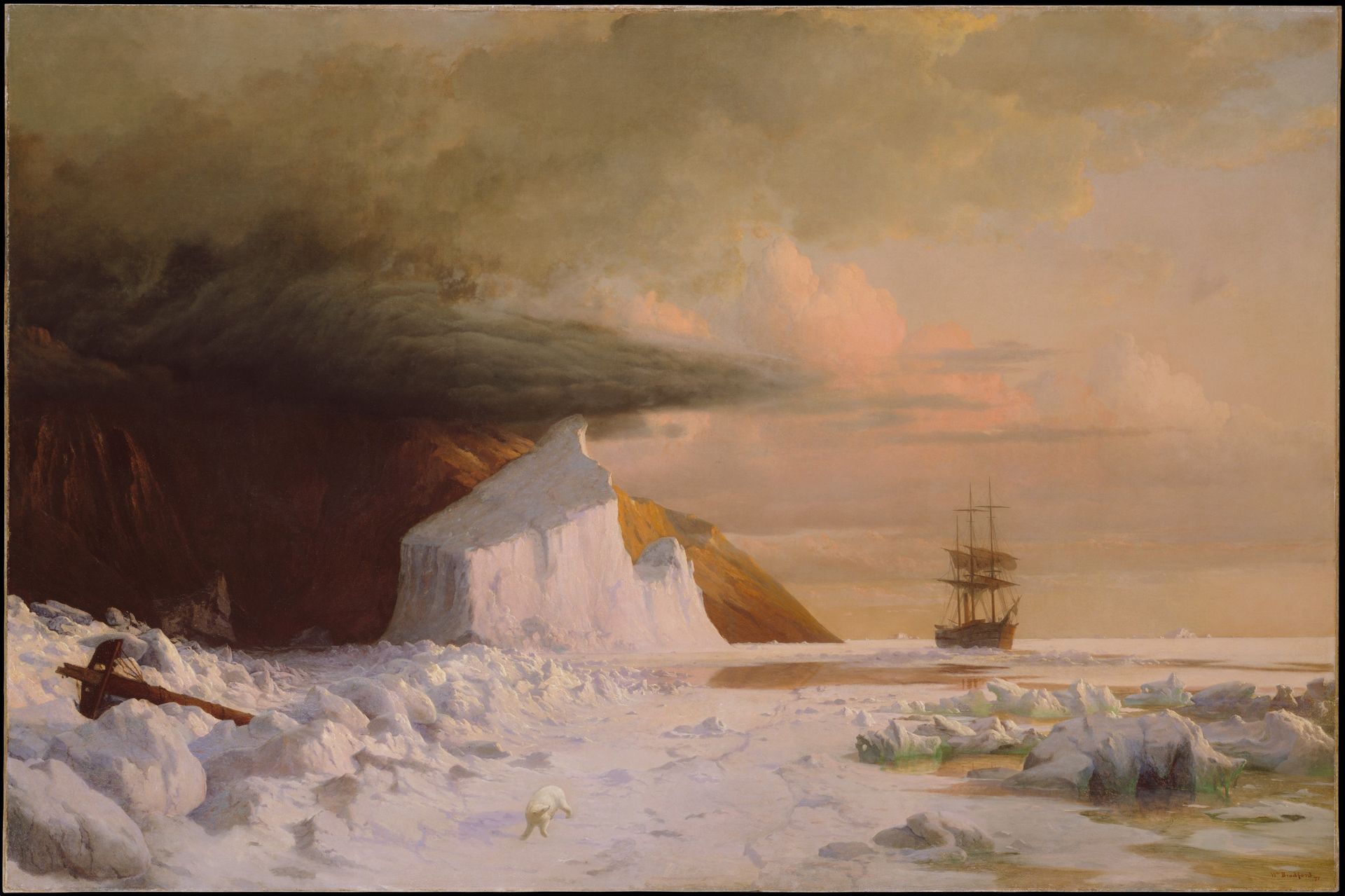
William Bradford made this large-scale painting, "An Arctic Summer: Boring Through the Pack in Melville Bay," with oil on canvas. Bradford was fascinated by the Arctic, making several expeditions to the region. The painting’s surface is meticulously rendered to capture the harsh environment of the Arctic. Note the texture of the ice, the cold, grey-tinged sky, and the way the light reflects off the water. Bradford's technique captures not just the appearance of the Arctic but also its material reality. This wasn’t just a feat of artistry; it was an act of documentation, reflecting the growing interest in exploration and resource extraction during the 19th century. Expeditions like Bradford's were often tied to capitalist expansion, seeking new trade routes and resources. The painting, therefore, exists at the intersection of art, exploration, and the economic forces driving the industrial age. It prompts us to consider the labor and resources involved in these expeditions and their impact on the Arctic landscape.
An Arctic Summer: Boring Through the Pack in Melville Bay
1871


Artwork details
- Dimensions
- 51 3/4 x 78 in. (131.4 x 198.1 cm); framed: 60 x 86 1/2 x 4 in.
- Location
- Metropolitan Museum of Art, New York, NY
- Copyright
- Public Domain
Comments
Share your thoughts
About this artwork
William Bradford made this large-scale painting, "An Arctic Summer: Boring Through the Pack in Melville Bay," with oil on canvas. Bradford was fascinated by the Arctic, making several expeditions to the region. The painting’s surface is meticulously rendered to capture the harsh environment of the Arctic. Note the texture of the ice, the cold, grey-tinged sky, and the way the light reflects off the water. Bradford's technique captures not just the appearance of the Arctic but also its material reality. This wasn’t just a feat of artistry; it was an act of documentation, reflecting the growing interest in exploration and resource extraction during the 19th century. Expeditions like Bradford's were often tied to capitalist expansion, seeking new trade routes and resources. The painting, therefore, exists at the intersection of art, exploration, and the economic forces driving the industrial age. It prompts us to consider the labor and resources involved in these expeditions and their impact on the Arctic landscape.
Comments
Share your thoughts