About this artwork
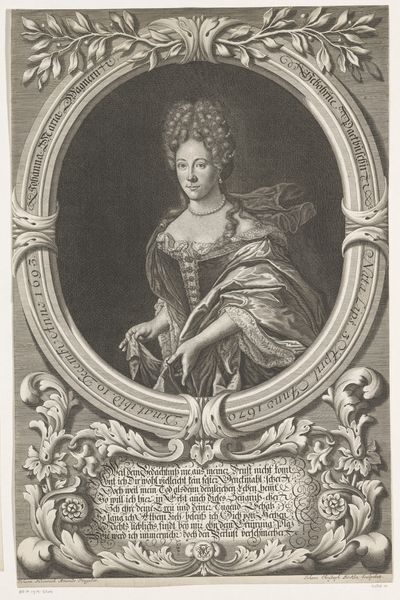
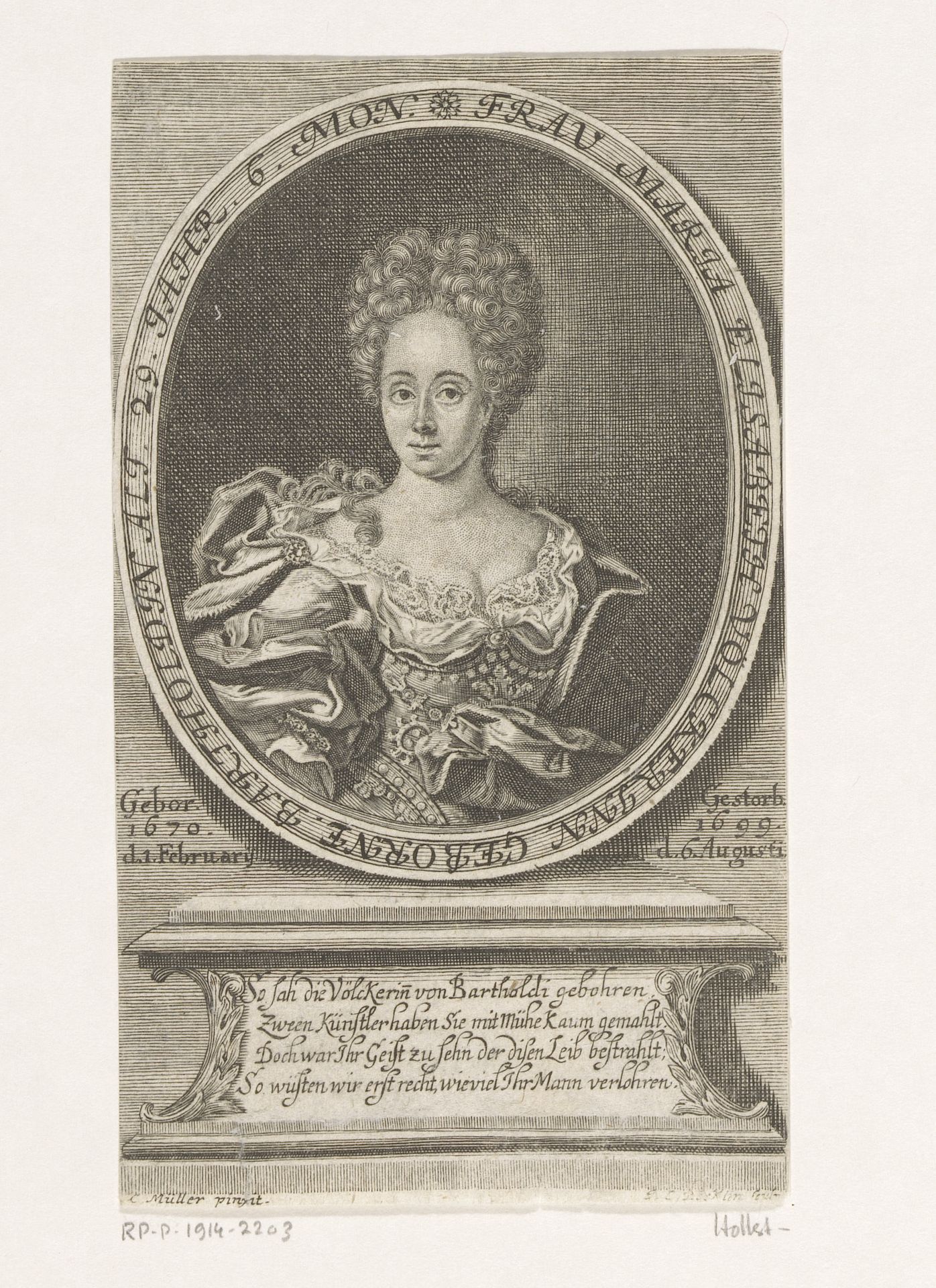
This is a portrait of Maria Elisabeth Völcker, made by Johann Christoph Boecklin sometime between 1670 and 1709. It’s an engraving, meaning that the image was incised into a metal plate, likely copper, with a tool called a burin. Ink was then applied to the plate, and the excess wiped away, leaving ink only in the incised lines, before being printed onto paper. Engraving was a highly skilled, labor-intensive process, requiring years of training. The density of fine lines creates subtle tonal variations, bringing Völcker to life. Note the elaborate details of her dress, hair, and the lettering that encircles the portrait. Engravings like this were often made in multiples, allowing for the wider dissemination of images. Consider the social context: printmaking was crucial to the spread of knowledge and ideas, also playing a significant role in shaping public opinion and cultural trends. So, next time you encounter a print, remember the layers of skill, labor, and social context embedded within its lines.
Portret van Maria Elisabeth Völcker
1699 - 1709

Johann Christoph Boecklin
1657 - 1709Location
RijksmuseumArtwork details
- Medium
- print, engraving
- Dimensions
- height 147 mm, width 86 mm
- Location
- Rijksmuseum
- Copyright
- Rijks Museum: Open Domain
Tags
Comments
Share your thoughts
About this artwork
This is a portrait of Maria Elisabeth Völcker, made by Johann Christoph Boecklin sometime between 1670 and 1709. It’s an engraving, meaning that the image was incised into a metal plate, likely copper, with a tool called a burin. Ink was then applied to the plate, and the excess wiped away, leaving ink only in the incised lines, before being printed onto paper. Engraving was a highly skilled, labor-intensive process, requiring years of training. The density of fine lines creates subtle tonal variations, bringing Völcker to life. Note the elaborate details of her dress, hair, and the lettering that encircles the portrait. Engravings like this were often made in multiples, allowing for the wider dissemination of images. Consider the social context: printmaking was crucial to the spread of knowledge and ideas, also playing a significant role in shaping public opinion and cultural trends. So, next time you encounter a print, remember the layers of skill, labor, and social context embedded within its lines.
Comments
Share your thoughts