About this artwork
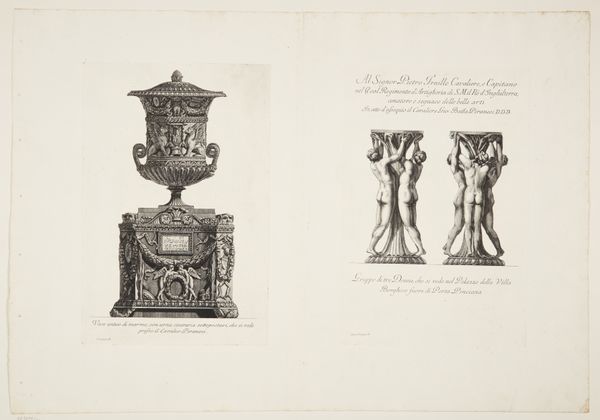
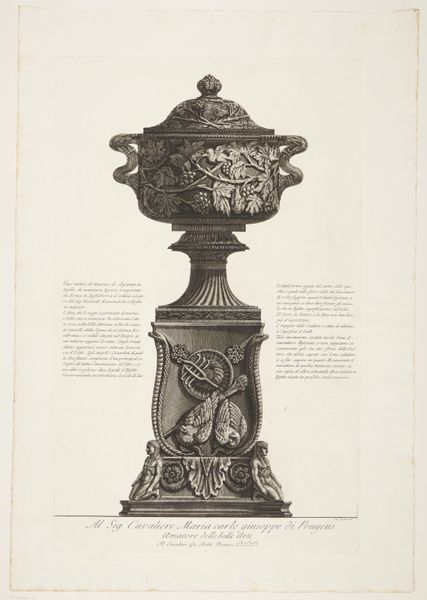
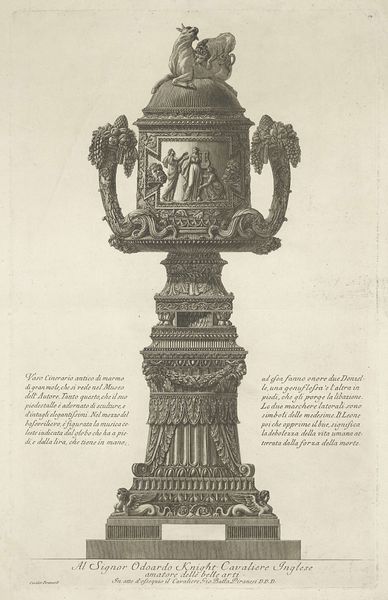
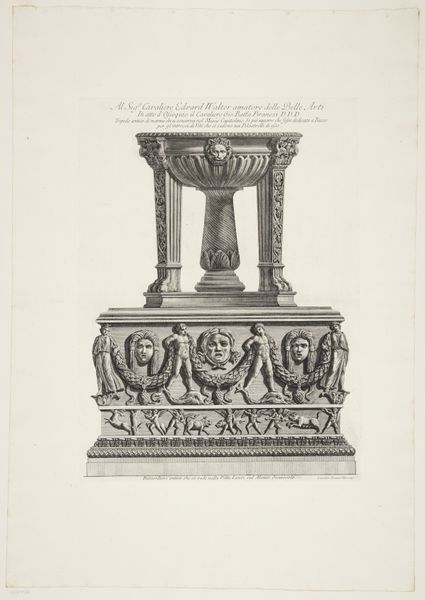
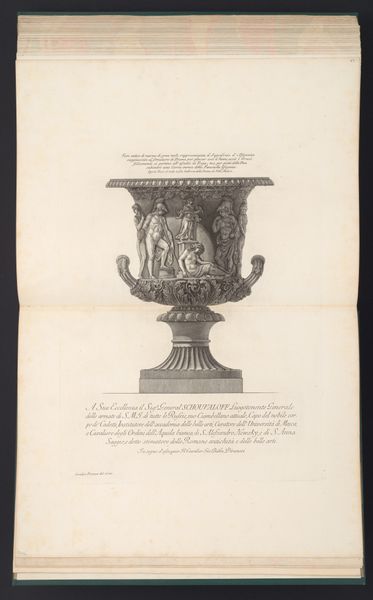
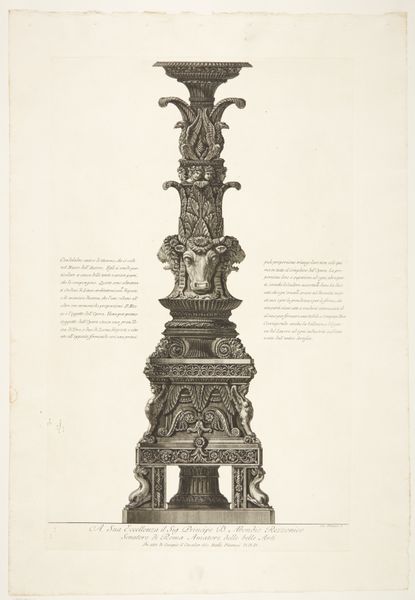
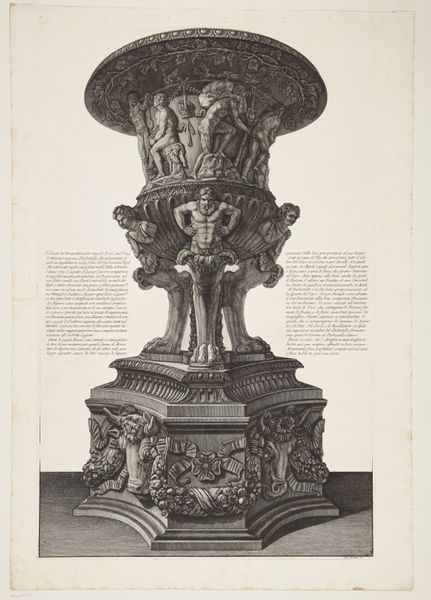
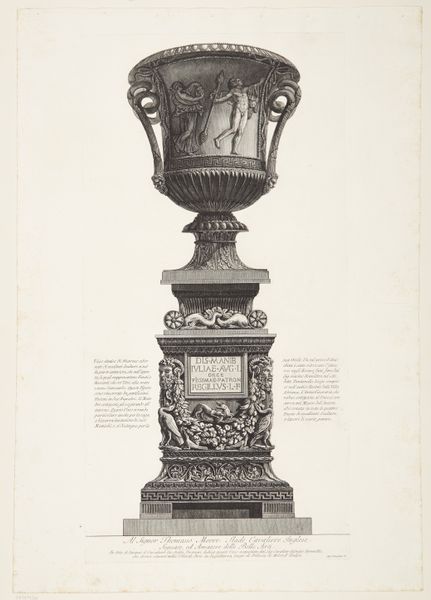
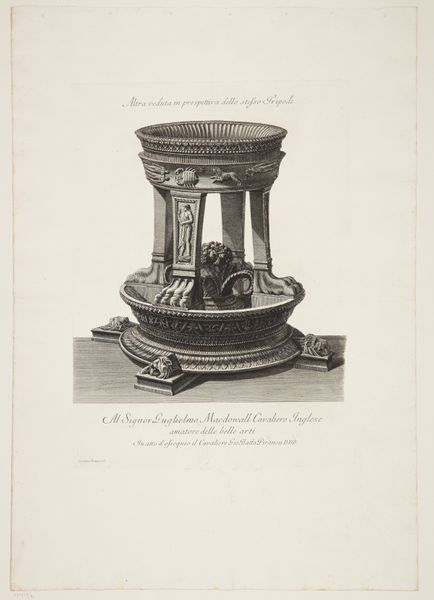
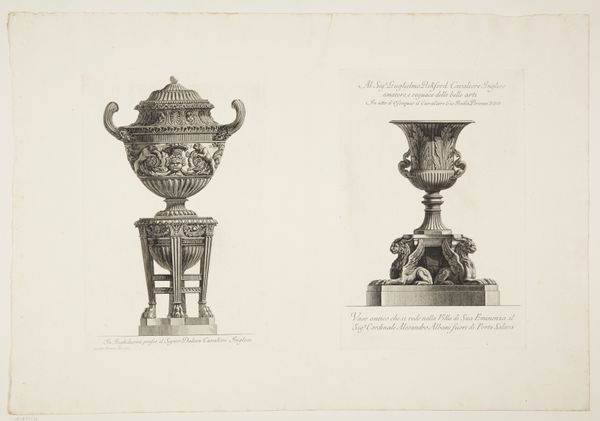
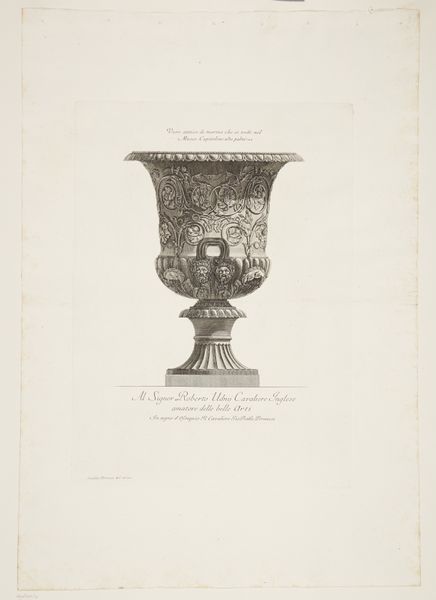
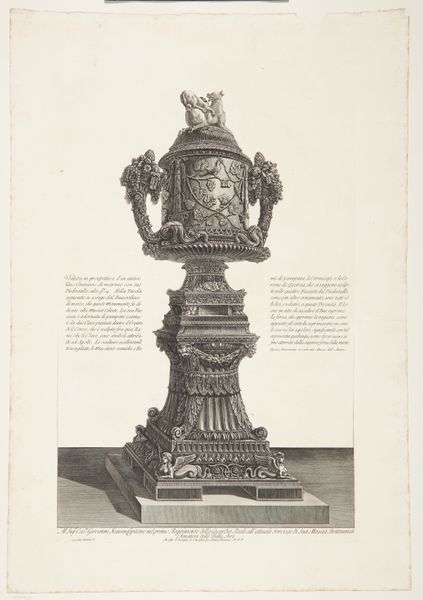
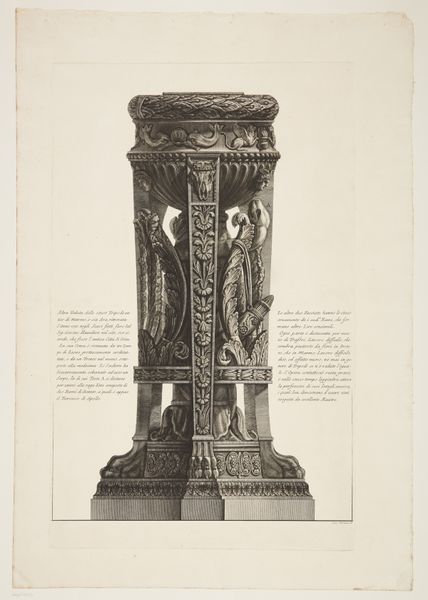
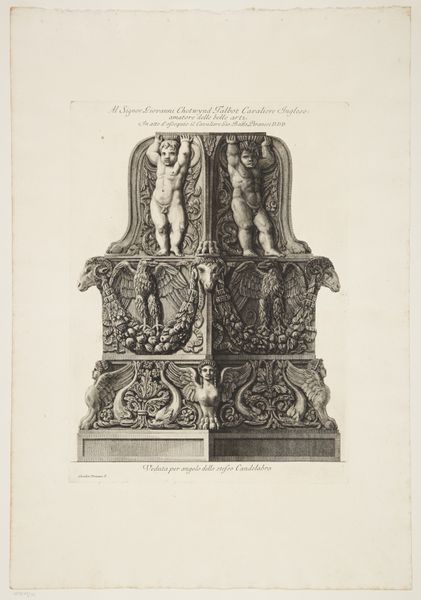
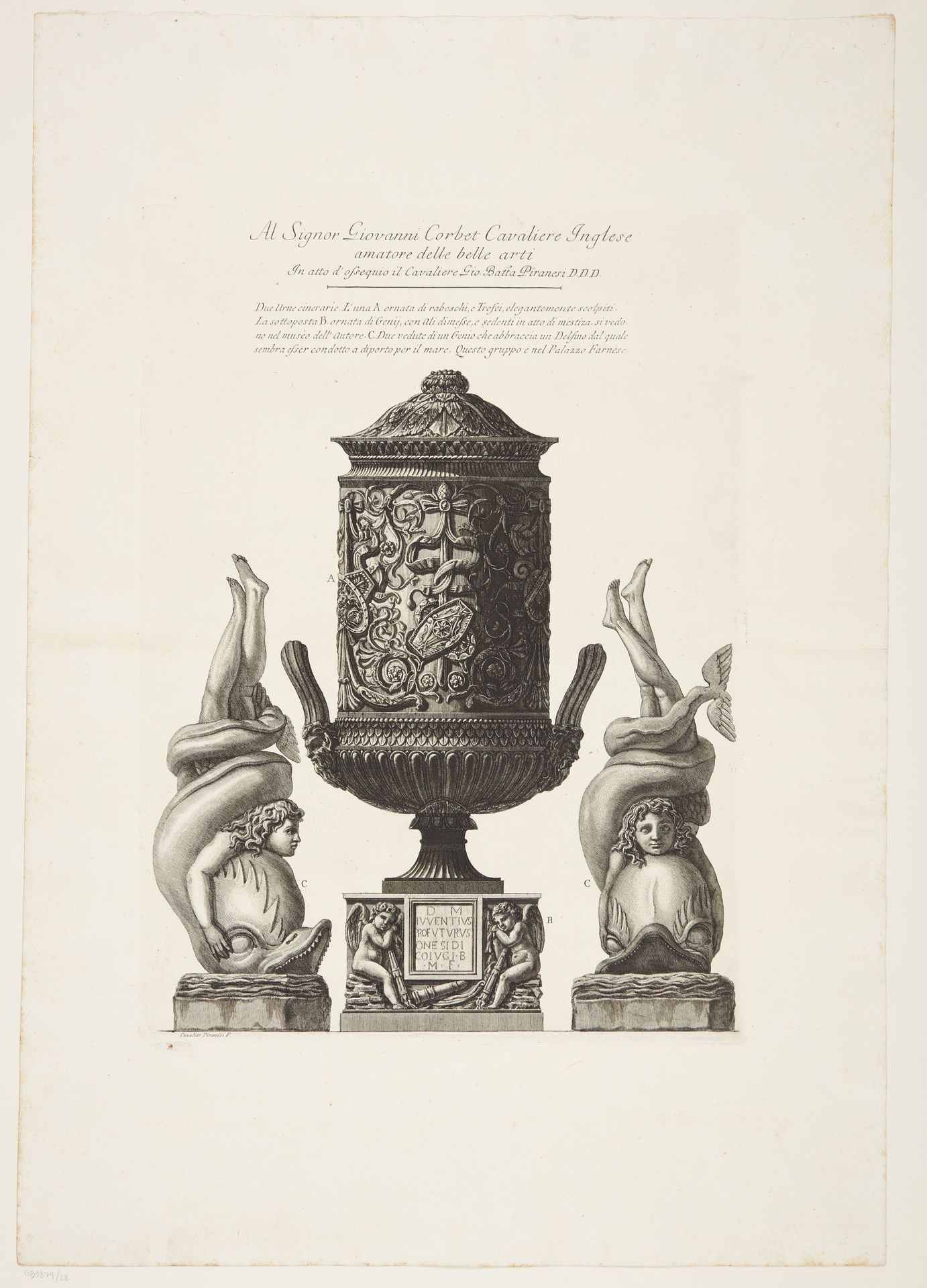
Giovanni Battista Piranesi created this etching of cinerary urns in the 18th century. These elaborate designs, with their trophies, arabesques, and flanking sculptures, are a testament to Piranesi's skill as a draftsman and his fascination with classical antiquity. Etching is an intaglio printmaking technique where the design is incised into a metal plate, traditionally copper. The plate is covered with a waxy ground, upon which the artist scratches an image with a pointed tool. The exposed metal is then bitten by immersing the plate in acid. The acid eats away at the lines, creating recessed areas that hold ink. In Piranesi’s time, the Grand Tour fueled a market for meticulously detailed prints like this, which served as both souvenirs and sources of inspiration for architects and designers. Through the repeatable medium of print, Piranesi democratized access to classical forms, disseminating them widely for study and adaptation. This print embodies the spirit of the Enlightenment, where knowledge and beauty were meant to be shared and celebrated.
Two cinerary urns, one of them with trophies and arabesques resting on the other with torches, both flanked by two views of a small group of a boy with a dolphin
1769 - 1778


Artwork details
- Dimensions
- 533 mm (height) x 385 mm (width) (plademaal)
- Location
- SMK - Statens Museum for Kunst
Comments
Be the first to share your thoughts about this work.
About this artwork
Giovanni Battista Piranesi created this etching of cinerary urns in the 18th century. These elaborate designs, with their trophies, arabesques, and flanking sculptures, are a testament to Piranesi's skill as a draftsman and his fascination with classical antiquity. Etching is an intaglio printmaking technique where the design is incised into a metal plate, traditionally copper. The plate is covered with a waxy ground, upon which the artist scratches an image with a pointed tool. The exposed metal is then bitten by immersing the plate in acid. The acid eats away at the lines, creating recessed areas that hold ink. In Piranesi’s time, the Grand Tour fueled a market for meticulously detailed prints like this, which served as both souvenirs and sources of inspiration for architects and designers. Through the repeatable medium of print, Piranesi democratized access to classical forms, disseminating them widely for study and adaptation. This print embodies the spirit of the Enlightenment, where knowledge and beauty were meant to be shared and celebrated.
Comments
Be the first to share your thoughts about this work.