About this artwork
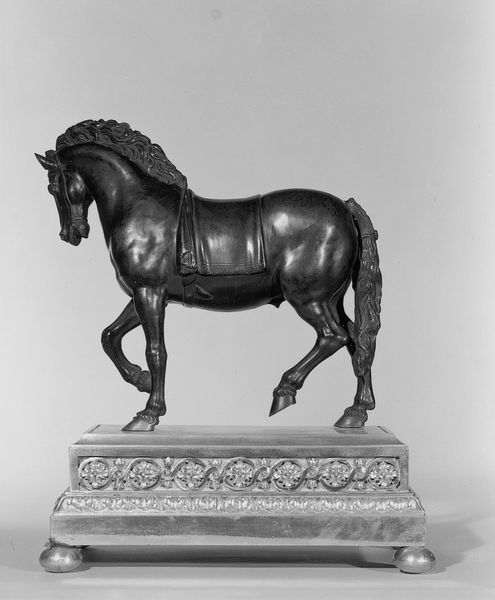
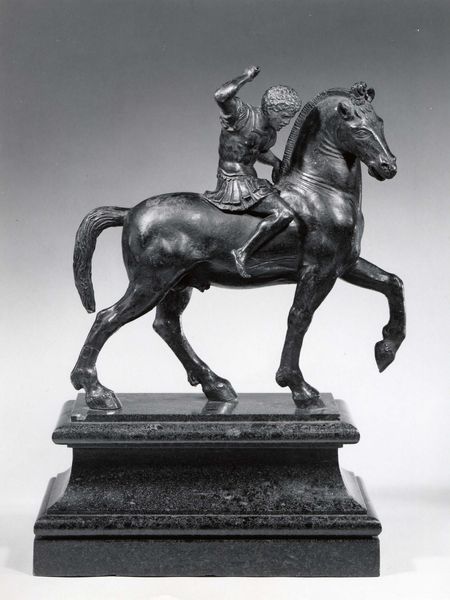
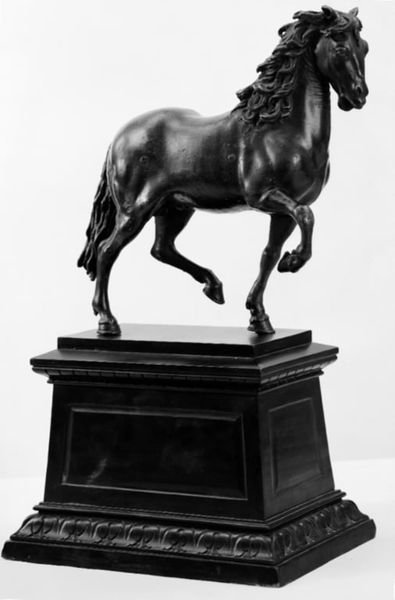
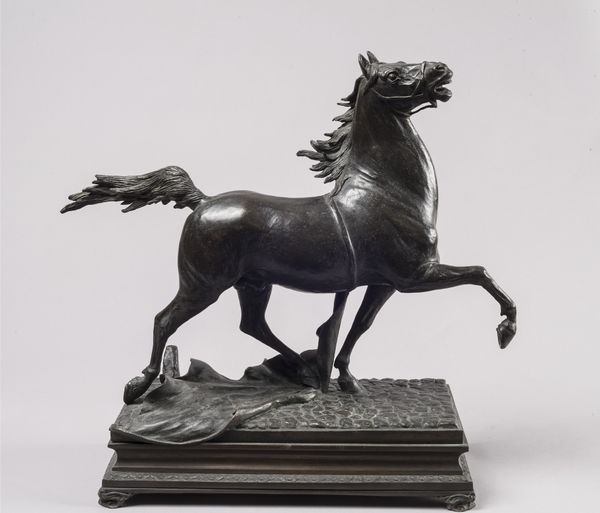
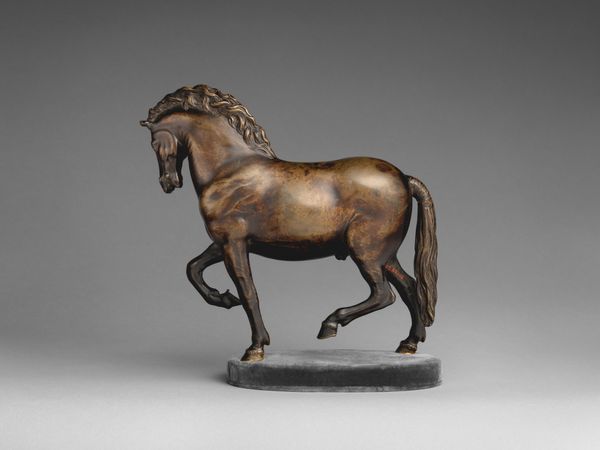
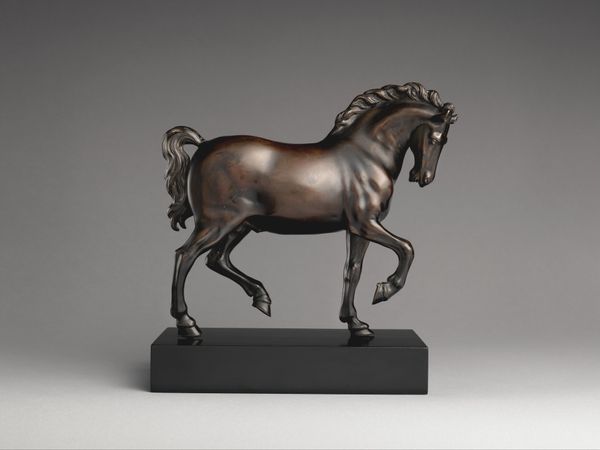
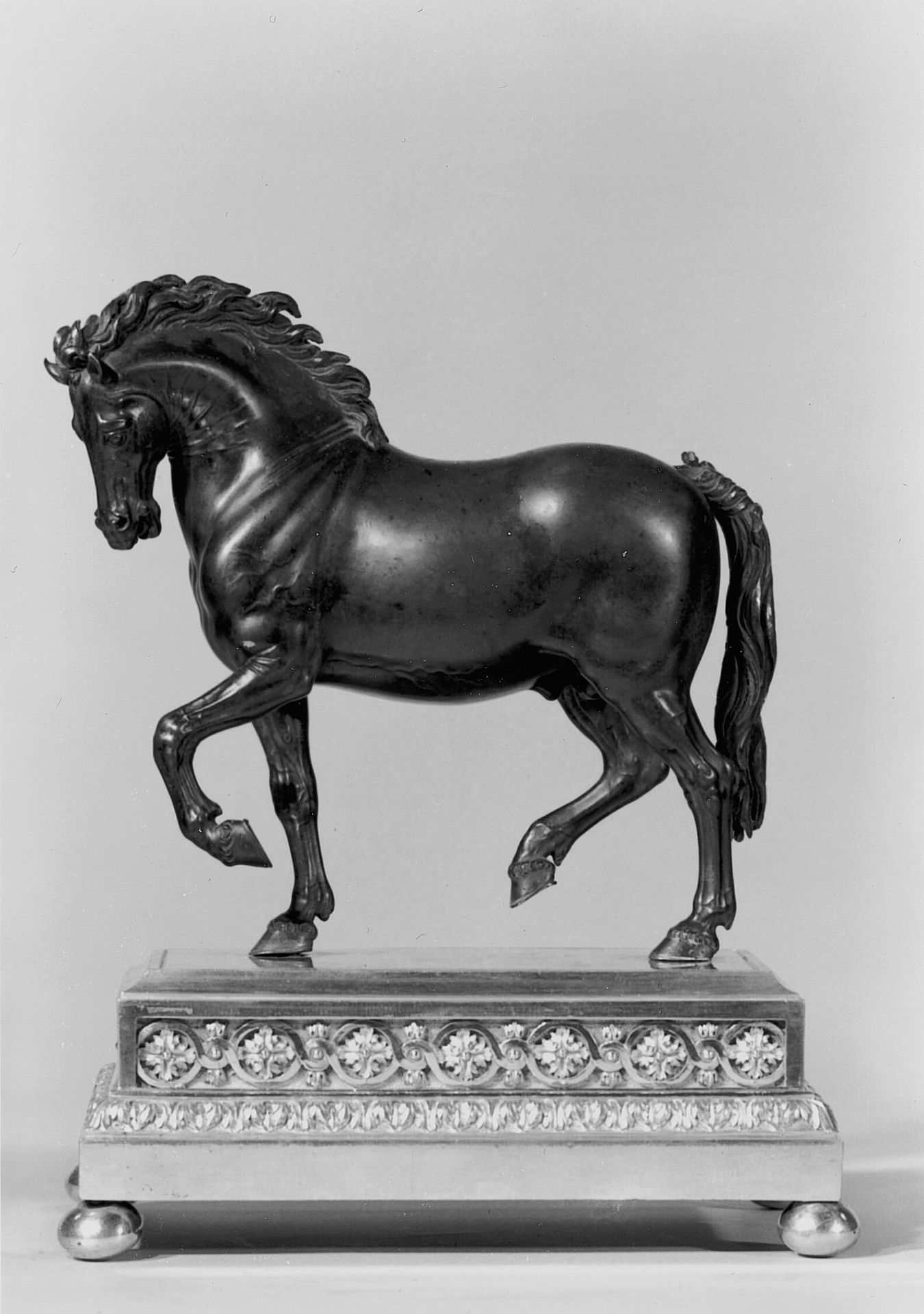
Here we see Giovanni da Bologna's bronze sculpture, Pacing Horse, which captures a sense of dynamic potential. The horse isn't simply standing; it's caught in a moment of controlled motion, with one leg raised as if mid-stride. The composition relies on a delicate balance. The smooth musculature of the horse contrasts with the intricate detailing of its mane and tail, creating a rich play of textures. This juxtaposition emphasizes the animal's vitality while demonstrating the sculptor's mastery over the medium. Notice how the horse's posture creates a series of curves and diagonals that give the sculpture a sense of contained energy. The choice of bronze as a medium is significant. Its reflective surface captures light, animating the figure and emphasizing its three-dimensionality. This sculpture embodies a tension between stillness and movement, inviting us to contemplate the dynamic possibilities held within a static form. This interplay is a hallmark not only of Bologna's work but also of the broader Mannerist aesthetic.
Pacing Horse (one of a pair)
c. 1587 - 1650


Artwork details
- Medium
- metal, bronze, sculpture
- Dimensions
- 34.3 × 27.6 × 15.9 cm (13 1/2 × 10 7/8 × 6 1/4 in.)
- Location
- The Art Institute of Chicago
- Copyright
- Public Domain
Tags
Comments
Share your thoughts
About this artwork
Here we see Giovanni da Bologna's bronze sculpture, Pacing Horse, which captures a sense of dynamic potential. The horse isn't simply standing; it's caught in a moment of controlled motion, with one leg raised as if mid-stride. The composition relies on a delicate balance. The smooth musculature of the horse contrasts with the intricate detailing of its mane and tail, creating a rich play of textures. This juxtaposition emphasizes the animal's vitality while demonstrating the sculptor's mastery over the medium. Notice how the horse's posture creates a series of curves and diagonals that give the sculpture a sense of contained energy. The choice of bronze as a medium is significant. Its reflective surface captures light, animating the figure and emphasizing its three-dimensionality. This sculpture embodies a tension between stillness and movement, inviting us to contemplate the dynamic possibilities held within a static form. This interplay is a hallmark not only of Bologna's work but also of the broader Mannerist aesthetic.
Comments
Share your thoughts