About this artwork
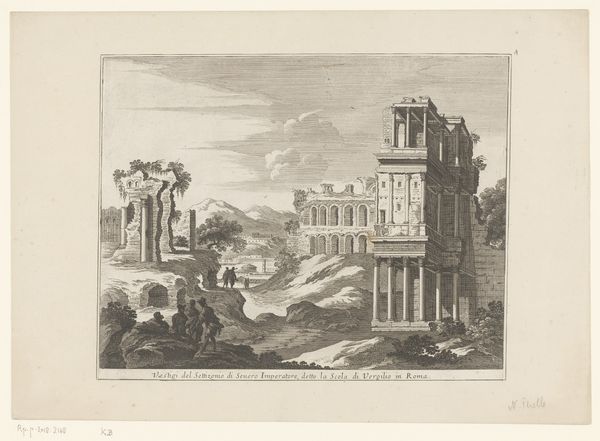
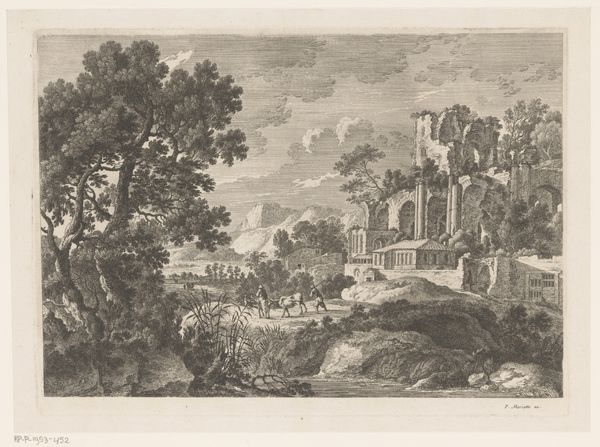
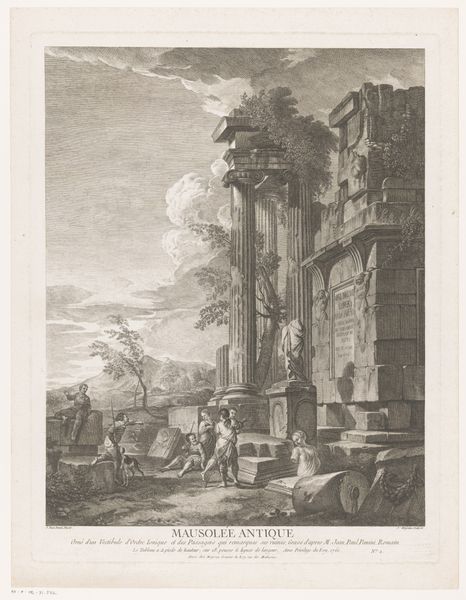
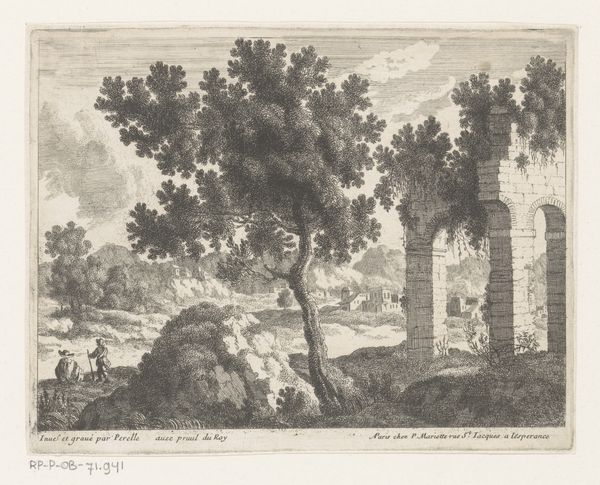
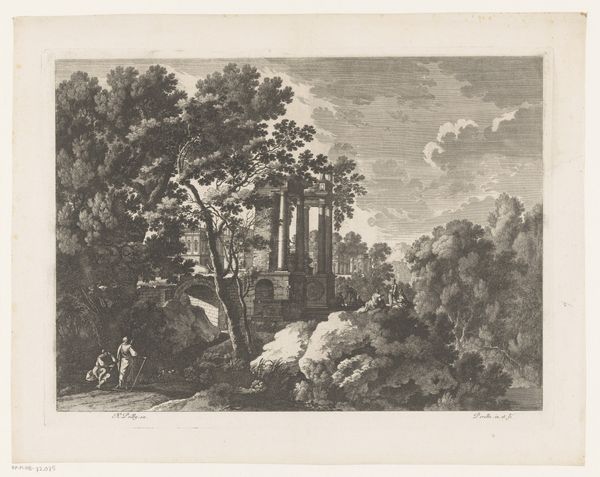
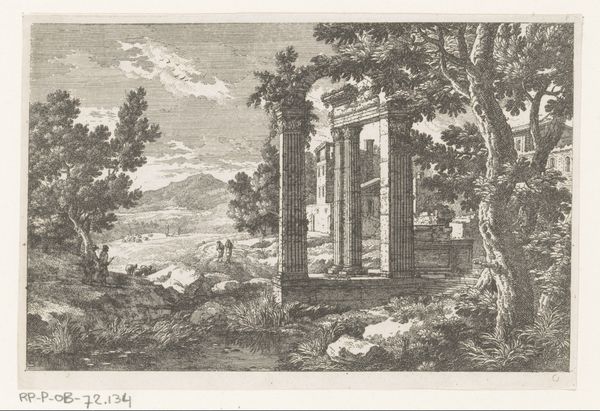
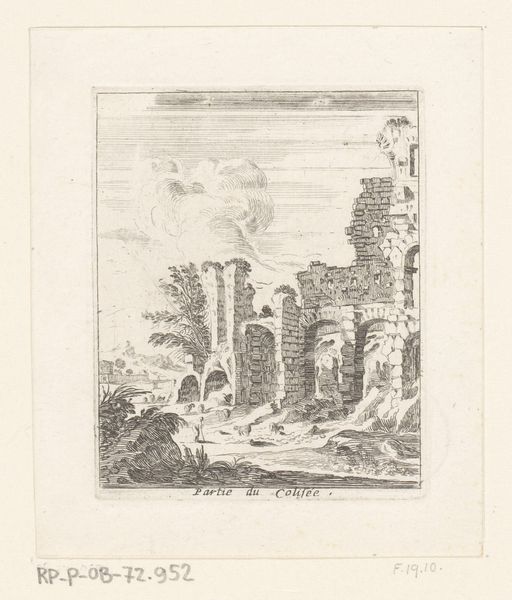
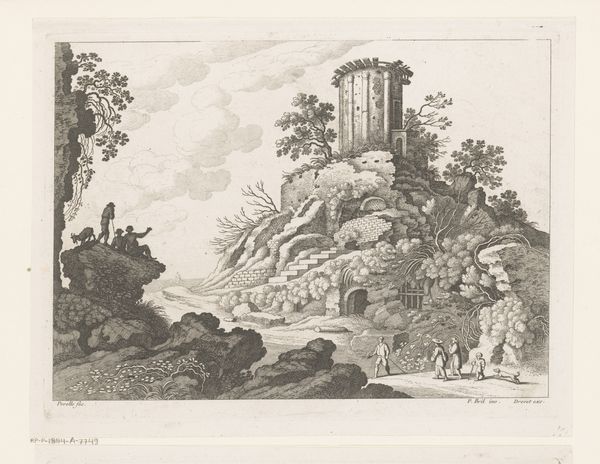
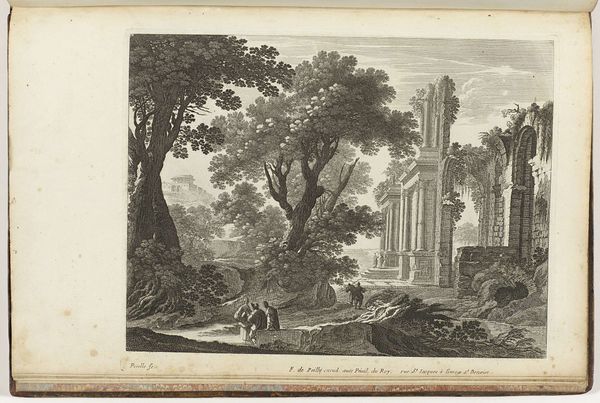
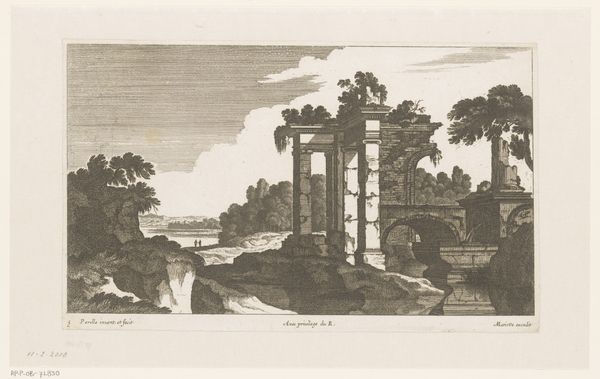
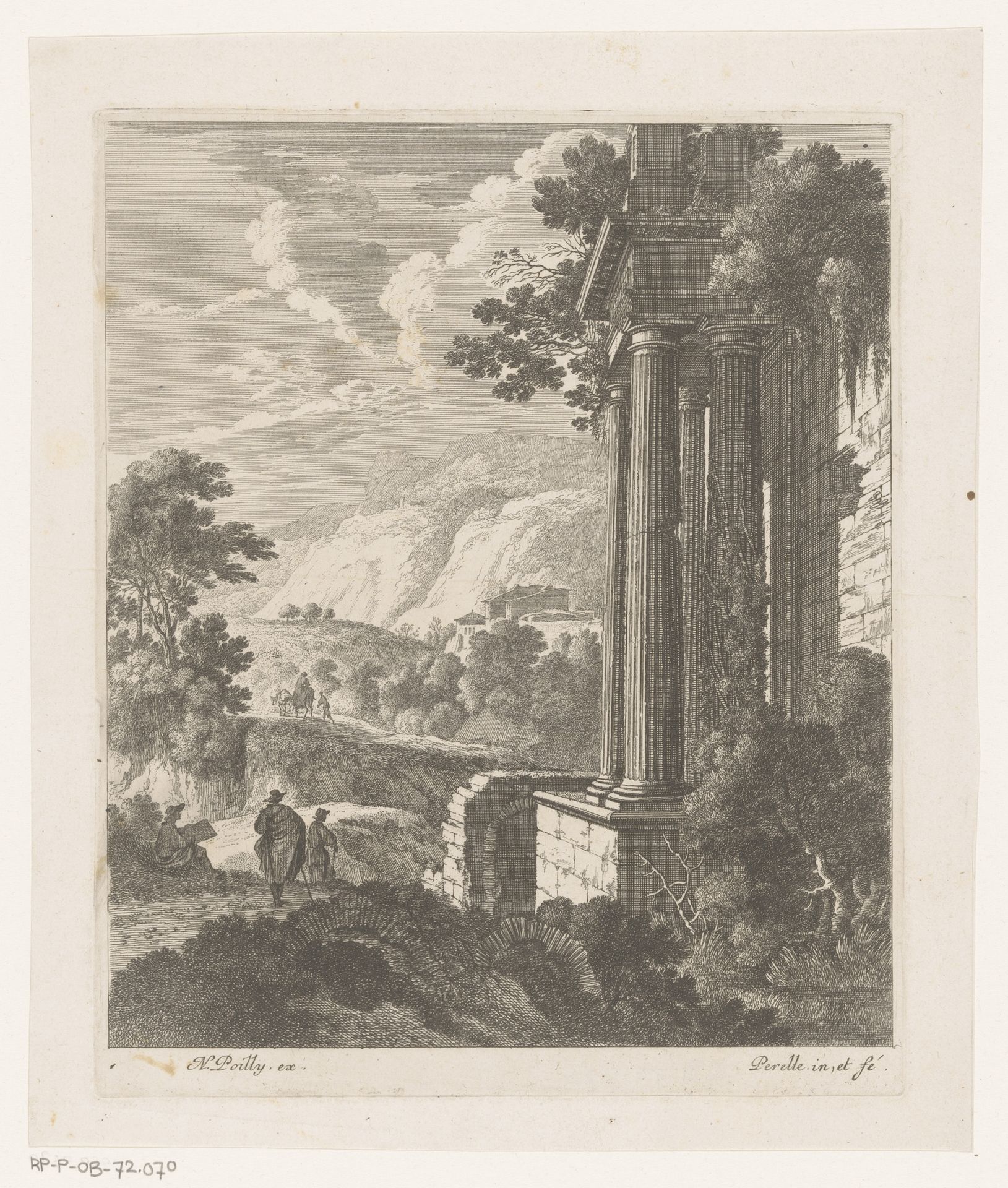
Nicolas Perelle created this landscape with the ruin of an antique temple with etching. Notice how the composition is structured around the decaying temple ruins dominating the right side. The artist employs linear perspective to draw our eyes into the distance where the sharp lines of landscape elements contrast with rounded forms of clouds. The detailed hatching and cross-hatching create a variety of textures from smooth stone to rough foliage, adding depth and visual interest. The semiotic interplay between the crumbling architecture and vibrant nature suggests the passage of time and the inevitable decline of civilizations. This could reflect philosophical ideas of the era, where the ephemeral nature of human achievements are set against an eternal backdrop of nature. The ruin symbolizes a lost grandeur and prompts the viewer to reflect on history. Perelle uses line and form to explore themes of time, decay, and the sublime power of nature. The artwork serves as a contemplative space where formal elements invite the viewer to explore meanings embedded in the cultural and philosophical discourse of that era.
Landschap met ruïne van antieke tempel
1636 - 1695

Nicolas Perelle
1631 - 1695Location
RijksmuseumArtwork details
- Medium
- engraving
- Dimensions
- height 220 mm, width 180 mm
- Location
- Rijksmuseum
- Copyright
- Rijks Museum: Open Domain
Tags
Comments
Share your thoughts
About this artwork
Nicolas Perelle created this landscape with the ruin of an antique temple with etching. Notice how the composition is structured around the decaying temple ruins dominating the right side. The artist employs linear perspective to draw our eyes into the distance where the sharp lines of landscape elements contrast with rounded forms of clouds. The detailed hatching and cross-hatching create a variety of textures from smooth stone to rough foliage, adding depth and visual interest. The semiotic interplay between the crumbling architecture and vibrant nature suggests the passage of time and the inevitable decline of civilizations. This could reflect philosophical ideas of the era, where the ephemeral nature of human achievements are set against an eternal backdrop of nature. The ruin symbolizes a lost grandeur and prompts the viewer to reflect on history. Perelle uses line and form to explore themes of time, decay, and the sublime power of nature. The artwork serves as a contemplative space where formal elements invite the viewer to explore meanings embedded in the cultural and philosophical discourse of that era.
Comments
Share your thoughts