About this artwork
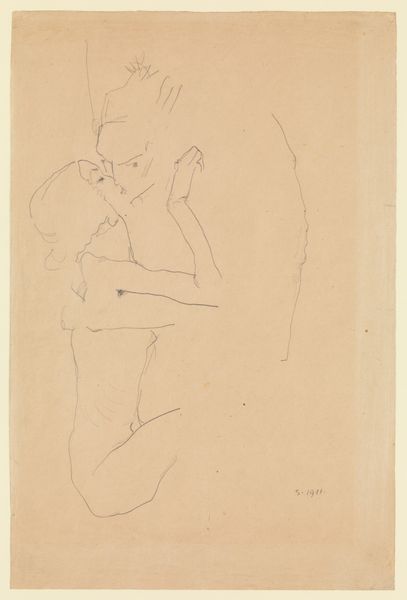
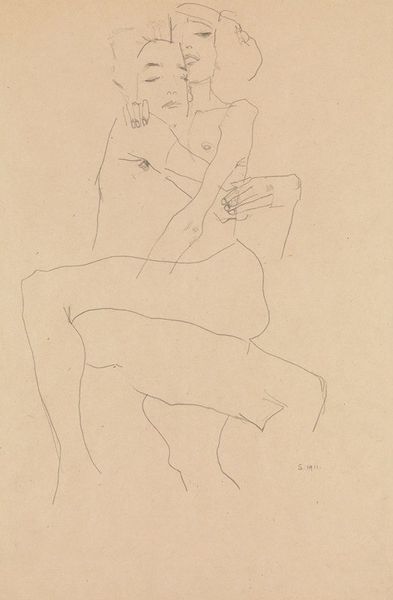
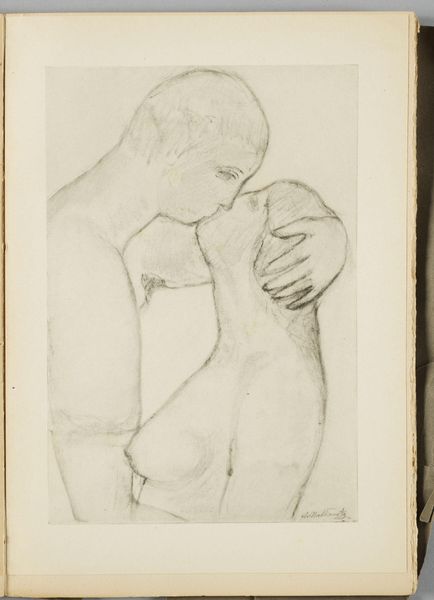
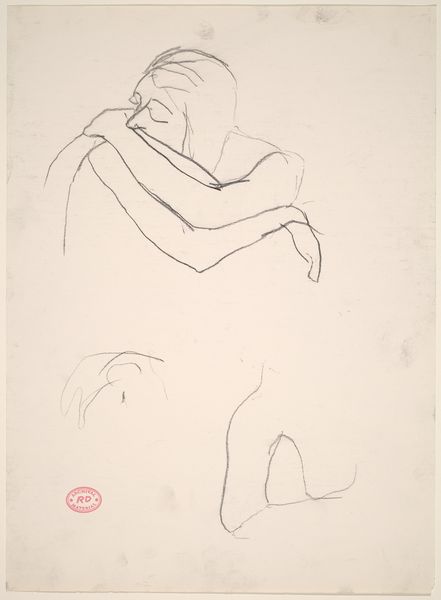
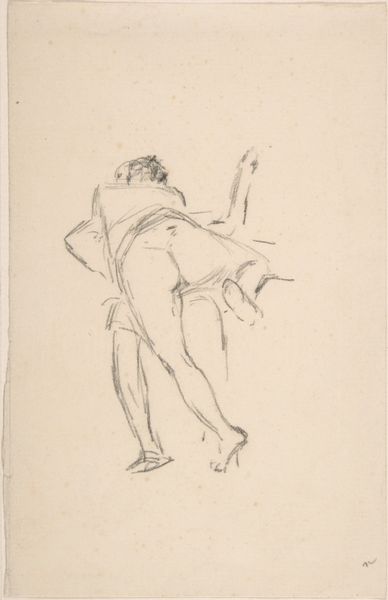
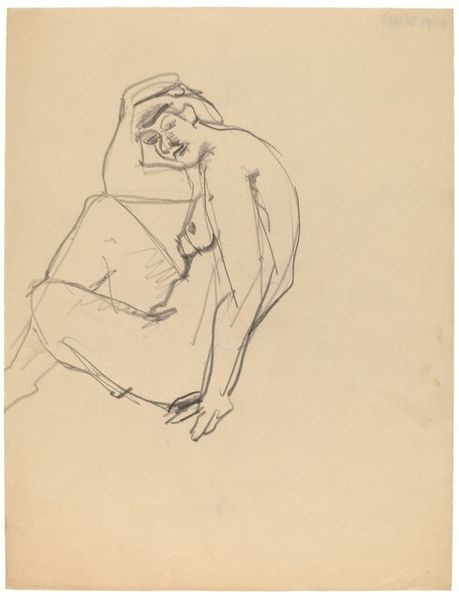
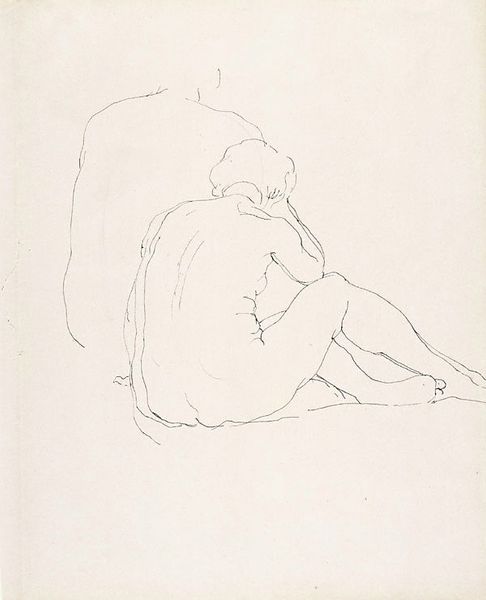
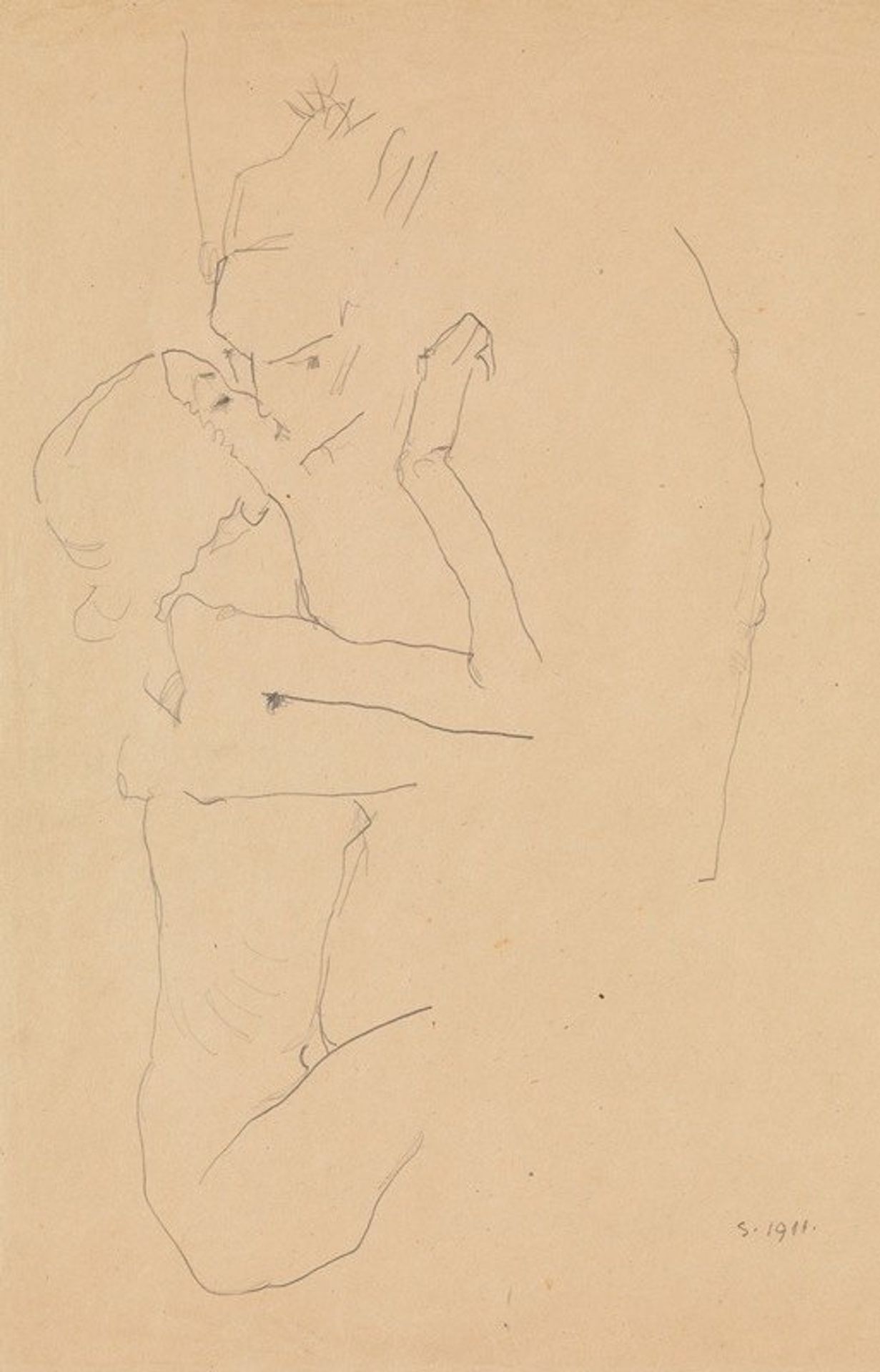
Egon Schiele drew this work, titled "The Kiss," using graphite on paper. The sketch emphasizes a direct, unmediated record of the artist's hand. Graphite, a humble material, allows for both precision and expressive freedom, visible in the delicate rendering of the figures, which conveys a sense of intimacy and vulnerability. The choice of graphite, rather than richer media, gives the work an immediacy, as if capturing a fleeting moment. Schiele's rapid, economical lines, reveal an engagement with the modernist concept of "truth to materials." The rawness of the medium becomes integral to the image's impact, challenging traditional notions of artistic refinement. In the context of early 20th-century Vienna, graphite's accessibility democratized art-making, blurring the lines between high art and the everyday. The work reflects an era of shifting social values, as well as the desire to record an intimate moment in a raw and honest way. By considering the materials and methods, we move beyond the subject matter to recognize the work as a testament to the artist's engagement with the materiality of art itself.

Artwork details
- Medium
- drawing
- Copyright
- Public Domain: Artvee
Tags
Comments
Share your thoughts
About this artwork
Egon Schiele drew this work, titled "The Kiss," using graphite on paper. The sketch emphasizes a direct, unmediated record of the artist's hand. Graphite, a humble material, allows for both precision and expressive freedom, visible in the delicate rendering of the figures, which conveys a sense of intimacy and vulnerability. The choice of graphite, rather than richer media, gives the work an immediacy, as if capturing a fleeting moment. Schiele's rapid, economical lines, reveal an engagement with the modernist concept of "truth to materials." The rawness of the medium becomes integral to the image's impact, challenging traditional notions of artistic refinement. In the context of early 20th-century Vienna, graphite's accessibility democratized art-making, blurring the lines between high art and the everyday. The work reflects an era of shifting social values, as well as the desire to record an intimate moment in a raw and honest way. By considering the materials and methods, we move beyond the subject matter to recognize the work as a testament to the artist's engagement with the materiality of art itself.
Comments
Share your thoughts