About this artwork
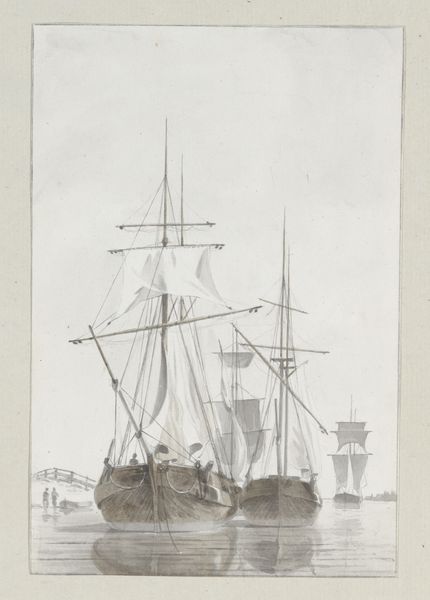
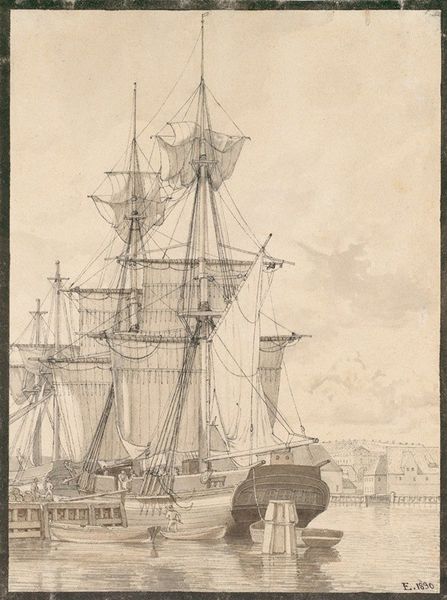
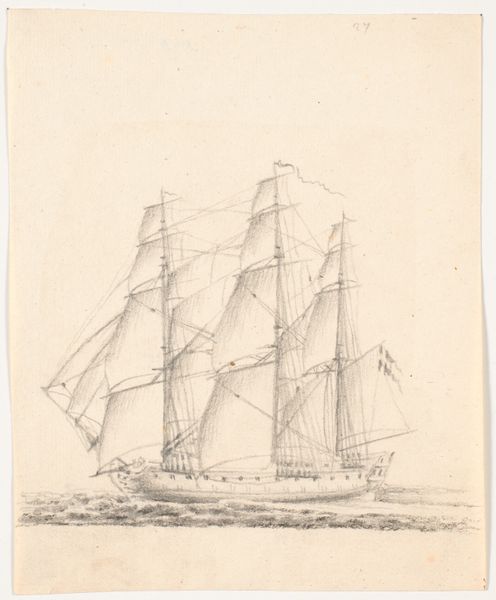
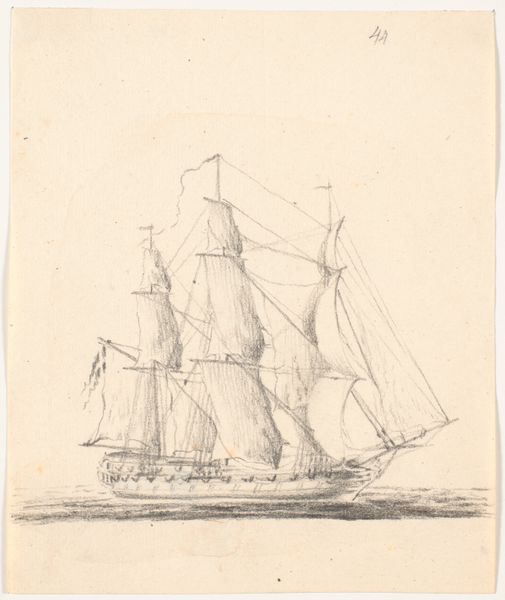
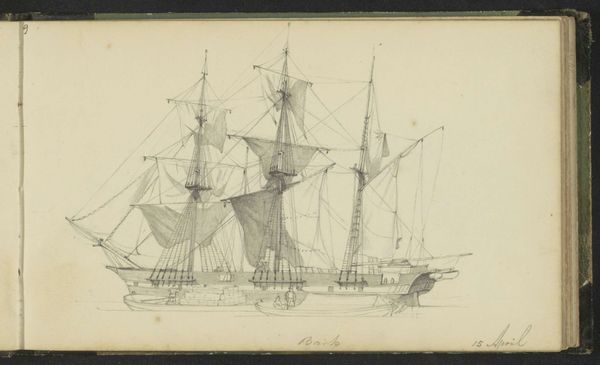
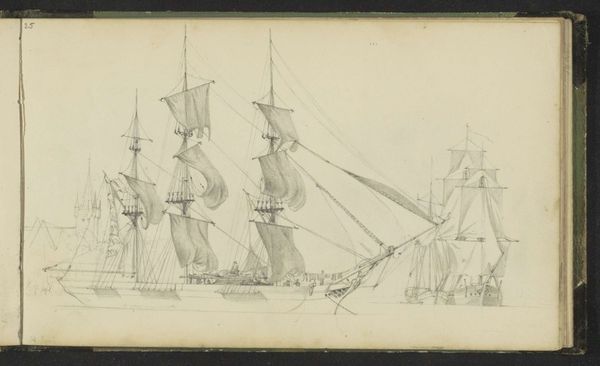
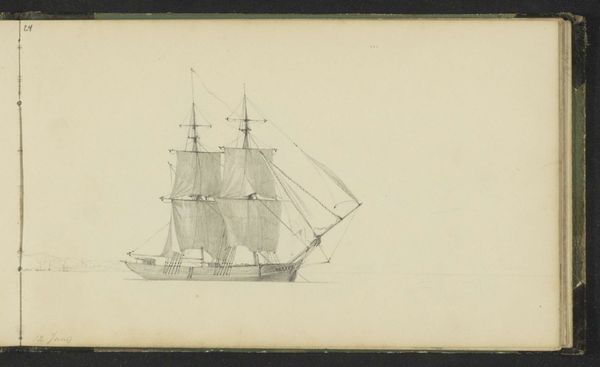
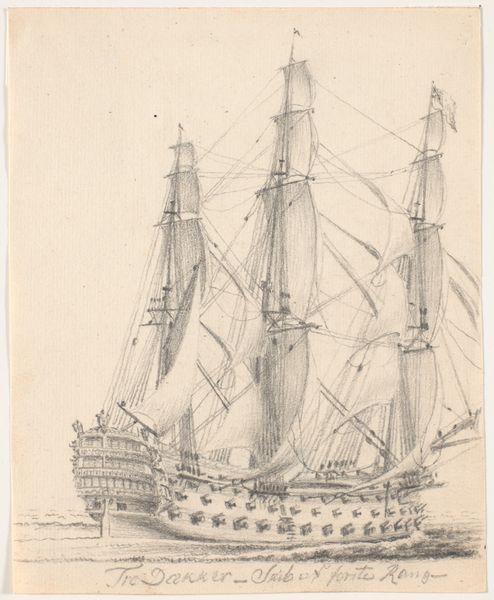
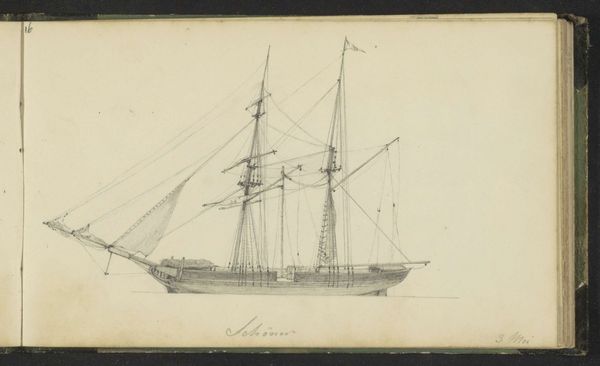
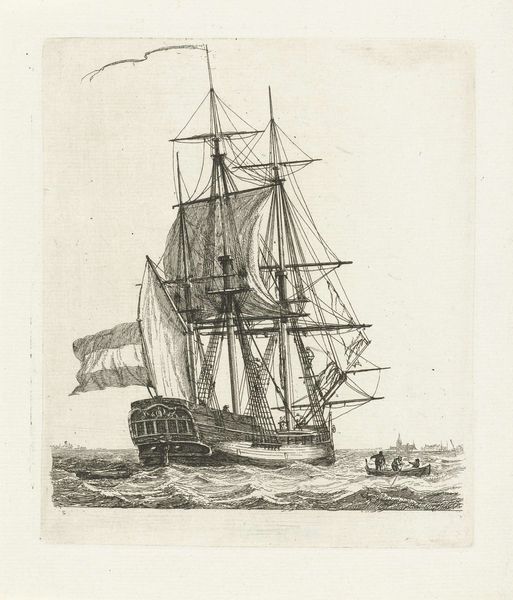
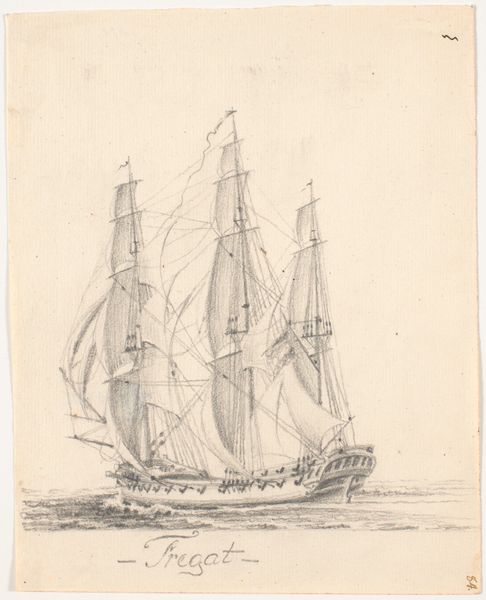
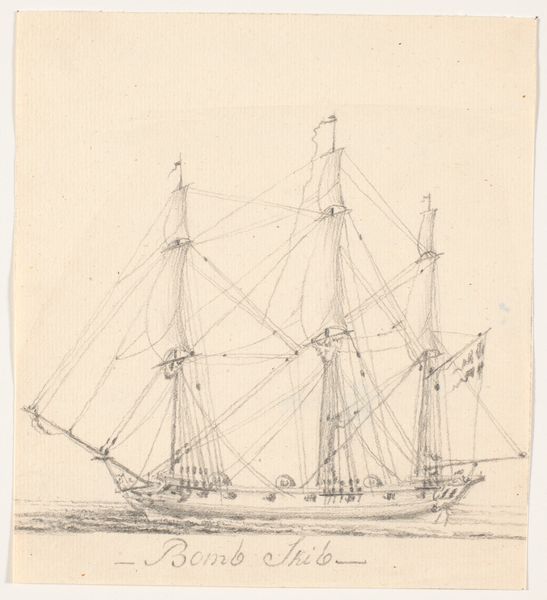
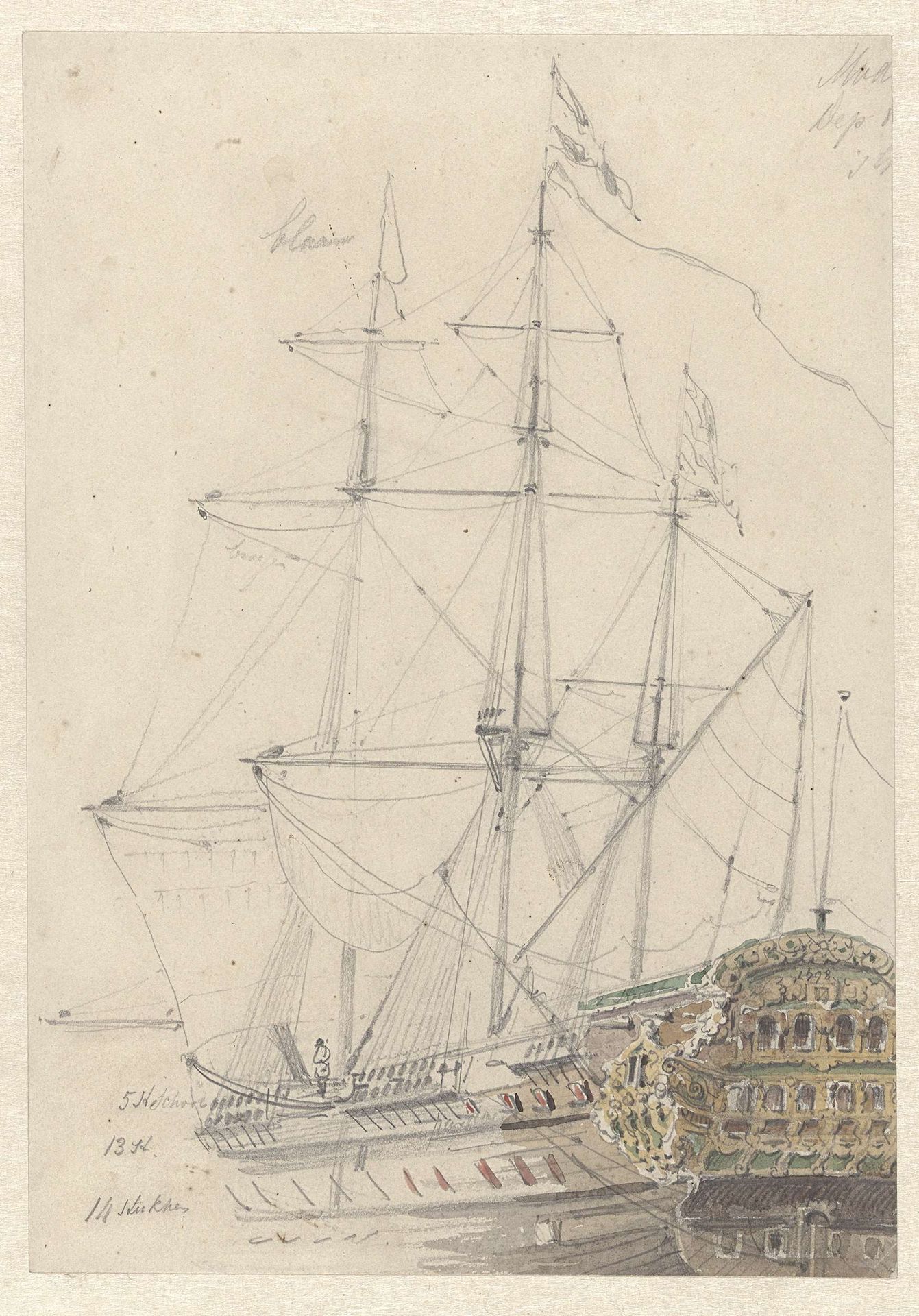
Willem Gruyter Jr. made this sketch of a 17th-century Dutch frigate in the 19th century using pen, brush, and watercolor. The drawing reflects the cultural fascination with the Golden Age of Dutch maritime power, a period when the Netherlands dominated global trade routes. But why the nostalgia? Consider the 19th-century context: the Netherlands was no longer a leading power, and the echoes of past glory served to bolster national identity. The sketch itself is intriguing. The precise detail of the ship's structure hints at a naval archive or meticulous model-making. The sketch suggests a desire to revive or preserve the memory of a historical moment. Maritime museums, art academies, and historical societies, all rising in prominence during this era, shaped how the public engaged with art and history. Historians might consult ship-building manuals, naval records, and period illustrations. This can enrich our understanding of not just the ship, but the shifting social and political currents that gave it meaning.
Schets naar een model van een zeventiende eeuws Hollands fregat
1827 - 1880

Willem Gruyter jr.
1817 - 1880Location
RijksmuseumArtwork details
- Dimensions
- height 345 mm, width 241 mm
- Location
- Rijksmuseum
- Copyright
- Rijks Museum: Open Domain
Comments
Share your thoughts
About this artwork
Willem Gruyter Jr. made this sketch of a 17th-century Dutch frigate in the 19th century using pen, brush, and watercolor. The drawing reflects the cultural fascination with the Golden Age of Dutch maritime power, a period when the Netherlands dominated global trade routes. But why the nostalgia? Consider the 19th-century context: the Netherlands was no longer a leading power, and the echoes of past glory served to bolster national identity. The sketch itself is intriguing. The precise detail of the ship's structure hints at a naval archive or meticulous model-making. The sketch suggests a desire to revive or preserve the memory of a historical moment. Maritime museums, art academies, and historical societies, all rising in prominence during this era, shaped how the public engaged with art and history. Historians might consult ship-building manuals, naval records, and period illustrations. This can enrich our understanding of not just the ship, but the shifting social and political currents that gave it meaning.
Comments
Share your thoughts