c. 1620 - 1685
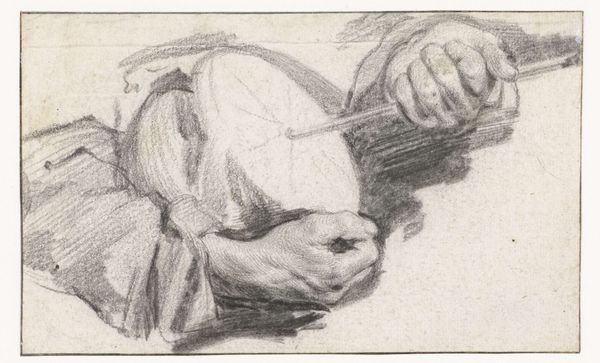
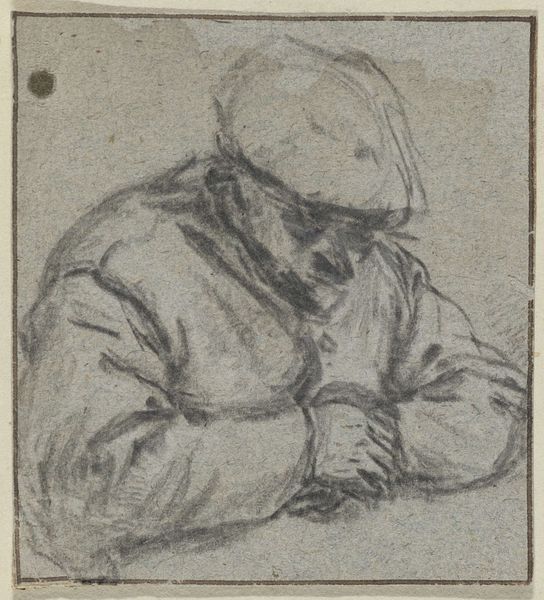
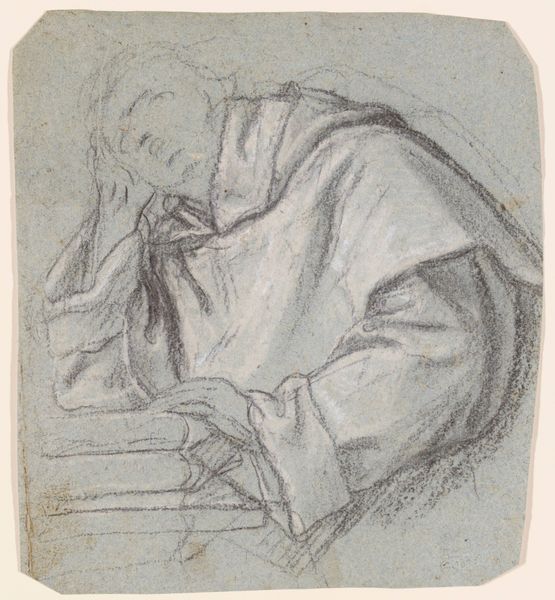
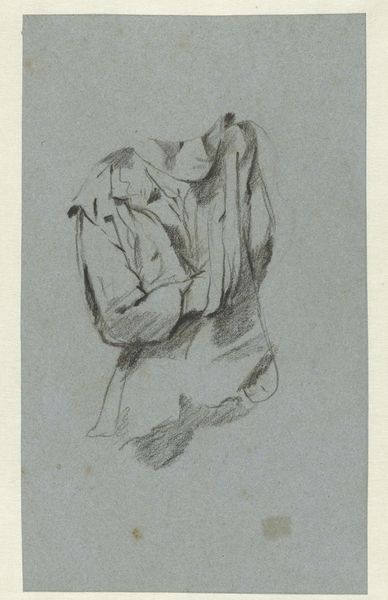
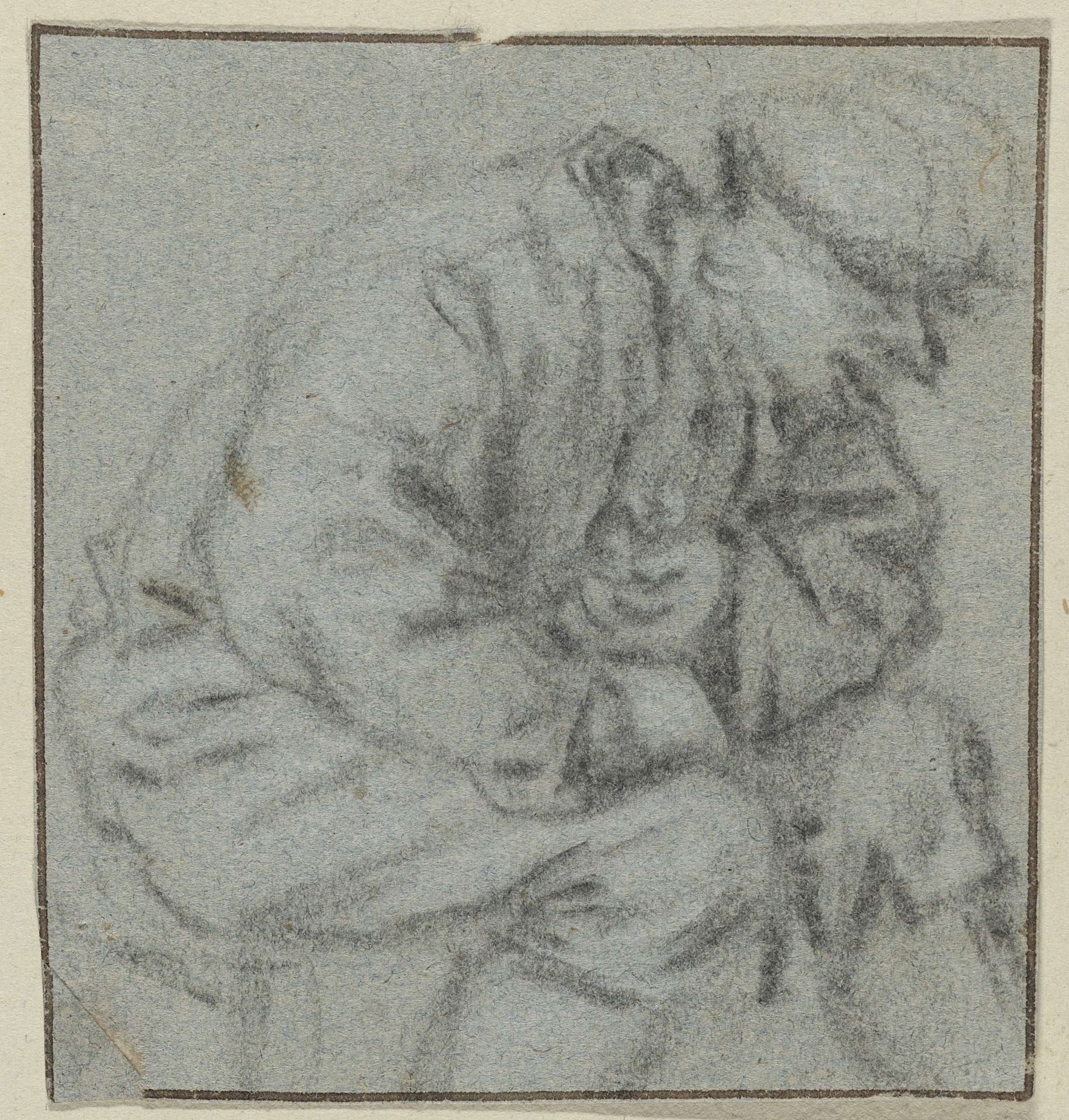
Borststuk van een man met pet, zijn armen over elkaar

Adriaen van Ostade
1610 - 1684Location
RijksmuseumListen to curator's interpretation
Curatorial notes
Editor: Right now, we’re looking at “Bust of a Man with a Cap, Arms Folded," by Adriaen van Ostade, probably made somewhere between 1620 and 1685. It’s a pencil drawing, and I have to say, it feels... incomplete. The man seems huddled and lost in thought. What do you see in this piece? Art Historian: Oh, "incomplete," you say? I think it's perfect, capturing a moment of profound introversion. Ostade was a master of the everyday, and to me, this drawing is like a snatched breath from the 17th century. It reminds me of looking in a misty mirror on a grey day. See how the lines sort of... dissolve? It's like the man himself is fading into contemplation. What do you make of his folded arms? Editor: I guess I see them as a defensive posture? Like he's guarding himself. Art Historian: Maybe. Or maybe he’s simply… holding himself. Think about how a musician might cradle an instrument. Or the way one hugs oneself for comfort. I see weariness there, but also a quiet dignity. Do you think you can glimpse that dignity behind his stance, even through the rough sketch? Editor: Now that you mention it, yes, the rough lines don't seem like carelessness, more like… sensitivity? Art Historian: Precisely! He invites us not just to observe, but to *feel* the weight of an unwritten story. So much personality expressed with what looks like just a handful of quick pencil strokes. And from just the bust alone! You can let your imagination roam to see what his hands, his legs and feet look like. Editor: Wow, I totally missed that the first time. Seeing the sensitivity in it changes the whole feel. Thanks! Art Historian: The pleasure was mine. It's easy to rush past the sketches, but they’re often where the real magic lives!