1738 - 1744
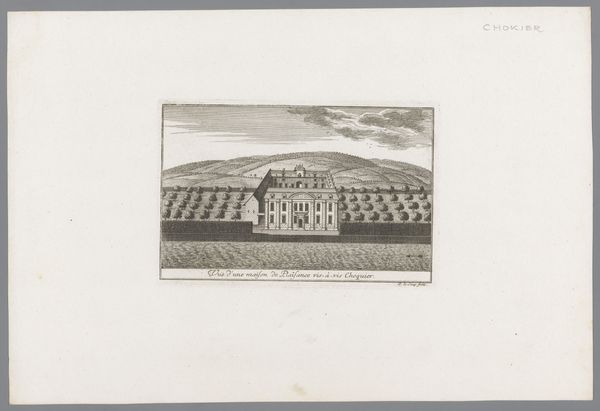
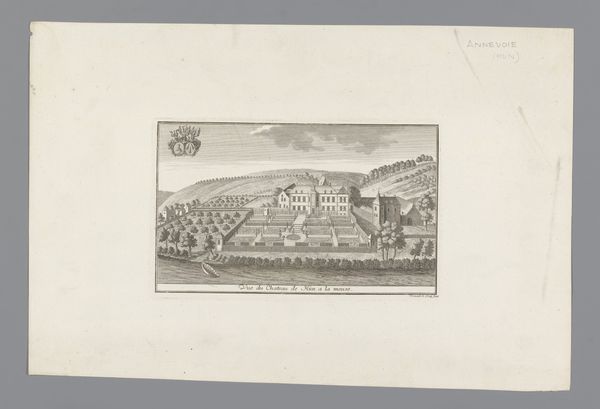
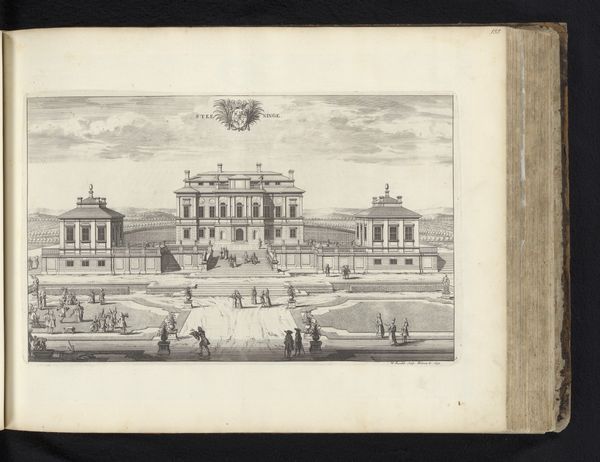
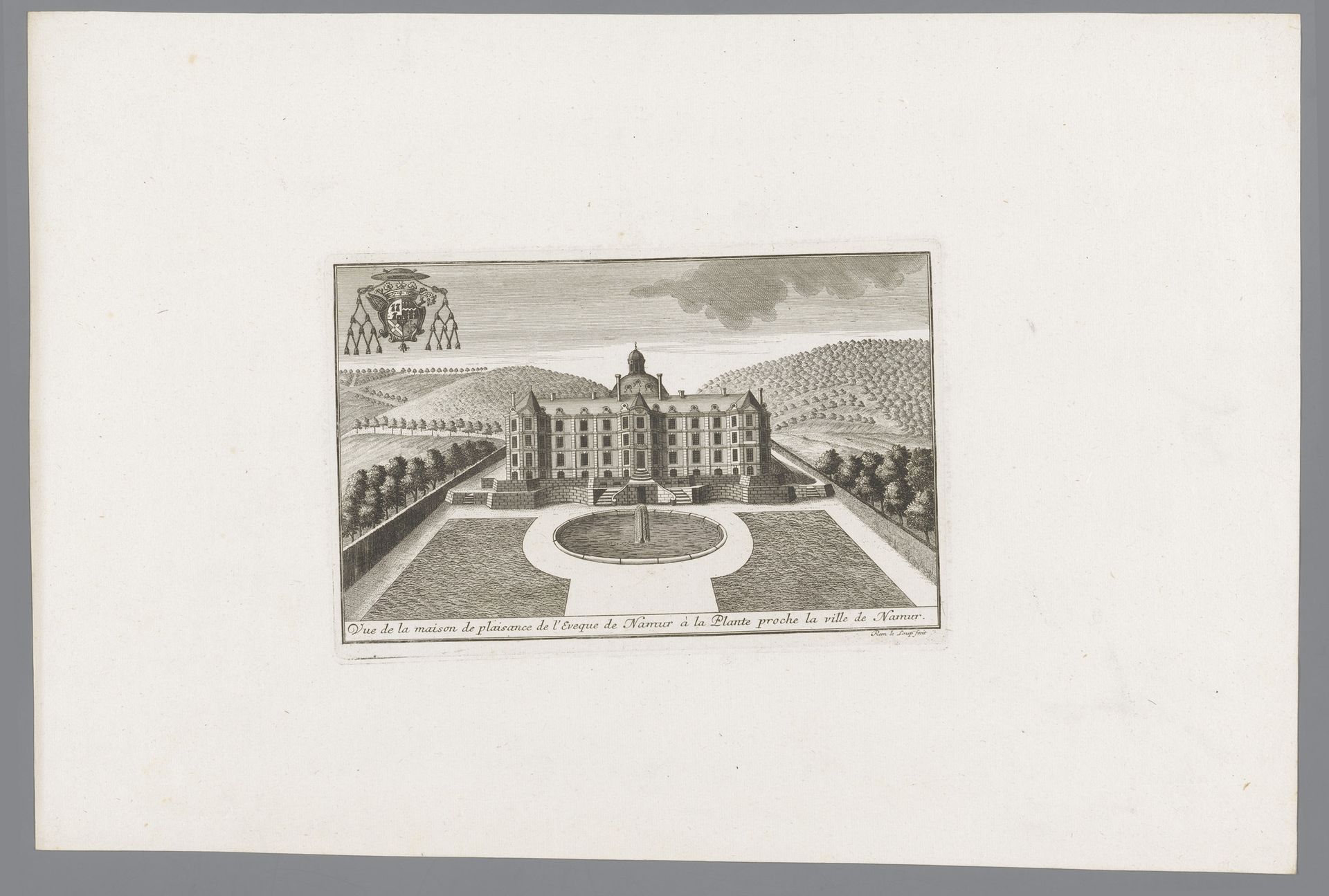
Gezicht op de buitenplaats van de bisschop van Namen

Listen to curator's interpretation
Curatorial notes
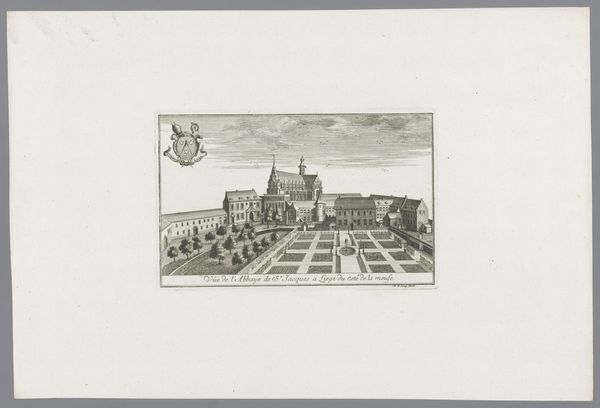
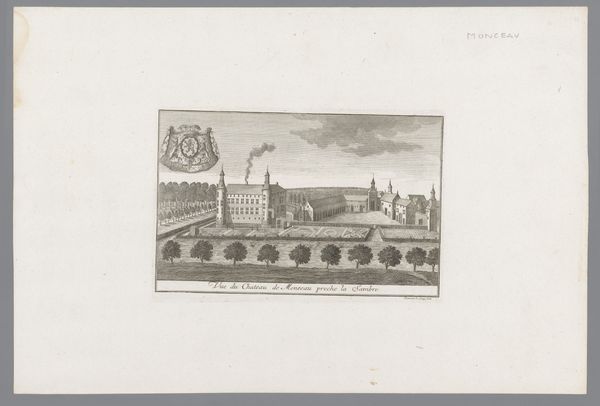
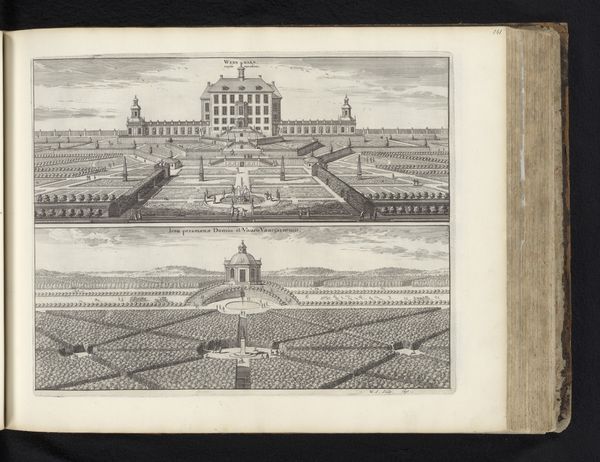
Editor: We're looking at "View of the country house of the Bishop of Namur," a print, an engraving in fact, made anonymously between 1738 and 1744. It feels very formal, very staged. How do you read this image? Curator: Formally, observe the emphasis on symmetry, particularly in the architectural design and landscaping. The engraving technique lends a certain crispness to the lines, enhancing the geometric precision. Note also how the texture achieved through hatching and cross-hatching defines depth and volume. Is the scale as you'd expect? Editor: I see the symmetry now. It's almost overwhelming. The shading gives it volume. But is it supposed to be so… precise? I guess it flattens the perspective almost. Curator: Indeed, this tension between precise detail and flattened perspective is a key formal element. The organization leads the eye from the foreground’s circular fountain through a calculated spatial recession towards the bishop’s house, anchored by the horizon line in the background. Can you perceive how it serves a particular ideology or message of control? Editor: I see. So the rigid composition serves a specific purpose, projecting authority through spatial control and refined design. It seems that technique enhances concept. Curator: Precisely. A purely structuralist lens helps us understand how its aesthetic strategy relates to a specific claim for influence. Now, how might this be different in a painting, perhaps? Editor: Interesting! I will certainly examine engravings more carefully now, looking past the subject to understand its formal and theoretical message. Thank you.