About this artwork
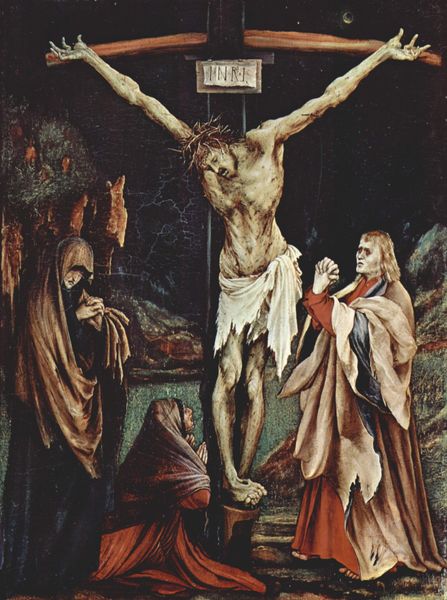
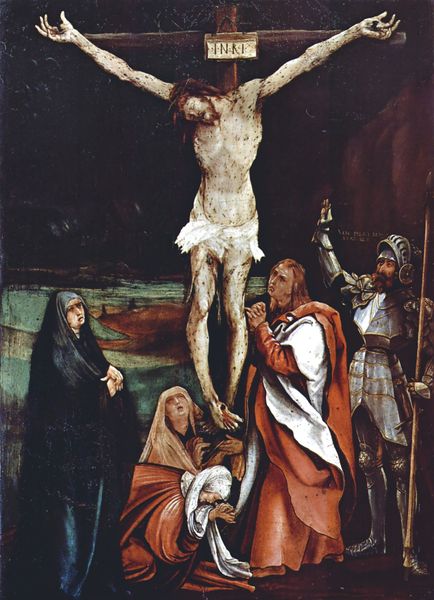
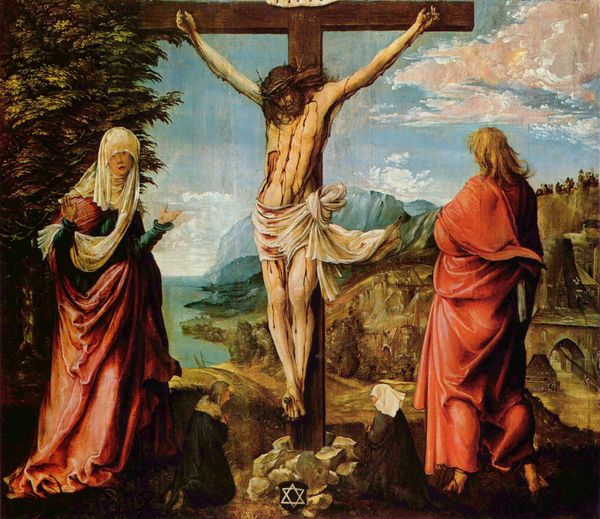
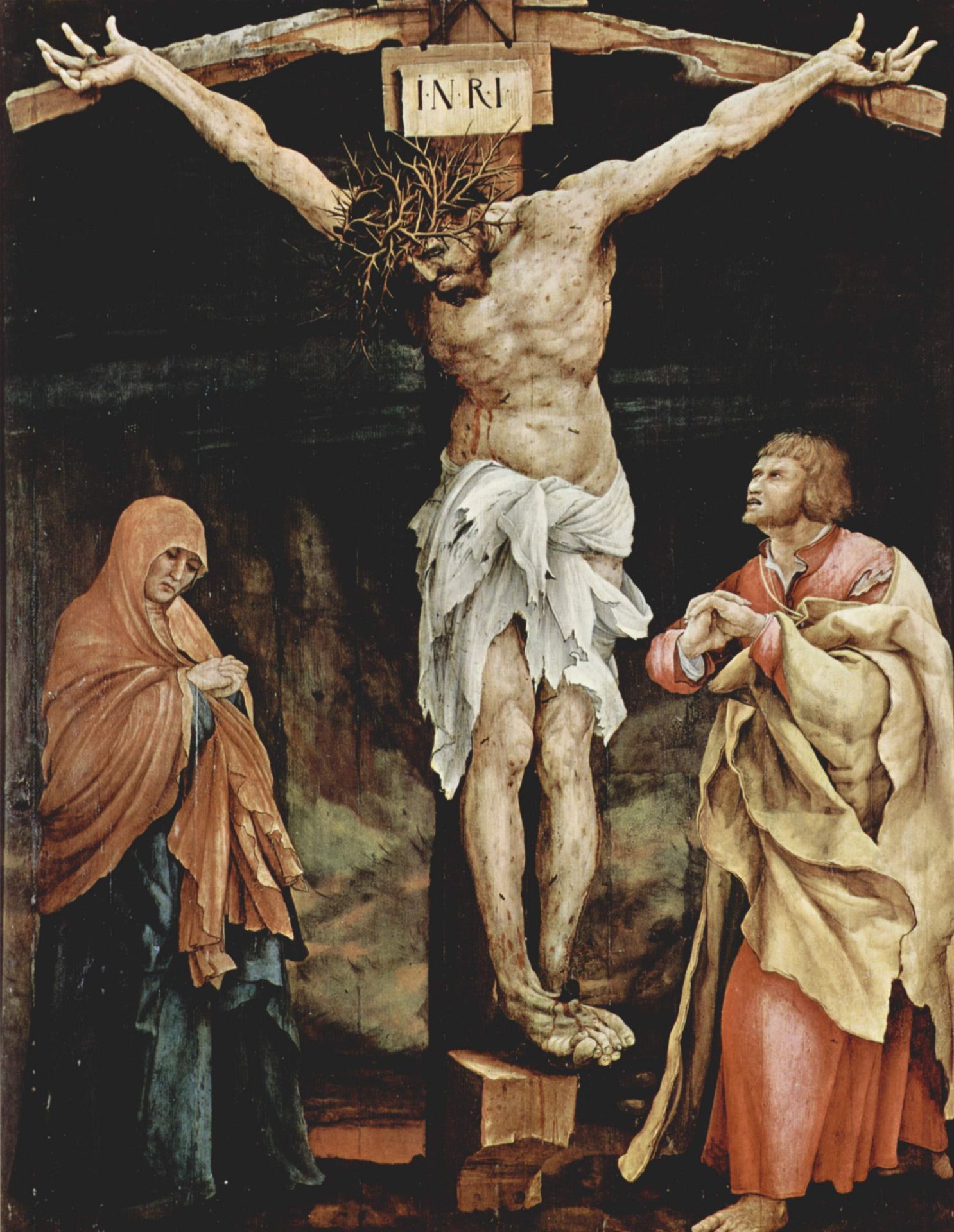
Matthias Grünewald's "The Crucifixion" is an oil on wood artwork, though undated, it reflects the tumultuous period of the early 16th century. Grünewald, living through the stirrings of the Reformation, conveys a scene that deviates sharply from traditional, idealized depictions of Christ’s crucifixion. The painting confronts us with a raw, visceral portrayal of suffering. Christ’s body, marred and contorted, speaks to the pain and the reality of human suffering. The artist perhaps aimed to connect with viewers on a deeply emotional level. By presenting such an unvarnished view of Christ’s agony, Grünewald invites contemplation on the nature of sacrifice and the weight of human sin. The figures surrounding Christ, each grief-stricken, add layers of depth. In particular, the image of the Virgin Mary reflects the sorrow of a mother. Through this painting, Grünewald captures not only a religious event but also a profound and lasting statement on human suffering, faith, and the complex emotional landscape of the human condition.
The Crucifixion 1524

Matthias Grünewald
1470 - 1528
Staatliche Kunsthalle Karlsruhe
Staatliche Kunsthalle Karlsruhe, Karlsruhe, GermanyArtwork details
- Dimensions
- 193 x 151 cm
- Location
- Staatliche Kunsthalle Karlsruhe, Karlsruhe, Germany
- Copyright
- Public domain
Comments
No comments
About this artwork
Matthias Grünewald's "The Crucifixion" is an oil on wood artwork, though undated, it reflects the tumultuous period of the early 16th century. Grünewald, living through the stirrings of the Reformation, conveys a scene that deviates sharply from traditional, idealized depictions of Christ’s crucifixion. The painting confronts us with a raw, visceral portrayal of suffering. Christ’s body, marred and contorted, speaks to the pain and the reality of human suffering. The artist perhaps aimed to connect with viewers on a deeply emotional level. By presenting such an unvarnished view of Christ’s agony, Grünewald invites contemplation on the nature of sacrifice and the weight of human sin. The figures surrounding Christ, each grief-stricken, add layers of depth. In particular, the image of the Virgin Mary reflects the sorrow of a mother. Through this painting, Grünewald captures not only a religious event but also a profound and lasting statement on human suffering, faith, and the complex emotional landscape of the human condition.
Comments
No comments